
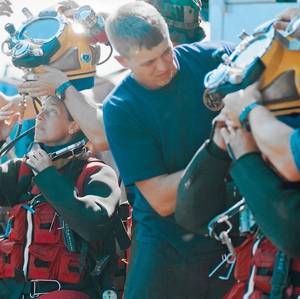
By Captain Bobbie Scolley, U.S. Navy (ret.) and Rear Admiral Tim Gallaudet, U.S. Navy (ret.)For more than six decades, spanning from 1905 to the late 1970s, the U.S. Navy’s diving apparatus for deep ocean operations and salvage remained fundamentally unchanged. During this period, the demographic of navy divers also saw little alteration.

WinGD recorded the first in-service operation of its X-DF-M/E alcohol fuel engine platform on ethanol fuel, following a successful bunkering and voyage in the US. The 9,000 TEU container ship Tangier Maersk, owned by the Maersk shipping line, successfully sailed from Houston to New York on ethanol fuel.

The American maritime industry depends on policy that supports economic growth and investment and protects national security; however, recent policy decisions have too often relied on broad administrative actions and outdated assumptions rather than modern, data-driven approaches. The extension of the Jones Act waiver and the continued use of rigid seasonal dredging windows illustrate this trend.

Expansion into Harbor Tug sector helps Master Boat Builders nearly double in size, from 200 to 400 employees building eight to nine vessels per year, and the prospect of a new drydock plus additional partnerships and government construction contracts promises to power the company forward further, faster.