

Rescuers were searching for seven missing crew on Thursday from one of two chemical tankers that caught fire overnight inside Romanian territorial waters in the Black Sea, after Russian drones strayed into Romanian airspace, Romanian officials said.Romanian officials stopped short of explicitly linking the fires onboard the ships to the Russian drones.

Eleven sailors were missing at sea on Tuesday from a ship sunk by a drone attack off the coast of Bulgaria, possibly the second deadly sinking of a cargo vessel in the area in a week, prompting Bulgaria to summon Russia's ambassador.Two cargo ships were hit by drones overnight and one was sunk, Bulgarian officials said.

Yemen's Iran-aligned Houthis on Friday reached the strategic island of Perim in the Bab el-Mandeb Strait, four Yemeni government sources told Reuters, potentially tightening their grip on one of the world's vital shipping routes and further increasing the threat to energy markets in the widening Middle East war.

The Middle East war intensified on Tuesday with Iranian-backed Houthis in Yemen launching strikes on several Saudi cities, further embroiling a U.S. ally in the conflict, while U.S. forces hit multiple Iranian oil tankers and Iran targeted a U.S. base in Jordan.The Houthis attacked four cities in the south of Saudi Arabia

A tanker was struck by an unknown projectile 63 nautical miles west of Saudi Arabia's port city of Yanbu, leading to a fire on the vessel's main deck, the United Kingdom Maritime Trade Operations said on Monday.The UKMTO said all crew were safe and accounted for with no reported environmental impact.

Oil prices rose to their highest in almost six weeks on Wednesday, with Brent crude surpassing $95 a barrel, on mounting concerns about disruptions to Middle Eastern supply routes because of escalating hostilities between the U.S. and Iran and threats to shipping by the Iran-backed Houthi militia in Yemen.Brent crude futures were up $2.23, or 2.45%, at $93.

The world's oil tanker fleet is behaving as if the Strait of Hormuz is reopening — even as the waterway itself remains only partially navigable and politically contested. From ship tracking data to freight rates, the signals are clear: owners and charterers are moving early to position vessels for a return to Gulf exports.

Since the Iranian Revolution and overthrow of Shah Mohammad Reza Pahlavi in 1979, the Strait of Hormuz has been a geographic constant as a choke point for which closure has been threatened from time to time but never truly closed. The longstanding assumption of the continued openness of the strait collapsed on February 28, 2026.

U.S. Central Command said it intercepted a merchant vessel trying to get through the blockade of Iran on Saturday.The ship, identified as the Sevan, was part of a 19-vessel "shadow fleet" transporting Iranian oil and gas products to foreign markets, the U.S. military said.Central Command said it was intercepted in the Arabian Sea by a U.S.

President Donald Trump said on Sunday the U.S. Navy would start blockading the Strait of Hormuz, raising the stakes after marathon talks with Iran failed to reach a deal to end the war, jeopardizing a fragile two-week ceasefire.The U.S. Central Command said U.S. forces would begin implementing the blockade of all maritime traffic entering and exiting Iranian ports at 10 a.m.
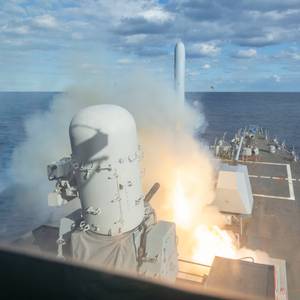
The U.S. and Israeli air war against Iran widened on Monday, with no end in sight as Israel attacked Lebanon in response to strikes by Hezbollah and Tehran kept up its missile and drone attacks on Gulf states that host U.S. military bases.U.S. President Donald Trump said the operation could continue for some weeks and that it was unclear who was in charge in Iran

The diplomatic route in Iran is now exhausted, as last night the United States and Israel attacked Iran, sharply escalating security risks for commercial shipping in the Persian Gulf and adjacent waters, prompting immediate operational and insurance repercussions across the global maritime sector.