

Northern Lights joint venture has taken delivery of its fourth dedicated liquefied CO2 (LCO2) carrier, completing the vessel fleet required for the first phase of its carbon capture and storage (CCS) transport and storage operations.The Northern Purpose has arrived in Norway following delivery from Dalian Shipbuilding Offshore Company (DSOC), joining sister vessels Northern Pioneer

Bernhard Schulte Shipmanagement (BSM) has agreed to acquire a 50% stake in Norwegian offshore recruitment and crewing specialist OffshoreCrew, expanding its services for offshore and maritime customers.Kristiansand-based OffshoreCrew provides recruitment, staffing and crew management services for the oil and gas, offshore wind and subsea sectors, supported by a database of around 30

As the market moves toward the end of the summer season in the northern hemisphere, several offshore support vessels are expected to roll off their contracts over the coming months. Shipowners are thus already positioning tonnage for the winter and next summer season. The CSOV market has remained tight over the past three months with multiple spot fixtures above EUR 60,000 per day.

Bernhard Schulte Offshore (BSO) has taken delivery of Windea Clarke, the fourth and final commissioning service operation vessel (CSOV) in its latest newbuild series, with the vessel set to enter a seasonal charter on a UK North Sea offshore wind project.The vessel was christened on June 30 at Ulstein Verft in Norway and completes a series of four new CSOVs integrated into BSO’s offshore fleet

Effective July 1, Kai Schulte-Schrepping has been appointed as the new Head of Liability Global Risk at Corporate & Specialty Insurer HDI Global. Schulte-Schrepping succeeds Daniel Maurer, who has decided to gradually step out of his current leadership role as part of his transition towards retirement.

Bernhard Schulte has christened its first liquefied CO2 (LCO2) carrier, marking the company’s entry into the carbon capture and storage (CCS)-related shipping segment.The vessel, named Northern Purpose, was christened on May 19 at Dalian Shipbuilding Offshore (DSOC) in China and will support the Northern Lights CCS project, a cross-border CO2 transport and storage development in Norway.

Navigator Holdings has signed a non-binding letter of intent to sell eight gas carriers and its shareholding in a joint venture for about $183 million.The agreement with Bernhard Schulte and Sloman Neptun covers vessels currently managed under the Unigas International joint venture.

MariApps Marine Solutions, a global leader in maritime digital solutions and a member of the Schulte Group, has announced it has acquired 100% ownership of Hyderabad-based software company, EffiaSoft Private Limited.This acquisition marks a milestone in MariApps’ commitment to expandingi ts digital ecosystem and enhancing its technological capabilities.

On Yonges Island, South Carolina, just up the Wadmalaw River from Charleston, the fourth-generation maritime company Stevens Towing Company continues to rewrite its own history. Long known for its towing and barge work, its ship repair business is growing at light speed, transforming what began decades ago as an internal maintenance yard into a dynamic commercial shipyard serving tugs, barges
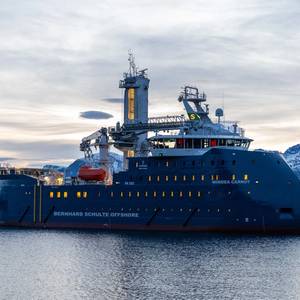
Bernhard Schulte Offshore (BSO) has taken delivery of a new commissioning service operation vessel (CSOV). The Windea Carnot, which was built at Ulstein Verft in Norway on behalf of an institutional investor, was handed over to its new owner, BSO, following completion.The Windea Carnot is the third of three sister ships built at Ulstein that BSO has integrated into its modern offshore fleet

Northern Lights JV has awarded a charter agreement to a consortium of “K” Line and MISC Berhad initially for one new liquid CO₂ transport vessel. A second vessel will be awarded to the same consortium in April 2026. Further, two charter agreements have been awarded to Mitsui O.S.K. Lines for two new CO₂ transport vessels.The three first vessels awarded will each have a 12,000 m3 cargo capacity.
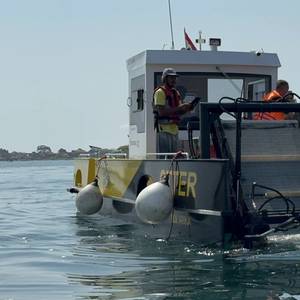
Leading shipping companies are joining forces to combat ocean plastic pollution through the launch of the Maritime Association for Clean Seas (MACS): a new industry alliance driving measurable reductions in plastic and operational waste at scale.Founded by Seven Clean Seas (SCS), an ocean impact organisation, MACS unites founding members including Berge Bulk, X-Press Feeders