

For decades, floating nuclear power occupied a niche position in the energy debate – technically feasible, strategically intriguing, but commercially marginal. Today, however, combined pressures of decarbonization, energy security, land constraints, rising electricity demand and water scarcity are making floating nuclear power a more serious proposition for policymakers, utilities

Firmus and SUBCO announced a landmark agreement to build a new submarine fiber optic cable connecting Tasmania to mainland Australia, significantly expanding the state's digital capacity and supporting the next generation of AI infrastructure. The new cable, to be named Bernacchi-1 in honor of pioneering Tasmanian-raised scientist and Antarctic explorer Louis Bernacchi

Since the Iranian Revolution and overthrow of Shah Mohammad Reza Pahlavi in 1979, the Strait of Hormuz has been a geographic constant as a choke point for which closure has been threatened from time to time but never truly closed. The longstanding assumption of the continued openness of the strait collapsed on February 28, 2026.

A flourishing cruise market and European shipbuilders’ unerring contractual success in the sector has taken orderbooks into the middle of the next decade, ensuring production continuity and underpinning fresh capital expenditure and R&D commitments by the continent’s foremost players.

The United States and French energy major TotalEnergies said on Monday they would redirect nearly $1 billion from offshore wind leases to U.S. oil and natural gas production.The agreement marks a new strategy in the Trump administration's wide-ranging effort to stymie development of U.S. offshore wind projects, which President Donald Trump has said he finds ugly, costly and inefficient.

As global demand for data storage and processing accelerates — driven by cloud computing, streaming media, and the explosive growth of artificial intelligence — the physical footprint of data centers has become a growing challenge. Land-based facilities face mounting constraints: limited space, water scarcity, grid congestion, long permitting timelines and rising community opposition.

Kawasaki Heavy Industries and Japan Suiso Energy have signed a contract to build the world’s largest liquefied hydrogen carrier, marking a step toward the commercialization of an international hydrogen supply chain.The vessel will have a cargo capacity of about 40,000 cubic meters and will be built at Kawasaki Heavy Industries’ Sakaide Works in Kagawa Prefecture.
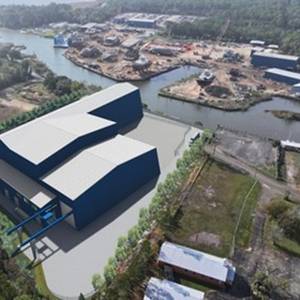
Facility will include 150,000 square feet of covered manufacturing space optimized for serial productionNew yard will support 200 new jobs and expands shipbuilding capacity Master Boat Builders announced plans to build a new $60 million, 150,000 sq ft manufacturing facility dedicated exclusively to government and defense shipbuilding programs.

Canada's Prime Minister Mark Carney signed an agreement with Alberta's premier on Thursday that rolls back certain climate rules to spur investment in energy production, while encouraging construction of a new oil pipeline to the West Coast.Under the agreement, the federal government will scrap a planned emissions cap on the oil and gas sector and drop rules on clean electricity in exchange for
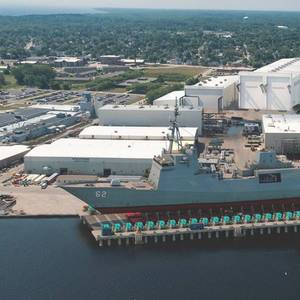
Fincantieri and the U.S. Navy have reached an agreement to redefine the future of the Constellation-class frigate program, ensuring work continues on the first two ships while cancelling four later units as part of a wider fleet review.The shift follows the Navy’s overhaul of its force-structure plans and aligns with new priorities aimed at accelerating next-generation ship designs and

McAllister Towing’s newest tractor tug, the Gerard McAllister, was delivered from Washburn & Doughty, the fifth in a series of six 84-metric-ton bollard pull, low-emission tractor tugs. She is McAllister’s 42nd tractor tug and the 13th with over 80 metric tons of bollard pull, underscoring the company’s continuation toward a more powerful, hi-tech, and sustainable fleet.
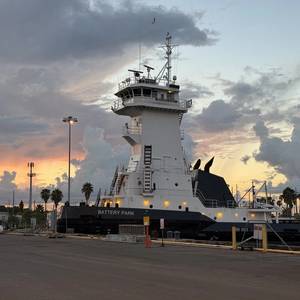
We are well into the discussions advising shipbuilders and operators how the U.S. will create a renaissance of the maritime industry. Federal Legislation, Executive Orders, and new foreign partnerships driving the promise of commercial competitiveness with the leading global shipbuilders. Most of the shipbuilding rhetoric indicates the domestic markets will be left to survive on their own.