

Many claim to have ‘saltwater in their veins,’ but all you have to do is walk into the corner office of John McDonald, the new Chairman and CEO of the American Bureau of Shipping (ABS), to see that him saying “I was born into maritime” is not hyperbole. The first thing that greets you is a Dusan Kadlec nighttime painting of the Brooklyn Bridge

The barge Defiant was refloated from the Castillo San Felipe del Morro shoreline in San Juan Harbor, Wednesday at approximately 2:22 a.m., just before high tide.Salvage crews and tugboat operators prepositioned three tugboats and completed all the preparations, including the pressurization of all cargo tanks, voids and compartments in the barge.

The U.S. Coast Guard coordinated the rescue of 27 mariners on Saturday after their Venezuelan-flagged fishing vessel caught fire approximately 500 miles north-northwest of the Galapagos Islands, Ecuador.At 3:51 p.m. PST, Saturday, Rescue Coordination Center Alameda received a notification from the Garmin Search and Rescue Command Center of an SOS distress alert from the 240-foot fishing vessel

The future of maritime safety will not be determined by a choice between people and technology but will instead depend on how effectively the industry combines them. Capt. Naoki Saito, General Manager and Head of the Cyber Security Ship Management Systems Department, ClassNK fully acknowledges the critical place mandatory procedures occupy in upholding consistent maritime safety

Capt. Jonathan Andrechik transferred command of Coast Guard Sector New York to Capt. Doreen McCarthy Monday, during a change-of-command ceremony at Sector New York in Staten Island. Rear Adm. Michael Platt, Commander, Coast Guard Northeast District, presided over the ceremony.Capt. McCarthy reported to Sector New York and has served as the deputy commander since May of 2024.

SciencoFAST launched the MarineFAST Slide-In, a Marine Sanitation Device with a rail-mounted installation system that allows the unit to either slide directly into existing hull tanks and slide back out, or drop into an existing tank or space for easy inspection or maintenance.“The MarineFAST Slide-In was developed to solve one of the most common challenges in marine sanitation—tight equipment

The Administration has made American manufacturing, shipbuilding, and supply chain resilience national priorities. The Great Lakes region is home to steel, autos, agriculture, energy infrastructure, defense suppliers, and advanced manufacturing. The St. Lawrence Seaway carries maritime commerce into that region.

The Arab Shipbuilding and Repair Yard Company (ASRY) has completed its 200th offshore rig project following the delivery of the VALARIS 250 (Bob Palmer) offshore rig project.The milestone was marked during a ceremony attended by executives and officials from ASRY and representatives from Valaris.

Windward, thealeader in mission-grade Maritime AI, announced the appointment of Robert (Bob) Sharp, retired U.S. Navy Vice Admiral, as Chief Maritime Intelligence Officer (CMIO). Sharp brings decades of experience at the highest levels of the U.S. defense and intelligence establishment, and will work directly with Ami Daniel, CEO and Co-Founder

The count down is on for this year’s CMA Shipping 2026 conference and exhibition taking place from 10–12 March 2026 at the Hilton Stamford Hotel in Stamford, Connecticut. Organised by the Connecticut Maritime Association (CMA) and Informa Markets, this flagship event is set to bring together the most influential voices in the maritime industry for three days of industry networking
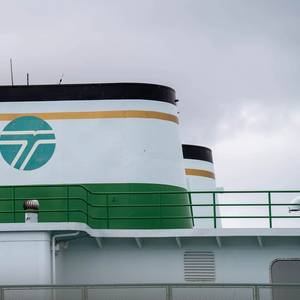
Washington State Ferries reported that its 17-vessel service was dinged by the removal of the ferry Wenatchee, which has been taken out of service due to a mechanical issue involving one of its electrical subsystems discovered last week.According to WSF, the vessel’s engine crew and maintenance teams are working to remove and replace the damaged equipment, which remains under warranty.
The Towing Vessel Inspection Bureau (TVIB) announced that Rio Marine, Inc. has become the first maritime services provider to achieve certification under the American Waterways Operators’ (AWO) Responsible Carrier Program (RCP).The RCP is a safety management system for the tugboat, towboat, and barge industry that sets standards for safety, environmental stewardship, and continuous improvement.