

A new shuttling system is reshaping the Middle East oil market, as producers seek to keep exports flowing despite the escalating regional conflict. The question now is whether this complex, expensive process is a stopgap measure or the global energy market’s new normal.Several miles off Oman's coast, south of the Strait of Hormuz, rows of tankers lie at anchor.

At least three Indian oil refiners and a global energy major plan to stop using vessels on Iran's new blacklist, including for ship-to-ship transfers, due to security concerns, four sources with direct knowledge of the matter said this week.Tehran announced on Sunday a blacklist of 45 ships it said had broken its rules for crossing the Strait of Hormuz

One Indian crew member was killed and eight others were wounded when two Emirati oil tankers were struck by Iranian cruise missiles in the Strait of Hormuz, the United Arab Emirates Ministry of Defence said on Tuesday, in the latest escalation in the strategic waterway.Abu Dhabi National Oil Company's shipping arm ADNOC L&S later confirmed the very large crude carriers (VLCCs) Mombasa B and Al
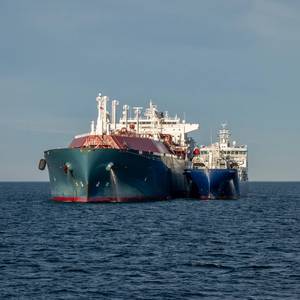
A sanctioned liquefied natural gas (LNG) tanker made a ship-to-ship (STS) transfer off the coast of Malaysia after picking up a cargo from a Russian export terminal also under Western restrictions, according to two analytics firms.The operation appears to be the first known STS transfer of sanctioned Russian LNG, despite Western efforts to curb Moscow's energy revenues over its war in Ukraine.

The United Arab Emirates and Kuwait have boosted naphtha exports to Asia in recent months via ship-to-ship (STS) transfers outside the Strait of Hormuz, helping Asian petrochemical producers to increase output, traders and analysts said.Abu Dhabi National Oil Company (ADNOC) and Kuwait Petroleum Corp (KPC), which accounted for nearly half of Gulf exports before the Iran war, shipped almost 1.

Ship-to-ship transfers in the Gulf of Oman for Middle Eastern oil from inside the Strait of Hormuz have reached their limits after Saudi Arabia diverted exports from the Red Sea, adding to shipments from other producers, trade sources and analysts said.The increasing amount of Saudi exports this month requires more supertankers to shuttle crude through Hormuz to conduct cargo transfers, they said.

NYK Line, with Japan Marine United Corporation, Nihon Shipyard Co., Ltd., Mitsubishi Gas Chemical Company, Inc., and Kokuka Sangyo Co., Ltd., completed the world’s first ship-to-ship (STS) ammonia bunkering operation to an ammonia-fueled vessel on September 17. At a quay within Japan Marine United Corporation’s Ariake Shipyard

INTERCARGO has published the first dedicated ship-to-ship (STS) transfer guidelines for dry bulk carriers, as such operations expand into new trading regions and offshore locations with limited port infrastructure.The ‘Ship to Ship Transfer Guidelines for Bulk Carriers’ establishes a framework for dry bulk STS operations, covering planning, risk assessment, maneuvering, fendering

INTERCARGO brought shipowners, charterers, insurers and service providers together in Athens on March 31 to tackle a growing issue in dry bulk shipping: how ship-to-ship (STS) transfers are actually carried out.STS in dry bulk is no longer occasional. It is becoming part of day-to-day operations as larger vessels and limited port infrastructure force cargo to be moved offshore.
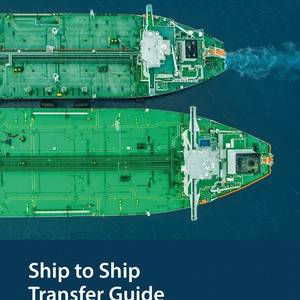
The Chemical Distribution Institute (CDI), International Chamber of Shipping (ICS), Oil Companies International Marine Forum (OCIMF) and the Society of International Gas Tanker and Terminal Operators (SIGTTO) have released the second edition of ‘Ship to Ship Transfer Guide for Petroleum, Chemicals and Liquefied Gases’.
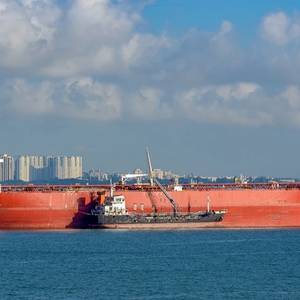
Lloyd’s Register (LR) has entered into strategic collaboration with Greece-based DYNAMARINe to launch an independent auditing program aimed at improving the safety, transparency and performance of ship-to-ship (STS) transfer operations worldwide.Under the new framework, LR’s auditors will assess STS service providers in line with standards set by the Oil Companies International Marine Forum
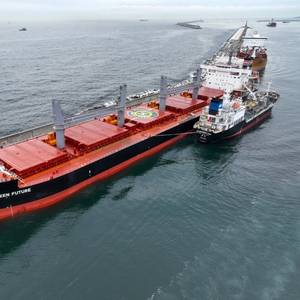
Ulsan Port Authority (UPA) has completed Korea’s first methanol bunkering for a dual-fuel bulk carrier at Ulsan Port.The STS for a bulk carrier, conducted on September 28, 2025, follows Ulsan Port’s world-first successful methanol bunkering demonstrations for container ships (PTS/STS) in 2023-2024.