

When artificial intelligence (AI) and digitalization are discussed in maritime, attention still gravitates toward autonomous ships. Yet the market is not about de-crewing but, rather, applying vessel and shore data to make operations safer, more fuel-efficient, and easier to maintain.As of 2024, the maritime AI market stood at $4.13 billion, with a projected five-year CAGR of 23%.

Ongoing fleet renewal by niche player Cool Carriers indicates continuing competitiveness at scale of the specialized, pallet-optimized reefership.Not so long ago, it seemed that the unrelenting march of containerization and ever-widening influence of the powerful ocean container line entities would finally usurp the conventional, breakbulk refrigerated cargo vessel.

Compute Maritime, the deep tech company behind NeuralShipper, the world's first Al platform for ship design, has revealed the results of its UK Government-funded project, GenDSOM, to bring generative Al and additive manufacturing into ship design.Working with consortium partners Siemens Digital Industries Software, Rapid Fusion, HP, BYD Naval Architects and the University of Southampton

Introduction. Looking back at history one could argue that it was French author Jules Verne in his book “20,000 Leagues Under the Sea”, published in 1869, who was speculating about a new power source much in the same out of the box thinking that H.G. Wells employed when he wrote about inter-planetary flight in “War of the World’s.

Dorian LPG took delivery of its 93,000 cubic meter (cbm) dual-fuel newbuilding named Areion an LPG and ammonia very large gas carrier (VLGC/AC) from Hanwha Ocean Heavy Industries Co., Ltd. at the Okpo Shipyard in South Korea. Areion will commence employment on charter under the Helios LPG Pool, an entity jointly controlled by Dorian LPG Ltd and MOL Energia Pte Ltd.

As global demand for data storage and processing accelerates — driven by cloud computing, streaming media, and the explosive growth of artificial intelligence — the physical footprint of data centers has become a growing challenge. Land-based facilities face mounting constraints: limited space, water scarcity, grid congestion, long permitting timelines and rising community opposition.
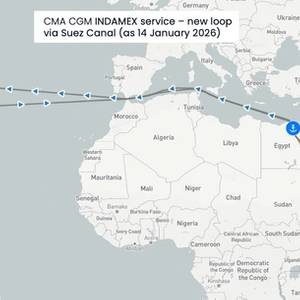
Major carrier CMA CGM has announced its INDAMEX service will transit Suez Canal on fronthaul and backhaul voyages between India/Pakistan and US East Coast in a notable step towards a largescale return of container ships to the Red Sea region.The first vessel to complete a full service loop via Suez Canal will be CMA CGM Verdi, sailing from Karachi to New York on 15 January.

Opsealog has published a whitepaper identifying what it calls a ‘missing loop’ between data collection and operational decision-making in offshore fleets, drawing on 10 years of work across more than 1,000 offshore support vessels.The study, The Conversion Gap: What Offshore Fleets Lose Between Data and Decision

On March 25, Damen Shipyards Group delivered the second of four Combi Freighters (CF) 3850 to Reederei Bernd Sibum following successful sea trials in Shanghai. The vessels are being constructed at Damen Yichang Shipyard in China. The first vessel, delivered at the beginning of February, is currently on its maiden voyage, bound for Norway with a project cargo.

The Chicago Propeller Club has announced its first event of 2026, featuring author John U. Bacon discussing his book The Gales of November and the enduring story of the SS Edmund Fitzgerald.The event will take place on April 14 at the Guinness Open Gate Brewery in Chicago’s West Loop and will include a live conversation between Bacon and Tom Wiater, President of Central Marine Logistics.

Louisiana-based boat builder Metal Shark, a supplier for the US Armed Forces and allies, and Tocaro Blue, a developer of Al-powered marine sensor processing solutions, have announced a strategic collaboration to embed Tocaro Blue's ProteusCore M Radar processing software into Metal Shark's fleet of High Speed Maneuverable Unmanned Surface Vessels (HSMUSVs).
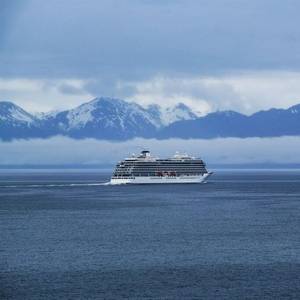
Wärtsilä Water & Waste, part of Wärtsilä, continues to deliver wastewater treatment performance in one of the world’s most closely monitored marine environments through their Hamworthy membrane bioreactor (MBR) systems, according to independent regulatory data from the Alaska Department of Environmental Conservation (DEC).