

TOTE Services, LLC, a U.S. maritime services company specializing in vessel construction management and ship management, signed a contract with the U.S. Department of Transportation - Maritime Administration (MARAD) to serve as vessel construction manager (VCM) for the Missile Range Instrumentation Vessel (MRIV) program.

The U.S. is expanding its icebreaking fleet to strengthen Arctic and domestic access, and support commercial shipping, seabed resources, subsea cables and fisheries. Current plans include 1–3 heavy Polar Security Cutters (PSCs), 11 medium Arctic Security Cutters (ASCs), seven Homeland Security Cutter (HSC) HSC-L (light) icebreakers, 11 HSC-Ms (medium) and one additional heavy HSC-H (heavy).

The U.S. Coast Guard commissioned its newest Fast Response Cutter, USCGC Vincent Danz (WPC 1162), for official entry into its service fleet during a ceremony held in New York City on Friday.The Vice Commandant of the Coast Guard, Vice Adm. Thomas Allan, presided over the ceremony. Members of the Danz family were also in attendance, including the cutter's sponsor, Angela Donohue
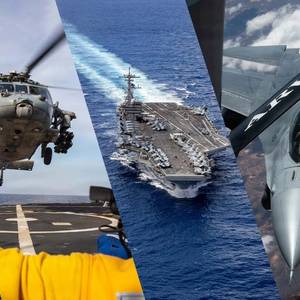
The U.S. military said on Monday it destroyed six Iranian small boats and intercepted Iranian cruise missiles and drones as Tehran sought to thwart a new U.S. naval effort to open shipping through the Strait of Hormuz.U.S. President Donald Trump launched the operation, called Project Freedom, on Monday as he sought to wrest control of the critical waterway from Iran

Security is all too often treated as a purely compliance-driven exercise. This isn’t advisable in any industry, but it is particularly damaging for those that fall under critical infrastructure frameworks. Ports, and, by extension, the dredging operations that maintain and expand shipping lanes, are the backbone of global trade, underpinning essential supply lines.

A new multi-million dollar Security and Rescue Training Center (SRTC), the first commercial facility of its kind in the world, is set to be built in the United Arab Emirates (UAE). It will serve as a regional hub for advanced, first-class, certified mission-based training for Helicopter Emergency Medical Services (HEMS), law enforcement, special forces, and commercial enterprises across the world.

Major US maritime organizations have issued statements voicing their concern over the Trump Administration’s decision to issue a sweeping 60-day waiver of the Jones Act.Under the Jones Act, goods shipped between U.S. ports must be carried on vessels that are U.S.-built, U.S.-flagged and mostly U.S.-owned. A coalition of U.S.

Three vessels have been hit by unknown projectiles in the Strait of Hormuz, maritime security agencies and sources said on Wednesday, as one of the strikes led to a fire onboard a ship and forced most of its crew to evacuate it.The Thailand-flagged bulk carrier Mayuree Naree was targeted and damaged approximately 11 nautical miles north of Oman, two maritime security sources said.

The U.S. Navy has refused near-daily requests from the shipping industry for military escorts through the Strait of Hormuz since the start of the war on Iran, saying the risk of attacks is too high for now, according to sources familiar with the matter.The Navy's assessments spell continued disruption to Middle East oil exports and reflect a divergence from President Donald Trump’s statements

At least three tankers were damaged off the Gulf coast and one seafarer was killed as Iranian retaliation for U.S. and Israeli strikes on Iran exposed ships to collateral damage, shipping sources and officials said on Sunday.Risks to commercial shipping have surged in the past 24 hours
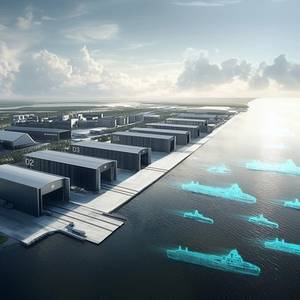
In a shipbuilding industry defined by tradition, one new entrant is seeking to rewrite the rules of how naval vessels are designed, built and delivered. Saronic Technologies, founded just three years ago, is racing to create what CEO Dino Mavrookas calls “a next-generation shipbuilding ecosystem” — one capable of delivering unmanned surface vessels (USVs) at the speed and scale the U.S.
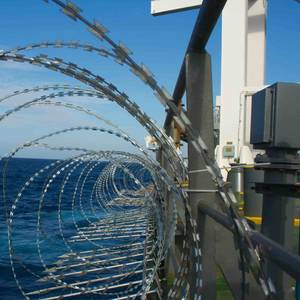
Pirates have boarded a Malta-flagged products tanker off Somalia, maritime security sources said on Thursday, while the vessel's manager said the ship's 24 crew members were safe.Attacks on vessels by armed assailants in recent days have raised concerns for shipping lanes in a region across which critical energy and goods are transported to global markets.