

Introduction. Looking back at history one could argue that it was French author Jules Verne in his book “20,000 Leagues Under the Sea”, published in 1869, who was speculating about a new power source much in the same out of the box thinking that H.G. Wells employed when he wrote about inter-planetary flight in “War of the World’s.

The U.S.-Israeli war on Iran has threatened Gulf ports and disrupted global trade through the Strait of Hormuz, a vital waterway through which roughly a fifth of the world's oil and liquefied natural gas normally passes. Iran's Revolutionary Guards have warned that any ship passing through the narrow Strait will be targeted.Below is a list of reported attacks since the U.S.

Explosive-laden Iranian boats appear to have attacked two fuel tankers in Iraqi waters, setting them ablaze and killing one crew member on Wednesday, after projectiles struck four vessels in Gulf waters, said port, maritime security and risk firms.The latest attacks on ships linked to the U.S. and Europe mark an escalation in the conflict between Iran and U.S.

Three vessels have been hit by unknown projectiles in the Strait of Hormuz, maritime security agencies and sources said on Wednesday, as one of the strikes led to a fire onboard a ship and forced most of its crew to evacuate it.The Thailand-flagged bulk carrier Mayuree Naree was targeted and damaged approximately 11 nautical miles north of Oman, two maritime security sources said.
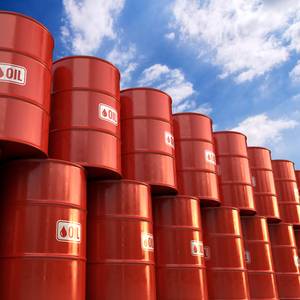
The U.S.-Israeli war on Iran has disrupted oil and natural gas exports from the Middle East and forced production stoppages from Qatar to Iraq, with Kuwait announcing cuts over the weekend.Analysts predict that the United Arab Emirates and Saudi Arabia will also have to cut output soon as they run out of oil storage.

At least three tankers were damaged off the Gulf coast and one seafarer was killed as Iranian retaliation for U.S. and Israeli strikes on Iran exposed ships to collateral damage, shipping sources and officials said on Sunday.Risks to commercial shipping have surged in the past 24 hours

The barge Defiant was refloated from the Castillo San Felipe del Morro shoreline in San Juan Harbor, Wednesday at approximately 2:22 a.m., just before high tide.Salvage crews and tugboat operators prepositioned three tugboats and completed all the preparations, including the pressurization of all cargo tanks, voids and compartments in the barge.
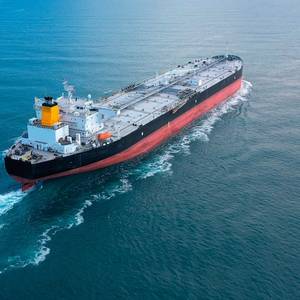
Iran confirmed on Saturday that its Revolutionary Guards had seized a tanker in Gulf waters carrying a cargo of petrochemicals bound for Singapore over alleged violations, Iranian state media reported.A U.S. official and maritime security sources had said on Friday that Iranian forces intercepted the oil products tanker and diverted it into Iranian territorial waters.

The ABS Board of Directors has elected John McDonald as the new Chairman and Chief Executive Officer of ABS at a board meeting on November 11.In the culmination of a well-planned succession process, McDonald, the serving ABS President and Chief Operating Officer, will take over on January 1, 2026, when present ABS Chairman and CEO Christopher J. Wiernicki retires.

A tanker has reported being approached by six small boats 50 nautical miles (93 km) south of Yemen's Aden, the United Kingdom Maritime Trade Operations reported on Monday, adding warning shots were fired by the tanker.The British maritime security firm Ambrey later said that Automatic Identification System data indicated the Marshall Islands-flagged tanker initiated evasive maneuvers after the

The Republic of the Marshall Islands (RMI) Registry recognized several milestones and achievements during Posidonia, highlighting the collaboration and teamwork to make them possible. In mid-May 2026, the United States Coast Guard (USCG) released the 2025 Port State Control (PSC) Annual Report, which recognized the RMI as a qualifying jurisdiction for the 22nd consecutive year.

The International Flag-State Association (IFA), an association of the world’s three largest registries—Liberia, the Republic of the Marshall Islands, and the Republic of Panama—has been meeting since 2021. IFA is the first alliance of its kind and was designed to allow its members to have a platform to more formally engage with respect to global challenges, stakeholder insight