

The United States has become the world's largest oil exporter, upending a decades-old order long dominated by Saudi Arabia and Russia, a shift that tightens American companies' grip on energy markets as Washington's war with Iran reshapes global energy trade.America's ascendancy to the top spot marks a stunning reversal for a country that was dependent on Middle Eastern oil for decades and
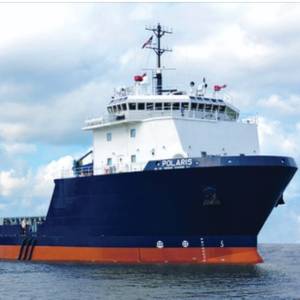
As oil exploration and production goes, so goes the market for Offshore Service Vessels (OSVs) and Platform Supply Vessels (PSVs). Throughout 2025, the prices of oil- which drives exploration and production (E & P), have softened, moving down towards $60/barrel amidst economic uncertainty and a wider than anticipated opening of the taps by major oil producers.

Around 1,000 Norwegian oil service workers were locked out on Saturday morning in an escalation of a labour dispute that is expected to disrupt drilling and some production on the Norwegian continental shelf.The lockout was declared in response to an ongoing strike by several hundred members of the Safe union and will affect companies including SLB, Halliburton, Subsea 7, DOF Subsea, Weatherford

RINA, the inspection, certification and consulting engineering multinational and Baker Hughes, an energy technology company, announced that RINA awarded a Type Approval certification to Baker Hughes for its NovaLT 16 gas turbine technology, specifically to operate on natural gas and up to 100% hydrogen for marine propulsion applications.

Caturus has taken a final investment decision on its Commonwealth LNG export project in Louisiana after securing $9.75 billion in project financing for the 9.5 million tonnes per annum facility, with partners Mubadala Energy, Kimmeridge and CPP Investments.The companies said the financing supports construction of the LNG export terminal in Cameron Parish, Louisiana

Baker Hughes has secured a contract to supply gas compression and power generation technology for ST LNG’s proposed 8.4 million tonnes per annum liquefied natural gas export terminal offshore Matagorda in Texas.Under the agreement, Baker Hughes will provide two LM6000PF gas turbine-driven centrifugal compressor trains and three NovaLT16 gas turbine generator packages for the first phase of the

Saudi Arabia's Aramco, the world's top oil exporter, said on Tuesday there would be "catastrophic consequences" for the world's oil markets if the Iran war continues to disrupt shipping in the Strait of Hormuz.Oil shipments have been largely blocked from traversing through the shipping artery, where normally roughly 20% of the world's oil would pass through daily.
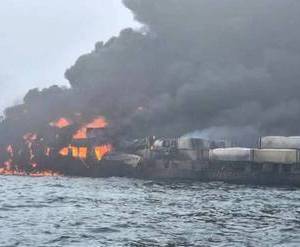
The captain of a container ship that crashed into a U.S. tanker off Britain's east coast last year was jailed for six years on Thursday for causing the death of a crew member through gross negligence.Russian national Vladimir Motin, 59, was captain of the Portuguese-flagged Solong when it hit the Stena Immaculate tanker, which was anchored and carrying just over 220

This past year won’t soon be forgotten. In 2025, conventional thinking about economics and investor behavior was frequently challenged, as dramatic changes in technology, energy and geopolitics drove markets in often unexpected ways.As the clock turns to 2026, here are 8 general market movers that can help explain what happened in 2025 and what it might mean for 2026 and beyond.1.

The United States on Thursday issued new sanctions targeting Venezuela, imposing curbs on three nephews of President Nicolas Maduro's wife, as well as six crude oil tankers and shipping companies linked to them, as Washington ramps up pressure on Caracas.The action came as the U.S. executes a large-scale military buildup in the southern Caribbean and as U.S.

The National Ocean Industries Association (NOIA) has released its sixth annual Offshore Energy Industry's Innovation & Workforce Excellence Report, a comprehensive publication showcasing how offshore energy companies are leading on environmental performance, workforce development, safety, and corporate responsibility.
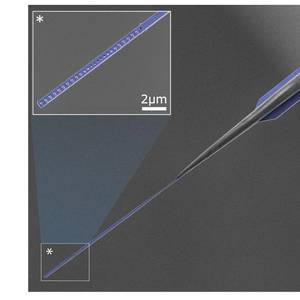
Researchers from Australia’s University of Queensland have made a microscopic “ocean” on a silicon chip to miniaturise the study of wave dynamics.The device, made at UQ’s School of Mathematics and Physics, uses a layer of superfluid helium only a few millionths of a millimetre thick on a chip smaller than a grain of rice.