

A.P. Moller Holding has agreed to acquire 100% of Oslo-based ship leasing company Ocean Yield from funds managed by investment firm KKR, expanding its maritime portfolio.Ocean Yield has interests in more than 70 vessels across several shipping segments, including gas carriers, LNG carriers, container ships, crude, product and chemical tankers, and dry bulk carriers.

A.P. Moller - Maersk has ordered eight large container vessels from China’s New Times Shipbuilding.All eight ships will have the same characteristics and make up a new series of 18,600 TEU vessels with delivery in 2029 and 2030.The ships will be equipped with dual-fuel engines able to operate on conventional bunker fuel or liquified gas.

Having spent a decade with A.P. Moller - Maersk (Maersk) in the past, Roberta Duarte will return to take on the role of Chief People Officer and join Maersk’s Executive Leadership Team, effective 1 November 2026.“I am truly honoured to return to Maersk. It is a company that feels like home to me – both because its values resonate strongly with my own and because of the many relationships I built

Lloyd’s Register, A.P. Moller - Maersk (Maersk) and the ports of Charleston and Felixstowe will examine the security and safeguarding requirements for the theoretical deployment of a nuclear-powered container ship route between the UK and US.Centered on a conceptual nuclear-powered container ship, the Pink Corridor will examine the requirements for theoretical port access on the specified route.

A.P. Moller - Maersk has entered into an agreement to sell Maersk Training and its subsidiary Maersk H2S Safety Services to Open Gate Capital, an industrial, corporate carve-out specialist.For more than four decades, Maersk Training has provided specialized training, competence development and safety services to industries including energy, maritime, renewables and logistics

A new joint study using the Port of Rotterdam as a case study “Enabling Nuclear-Powered Feeder Ships: A Joint Development Project on Port Call Feasibility and Regulatory Pathways” has found that existing port safety and risk-management frameworks could provide a credible starting point for assessing nuclear-powered commercial ship calls within a major European port environment.

Tema Mærsk, powered by its X82DF-M/E multi-fuel engine platform with methanol capability and inherent compatibility with ethanol, was delivered to A.P. Moller - Maersk (Maersk). The naming ceremony took place at Yangzijiang Shipbuilding in China, attended by WinGD’s Chief Executive Officer Dominik Schneiter and Vice President Market Development Benny Hilström.

Stillstrom, a unit of A.P. Moller - Maersk, has launched two offshore charging systems aimed at supporting vessel electrification in the offshore wind sector.The new solutions, Power Hub and Power Tower, are designed as standalone systems that can be deployed independently of wind turbine infrastructure, enabling flexible charging options for vessels operating at sea.

WAPS: Making the Wind Blow for Shipping’s DecarbonizationIn the evolving landscape of maritime decarbonization, few subjects are as timely or arguably as misunderstood as wind-assisted propulsion. Yet the shipping industry finds itself at a decisive moment, driven by regulatory tightening, customer expectations for greener supply chains, and an urgent need to manage escalating fuel costs.

A.P. Moller - Maersk (Maersk) has entered into an agreement to sell Maersk Training and its subsidiary Maersk H2S Safety Services to Open Gate Capital, an industrial, corporate carve-out specialist. The agreement remains subject to customary closing conditions and regulatory approvals.
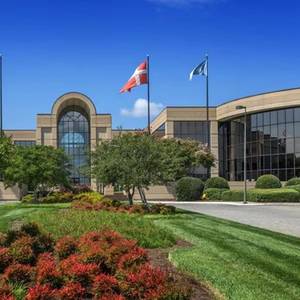
A.P. Moller-Maersk (Maersk) has selected Charlotte for its official North America headquarters, committing to add more than 500 jobs to its current Charlotte-based workforce over the next several years, ultimately bringing its Charlotte workforce to more than 1,300.Maersk has had a corporate presence in Charlotte for more than two decades

A.P. Moller – Maersk is reinforcing its long-term commitment to India's maritime sector and is intending to significantly expand its operational footprint in the country through port infrastructure investments, vessel reflagging, and enhanced local partnerships across the maritime value chain.APM Terminals Pipavav (Gujarat Pipavav Port Limited), part of A.P.