

Continuous design refinement and incremental productivity gains — reflecting the Japanese concept of kaizen — alongside unremitting attention to contractual performance and product quality have seen the country’s shipbuilders maintain a high profile in certain sectors of the commercial vessel market.

When Saudi Aramco told its oil buyers in a letter this week that it had no clear idea which port it would use for April exports, it laid bare a new reality: Iran, not the United States, holds the key to reopening the global energy market.The letter, sent to Saudi oil buyers around the world, said they might receive oil from the Red Sea, but they might still get it from the Gulf.

Maritime 2026 opened with a bang between the announcement of Battleships, Venezuela, shadow fleets and yes, U.S. shipbuilding. The commercial building issue may come down to strategic patience or the adaptability to evolve through new technology while ignoring historic, old tactics.
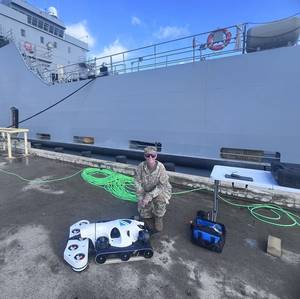
Sticking to legacy tactics won't beat China — adopt Secretary Hegseth's and the Army initiatives or surrender the edge.In a recent address, Admiral Christopher Grady, Vice Chairman of the Joint Chiefs of Staff, underscored the urgent need for a robotic hull-cleaning system to enable anytime maintenance, reduce drag, boost speed, and minimize fuel consumption for naval vessels.
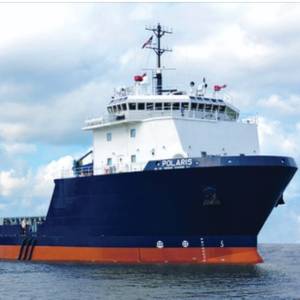
As oil exploration and production goes, so goes the market for Offshore Service Vessels (OSVs) and Platform Supply Vessels (PSVs). Throughout 2025, the prices of oil- which drives exploration and production (E & P), have softened, moving down towards $60/barrel amidst economic uncertainty and a wider than anticipated opening of the taps by major oil producers.

Liskow announced the firm’s expansion into New England and the growth of our maritime practice with the addition of three attorneys: Samuel P. Blatchley, Patrick J. O’Connor, and Michael J. Pluhowski. The addition brings an established fisheries litigation and maritime regulatory practice to Liskow and adds a new office in New Bedford, Massachusetts

American Cruise Lines has announced that new riverboat American Encore was christened in Lewiston, Idaho on May 12th. The boat’s inaugural 9-Day Columbia & Snake Rivers cruise departed from Stevenson, Washington on May 6th with guests also enjoying an included hotel stay in Portland, Oregon on May 5th.

Bangladesh on Wednesday sought to increase fuel purchases from India, as foreign minister Khalilur Rahman made the new government's first ministerial visit to New Delhi, a further sign that strained relations between the two countries may be easing.During his two-day trip, Rahman held talks with India’s External Affairs Minister S.

U.S. officials are drafting agreements to pay nearly $1 billion to oil major TotalEnergies as compensation for the cancellation of leases for wind farms in federal waters off New York State and North Carolina, the New York Times reported on Tuesday.Under the terms of the proposed settlements, the U.S.

American Bureau of Shipping (ABS), Japan’s ENEOS, Nippon Yusen Kabushiki Kaisha (NYK Line) and SEACOR Holdings have launched a joint study to develop a commercial methanol marine fuel supply network along the U.S. Gulf Coast.The study aims to establish the first large-scale ship-to-ship methanol bunkering operations in the United States
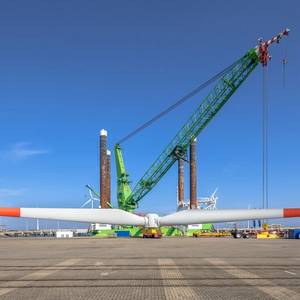
A federal judge on Monday struck down an order by U.S. President Donald Trump's administration to halt all federal approvals for new wind energy projects, saying that agencies' efforts to implement his directive were unlawful and arbitrary.Agencies including the U.S. Departments of the Interior and Commerce and the Environmental Protection Agency have been implementing a directive to halt all
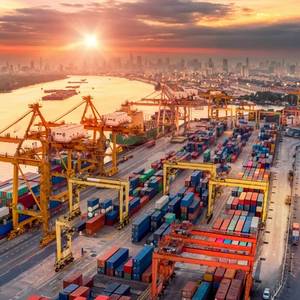
U.S. shipbuilders and port operators are getting hit in the fallout from President Donald Trump’s campaign to wipe out the offshore wind industry, suffering hundreds of millions of dollars in lost government support, vanishing vessel orders, and an uncertain future for the billions of dollars' worth of investments.