

McAllister Towing received the tug Mary McAllister from Washburn & Doughty Associates, Inc. in Maine. Mary McAllister is the sixth in a seven-tug series of American Bureau of Shipping-classed and certified 84-metric-ton bollard pull, low-emission tractor tugs. Mary McAllister is powered by CAT Tier IV engines producing 6,770 horsepower.
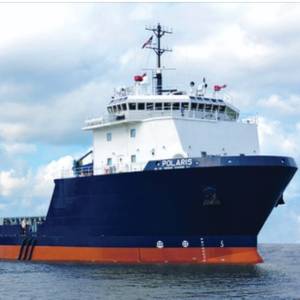
As oil exploration and production goes, so goes the market for Offshore Service Vessels (OSVs) and Platform Supply Vessels (PSVs). Throughout 2025, the prices of oil- which drives exploration and production (E & P), have softened, moving down towards $60/barrel amidst economic uncertainty and a wider than anticipated opening of the taps by major oil producers.
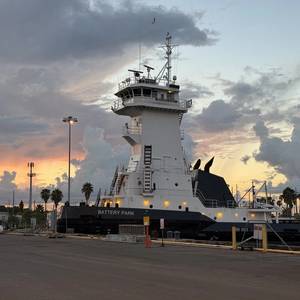
We are well into the discussions advising shipbuilders and operators how the U.S. will create a renaissance of the maritime industry. Federal Legislation, Executive Orders, and new foreign partnerships driving the promise of commercial competitiveness with the leading global shipbuilders. Most of the shipbuilding rhetoric indicates the domestic markets will be left to survive on their own.

Oil prices settled lower on Wednesday following a choppy session after the International Energy Agency agreed to speed up a release of oil stocks and prioritize diesel in a bid to curb record-high fuel prices as the Iran war squeezes global supplies.Brent crude futures LCOc1 settled down 38 cents, or 0.38%, at $100.20 a barrel. US West Texas Intermediate (WTI) crude futures CLc1 settled down $1.

Oil prices climbed on Wednesday as the market weighed supply constraints from a storm heading for US oil-producing regions and attacks by Yemen's Iran-backed Houthis on Saudi Arabia against increased supplies of Middle East crude.Brent futures LCOc1 rose 81 cents, or 0.8%, to $101.39 a barrel by 0635 GMT. US West Texas Intermediate (WTI) crude futures CLc1 gained 61 cents, or 0.7%, to $90.

Liskow announced the firm’s expansion into New England and the growth of our maritime practice with the addition of three attorneys: Samuel P. Blatchley, Patrick J. O’Connor, and Michael J. Pluhowski. The addition brings an established fisheries litigation and maritime regulatory practice to Liskow and adds a new office in New Bedford, Massachusetts

NOAA-supported scientists announced that this year’s Gulf of America hypoxic zone is approximately 1,332 square miles, making it the 2nd smallest zone on record in 40 years of measurement. Hypoxic areas, also called “dead zones,” are areas with little to no oxygen in the water, which can negatively impact fish, shellfish

Ships and aircraft participating in exercise Rim of the Pacific (RIMPAC) 2026 conducted a planned, live-fire sinking exercise (SINKEX) and sank decommissioned USS Mobile Bay (CG 53), July 12, 2026, and decommissioned USS Peleliu (LHA 5), July 17. Mobile Bay and Peleliu were sunk in waters 15,000 feet deep, more than 50 nautical miles off the northern coast of the island of Kauai.

With powerful winter storms, it’s easy to focus on what’s happening at the surface: snowfall totals, wind chills, and travel impacts. But the real story often begins thousands of miles away, high in the atmosphere, long before the first flakes ever fall.In March 2026, a major winter storm swept across the Midwest United States, and it didn’t start with snow or wind at all.

American Bureau of Shipping (ABS), Japan’s ENEOS, Nippon Yusen Kabushiki Kaisha (NYK Line) and SEACOR Holdings have launched a joint study to develop a commercial methanol marine fuel supply network along the U.S. Gulf Coast.The study aims to establish the first large-scale ship-to-ship methanol bunkering operations in the United States
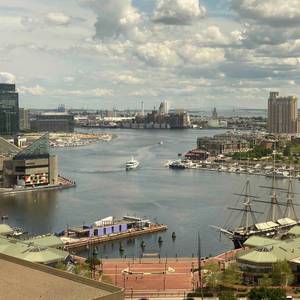
The Neoliner Origin, the world's largest cargo sailboat, completed its maiden transatlantic voyage on Thursday (October 30) despite sustaining damage to its aft sail during the crossing, forcing the crew to rely partially on its motor and remaining intact sail.The 136-meter-long (446 feet) vessel, equipped with two semi-rigid sails, first stopped in Saint Pierre and Miquelon
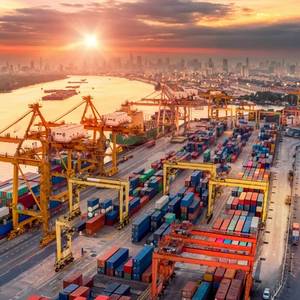
U.S. shipbuilders and port operators are getting hit in the fallout from President Donald Trump’s campaign to wipe out the offshore wind industry, suffering hundreds of millions of dollars in lost government support, vanishing vessel orders, and an uncertain future for the billions of dollars' worth of investments.