

The U.S. is expanding its icebreaking fleet to strengthen Arctic and domestic access, and support commercial shipping, seabed resources, subsea cables and fisheries. Current plans include 1–3 heavy Polar Security Cutters (PSCs), 11 medium Arctic Security Cutters (ASCs), seven Homeland Security Cutter (HSC) HSC-L (light) icebreakers, 11 HSC-Ms (medium) and one additional heavy HSC-H (heavy).

Hanwha Philly Shipyard (HPSI) and TOTE Services were selected to deliver the Missile Defense Agency’s (MDA) Missile Range Instrumentation Vessels (MRIV). TOTE Services will serve as vessel construction manager (VCM), and HPSI will build the ships at its Philadelphia shipyard.The MRIV will replace the Pacific Tracker and Pacific Collector

MSC Mediterranean Shipping Company (MSC) has confirmed that its container vessel MSC Sariska V was struck by two projectiles while departing the port of Umm Qasr in Iraq on June 1, though no crew members were injured.According to the company, the first projectile hit the vessel while a pilot was onboard during departure from the port

Royal Caribbean cut its annual earnings forecast on Thursday, even after reporting a better-than-expected quarterly profit, as surging fuel costs linked to the Iran war weighed on the cruise operator.Still, its shares jumped 6% as demand for its vacation destinations remained resilient.

Fincantieri and Princess Cruises signed an agreement for the construction of three new LNG-powered cruise ships. The vessel, part of a new “Voyager” class, will be built at Fincantieri’s Monfalcone yard, with deliveries scheduled for 2035, 2038 and 2039. While financial details were not disclosed

The U.S.-Israeli war on Iran has threatened Gulf ports and disrupted global trade through the Strait of Hormuz, a vital waterway through which roughly a fifth of the world's oil and liquefied natural gas normally passes. Iran's Revolutionary Guards have warned that any ship passing through the narrow Strait will be targeted.Below is a list of reported attacks since the U.S.

India has seized three U.S.-sanctioned tanker ships linked to Iran this month and stepped up surveillance in its maritime zone to curb illicit trade, a source with direct knowledge of the matter said on Monday.India aims to prevent its waters from being used for ship-to-ship transfers that obscure the origin of oil cargoes, the source added.

A new research project at the National University of Singapore (NUS) aims to accelerate the decarbonization of the global shipping industry through the development of next-generation ammonia-fueled marine engines with high efficiency and near-zero emissions.The project focuses on a novel in-cylinder reforming gas recirculation (IRGR) engine concept designed to address key limitations that have

The Panama Canal marked a significant milestone on Monday with the inaugural transit of the Neopanamax cruise ship, Disney Adventure, the largest passenger vessel by capacity and gross tonnage ever to transit the interoceanic waterway.The passage of the ship, 208,000 gross tons and with capacity for approximately 6,700 passengers, took place as part of her positioning voyage.

HII’s Newport News Shipbuilding division is marking 140 years of service to the US today, January 28, 2026.On Jan. 28, 1886, Collis P. Huntington, a businessman whose investments enabled completion of the U.S. transcontinental railroad, turned his focus to shipbuilding, establishing what was first chartered as Chesapeake Dry Dock and Construction Co.
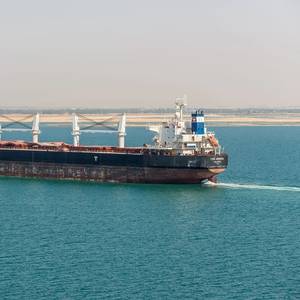
Star Bulk Carriers reported a weaker third quarter amid softening dry bulk markets, lower charter rates and a smaller operating fleet, while continuing to reshape its fleet through vessel sales, refinancing and newbuilding acquisitions.The company posted net income of $18.5 million for Q3 2025, down sharply from $81.3 million in the same period last year. Voyage revenues also fell to $263.
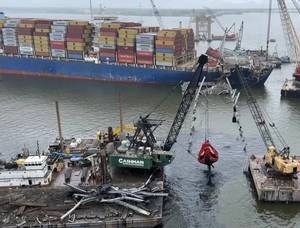
The National Transportation Safety Board said on Tuesday that a loose wire led to a power failure on the cargo ship Dali that crashed into Baltimore's Francis Scott Key Bridge in March 2024, killing six people and wrecking the bridge.The NTSB is holding a hearing in Washington to determine the probable cause of the incident that killed six construction workers on the bridge.