

Batteries have become a practical part of maritime decarbonization. They are used on ferries, harbor craft, tugs, offshore support vessels, crew transfer vessels, various types of remotely operated vessels, and hybrid ships to reduce fuel burn, provide spinning reserve, support dynamic positioning, enable peak shaving, and allow zero-emission operation in port.

U.S. officials on Monday said they are working closely with foreign investors to identify gaps in the U.S. manufacturing supply chain and to help small- and medium-sized businesses scale up to meet rising demand as foreign investments surge.Assistant Secretary of the Treasury Chris Pilkerton and Small Business Administrator Kelly Loeffler told Reuters that U.S.

CHICAGO — July 30, 2026 — The United States cannot rebuild its maritime strength by focusing solely on its ocean coasts. Instead, the nation's industrial resurgence depends on recognizing the Great Lakes as one of America's five maritime coastlines and leveraging the region's unmatched manufacturing ecosystem, according to U.S. Maritime Administrator Stephen M. Carmel.

A record wave of global investment in new ships is translating into sustained growth for Germany's marine equipment industry, with suppliers reporting rising revenues, strong order books and growing optimism despite mounting geopolitical and competitive pressures.According to the latest industry survey from VDMA, Germany's maritime supplier sector posted average revenue growth of 5.

Australian mining company Fortescue has signed an agreement with Belgian shipping and cleantech group CMB.TECH to charter up to 12 ammonia-capable bulk carriers, stepping up efforts to decarbonize maritime transport and support the development of green ammonia as a marine fuel.Under the agreement, Fortescue will charter 12 Newcastlemax dry bulk vessels, each with a carrying capacity of 210

Often debated and long-awaited, The White House released its long-anticipated America’s Maritime Action Plan (MAP), a 40+ page blueprint aimed at what it calls a new “Maritime Golden Age” for the United States.The document, developed under Executive Order 14269, lays out a four-pillar strategy to rebuild domestic shipbuilding capacity, expand the U.S.

The quest to rebuild the U.S. iceabreaking fleet continues to move at lightening speed, with Seaspan Shipyards (Seaspan) signing agreements with Bollinger Shipyards (Bollinger) and Rauma Marine Constructions Oy (Rauma) to provide its Multi-Purpose Icebreaker (MPI) design and associated supply chain packages to enable rapid construction and delivery of up to six vessels for the U.S.

Japan will conduct test mining of rare-earth-rich mud from the deep seabed off Minamitori Island, some 1,900 kilometres (1,180 miles) southeast of Tokyo, from January 11 to February 14, the head of the government-backed project said.The operation will mark the world's first attempt to continuously lift rare-earth mud from a depth of around 6,000 meters on to a vessel.

If 2025 proved anything for Germany’s shipbuilding and marine equipment sector, it is that the industry retains both resilience and relevance, even amid geopolitical turbulence. According to The Association for Shipbuilding and Marine Technology (VSM), the year closed with strong order activity
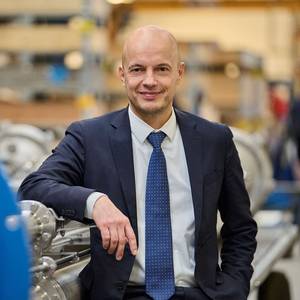
Svanehoj, an ITT company, acquired Germany-based Köhler & Hörter GmbH (KOHO Kompressorsysteme, or KOHO), a family-owned company specializing in high-quality compressors for a wide range of industries, including shipbuilding. The acquisition closed on October 1, 2025. In recent years, Svanehoj has expanded its position as a supplier of marine pumps, tank control systems
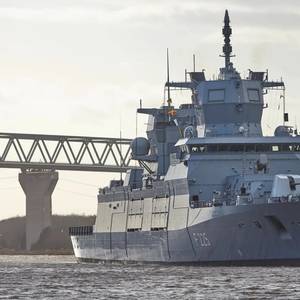
TKMS, the defence business that German conglomerate Thyssenkrupp aims to spin off this autumn, plans to raise its profit margin to more than 7% to close a gap with rivals, banking on soaring military demand amid fears of Russian aggression.TKMS, which makes submarines, frigates as well as sensor and mine-hunting technology, has more than tripled its order backlog in five years.
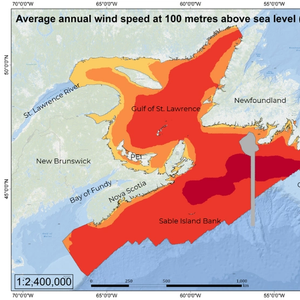
Sean Fraser, Canada’s Minister responsible for the Atlantic Canada Opportunities Agency, has announced that strategic direction has been given to the Canada–Nova Scotia Offshore Energy Regulator as a next step toward realizing Canada’s first-ever offshore wind project.Fraser made the announcement on behalf of Tim Hodgson, Canada’s Minister of Energy and Natural Resources