

Yangzijiang Maritime Development has ordered 24 vessels from various Chinese shipyards for delivery between 2028 and 2030, expanding its newbuild portfolio across bulk carriers, chemical and product tankers and large oil tankers.The new orders comprise six 64,500-dwt bulk carriers, six 49,800-dwt product oil and chemical tankers, four 28,000-dwt stainless steel chemical tankers, four 29

Four shipowners from Sweden, Norway and Canada have ordered four new VINGA product tankers for delivery in 2028 and 2029, expanding the Furetank-developed vessel series to 26 ships.Two of the vessels will be owned by FureBear, a joint venture between Sweden's Furetank and Canada's Algoma Central Corporation, while Norway's O.H. Meling and Sweden's Älvtank will each take one.The order marks O.H.

ADNOC Logistics and Services (ADNOC L&S) has ordered four new liquefied natural gas (LNG) carriers from China’s Jiangnan Shipyard for about $900 million, expanding its LNG newbuild program to 18 vessels, while also taking delivery of the first of four very large ammonia carrier (VLAC) newbuilds.The four ships will each have a capacity of 175,000 cubic meters and are scheduled for delivery in 2029.

A.P. Moller Holding has agreed to acquire 100% of Oslo-based ship leasing company Ocean Yield from funds managed by investment firm KKR, expanding its maritime portfolio.Ocean Yield has interests in more than 70 vessels across several shipping segments, including gas carriers, LNG carriers, container ships, crude, product and chemical tankers, and dry bulk carriers.

The “Badan Riset dan Inovasi Nasional” (BRIN), Indonesia’s national agency for research and innovation, has commissioned the French shipbuilder PIRIOU to design and build two research vessels:a multimission offshore hydro-oceanographic vessel (ORV – Ocean Going Research Vessel) and a coastal research vessel (CRV – Coastal Research Vessel).

Panama-flagged tanker Idemitsu Maru, carrying 2 million barrels of Saudi oil, crossed the Strait of Hormuz, LSEG shipping data showed on Tuesday, becoming the first Japan-linked crude tanker to do so since the Iran war began.Before the U.S.-Iran conflict broke out on February 28 and disrupted Middle East crude oil and liquefied natural gas supplies

U.S. President Donald Trump's move allowing foreign-flagged cargo ships to move fuel and other goods between domestic ports has so far had little impact on American oil supply, according to trade data and analysts who noted that U.S. refiners and shippers are earning more profits sending fuel overseas.

Hafnia has taken delivery of the ECOMAR GIRONDE, the final vessel in its four-ship ECOMAR dual-fuel methanol newbuilding program developed in joint venture with France’s Socatra, completing the newbuilding series.Built at Guangzhou Shipyard International in China, ECOMAR GIRONDE is a 49,800-deadweight dual-fuel, methanol-capable Chemical IMO II medium-range tanker.

Swan Defence and Heavy Industries (SDHI) has signed its first newbuild contract for six IMO Type II chemical tankers, marking a milestone for India’s commercial shipbuilding sector and the country’s first chemical tanker order placed with a domestic shipyard.The contract, valued at $227 million, was awarded by European shipowner Rederiet Stenersen AS and covers six 18

The U.S. inland waterways don’t just move cargo — they move people into long-term, well-paid careers. At a time when trucking and rail struggle with shortages, turnover, and burnout, inland waterways operators quietly offer something different: a job you can start without experience, a career you can grow into, and a paycheck that gets better every step of the way.

Odfjell SE and Japan’s Nissen Kaiun Co., Ltd. have formed a new Bergen-based joint venture, Odfjell Hakata Maritime AS, marking a significant expansion of their long-standing partnership and adding substantial capacity to the global chemical tanker market.The JV will launch with a fleet of 10 stainless-steel chemical tankers, equally contributed by the two companies.
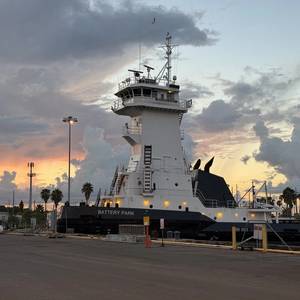
We are well into the discussions advising shipbuilders and operators how the U.S. will create a renaissance of the maritime industry. Federal Legislation, Executive Orders, and new foreign partnerships driving the promise of commercial competitiveness with the leading global shipbuilders. Most of the shipbuilding rhetoric indicates the domestic markets will be left to survive on their own.