

Michael Carter and Steven Henderson grew up together in North Carolina, attended the United States Merchant Marine Academy (USMMA) together, and most recently jointly founded Fleet Zero, a company aiming to develop modular, containerized battery technology for electrifying cargo ships.

A bipartisan group of U.S. senators on Monday urged President Donald Trump to hold fast to trade remedies proposed by his administration to rebuild U.S. shipbuilding and not offer concessions when he meets with Chinese President Xi Jinping.Democratic Senators Tammy Baldwin of Wisconsin and Mark Kelly of Arizona as well as Republicans Tim Scott of South Carolina and Todd Young of Indiana told

The United States and French energy major TotalEnergies said on Monday they would redirect nearly $1 billion from offshore wind leases to U.S. oil and natural gas production.The agreement marks a new strategy in the Trump administration's wide-ranging effort to stymie development of U.S. offshore wind projects, which President Donald Trump has said he finds ugly, costly and inefficient.

HII’s Newport News Shipbuilding division is marking 140 years of service to the US today, January 28, 2026.On Jan. 28, 1886, Collis P. Huntington, a businessman whose investments enabled completion of the U.S. transcontinental railroad, turned his focus to shipbuilding, establishing what was first chartered as Chesapeake Dry Dock and Construction Co.

When we interviewed Saronic Co-Founder and CEO Dino Mavrookas late last year, he insisted that Saronic's mission was to deliver commercially viable autonomous vessels first, and in turn parlay that into a ready package for defense. That vision comes to fruition as Saronic announced a partnership with Hornbeck Offshore Services, Inc.
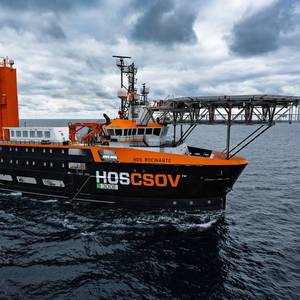
Eastern Shipbuilding Group (ESG) completed and redelivered HOS Rocinante, a first-of-its-kind U.S.-flagged Service Operation Vessel (SOV) converted for Hornbeck Offshore Services.The vessel marks a milestone in the evolution of the U.S. offshore service fleet to be future-ready for both the offshore wind and petro-energy sector demands for broadly capable marine support vessels.
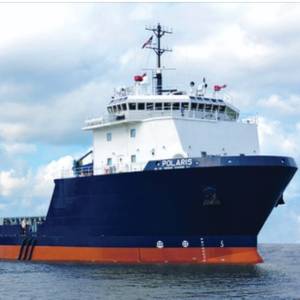
As oil exploration and production goes, so goes the market for Offshore Service Vessels (OSVs) and Platform Supply Vessels (PSVs). Throughout 2025, the prices of oil- which drives exploration and production (E & P), have softened, moving down towards $60/barrel amidst economic uncertainty and a wider than anticipated opening of the taps by major oil producers.

The Whiskey Project Group (TWPG) has officially opened its watercraft manufacturing facility in Edenton, North Carolina, marking a milestone in the company’s U.S. expansion and strengthening domestic production and sustainment capacity for American defense, government and commercial customers.

Prysmian, a provider of cable manufacturing, is investing over $1 billion and adding 385 jobs in an expansion of its facility in Catawba County, Governor Josh Stein announced today. Prysmian, headquartered in Milan, Italy, operates in over 50 countries and specializes in cabling solutions. Its North American headquarters are located near Cincinnati in Highlands Heights, Kentucky.

Duke Energy will terminate its offshore wind lease in the Carolina Long Bay area under a settlement agreement with the U.S. Interior Department and reinvest nearly $129 million in additional power generation capacity in the Carolinas, the department said on Monday.(Reuters)

Helix Energy Solutions and Hornbeck Offshore Services have agreed to combine in an all-stock transaction to create an integrated offshore services company.Under the agreement, Hornbeck shareholders will own about 55% of the combined company, while Helix shareholders will hold around 45%.

U.S. officials are drafting agreements to pay nearly $1 billion to oil major TotalEnergies as compensation for the cancellation of leases for wind farms in federal waters off New York State and North Carolina, the New York Times reported on Tuesday.Under the terms of the proposed settlements, the U.S.