

An unprecedented level of investment in multi-deck vehicle carriers is being driven by tonnage replacement and scale economy strategies, but emphatically also by explosive growth in China’s automotive exports.Global deep-sea automotive shipments, excluding the Russian trade, were estimated at some 15.6 million units in 2025, up 5 percent on 2024, maintaining recent years’ trajectory.

Venezuela's dilapidated oil port terminals are imposing a de facto export cap on the country's resurgent crude production, with tankers having to wait up to 30 days to load because of ageing infrastructure, power outages and quality issues, according to shipping data, sources and documents.The delays are putting roadblocks on a U.S.

Since the Iranian Revolution and overthrow of Shah Mohammad Reza Pahlavi in 1979, the Strait of Hormuz has been a geographic constant as a choke point for which closure has been threatened from time to time but never truly closed. The longstanding assumption of the continued openness of the strait collapsed on February 28, 2026.

China and Russia on Tuesday vetoed a U.N. resolution encouraging states to coordinate efforts to protect commercial shipping in the Strait of Hormuz, calling the measure biased against Iran, while Washington's ambassador to the world body called on "responsible nations" to join the U.S. in securing the waterway.

At first glance, the Iran war appears to be hitting oil and gas with equal force, as missiles, drone strikes and shipping disruptions choke flows through the Strait of Hormuz.But beneath that surface symmetry lies a critical imbalance. The global gas supply chain has fewer rerouting options and less storage capacity than the oil market - making the fallout for gas consumers considerably more

When Saudi Aramco told its oil buyers in a letter this week that it had no clear idea which port it would use for April exports, it laid bare a new reality: Iran, not the United States, holds the key to reopening the global energy market.The letter, sent to Saudi oil buyers around the world, said they might receive oil from the Red Sea, but they might still get it from the Gulf.

Two foreign tankers carrying Iraqi fuel oil were subjected to unidentified attacks inside territorial waters, causing them to catch fire, Iraq's director general of the General Company for Ports Farhan al-Fartousi told Reuters on Wednesday.Iraq evacuated the 25 crew members from the two vessels and fire is still ablaze on both ships, he added.

Singapore-based Seatrium has delivered a next-generation wind turbine installation vessel (WTIV) to Maersk Offshore Wind, following the completion of sea trials and final readiness evaluations.The custom-engineered vessel is designed to install 15+ MW-class offshore wind turbines and is equipped with a 1,900-tonne main crane featuring a 180-metre hook height.

Vard, the Norwegian subsidiary of the Fincantieri Group, has delivered the second Commissioning Service Operation Vessel (CSOV) to Windward Offshore, named Windward Paris.The naming ceremony was held at the delivery yard, Vard Brattvaag in Norway on January 28, 2026.Windward Paris is the second CSOV Vard has delivered to Windward Offshore, one week before contractual delivery date.

Wind propulsion specialist bound4blue has completed the first installation under its agreement with Maersk Tankers, fitting four 24-meter eSAIL suction sails on the medium-range tanker Maersk Trieste as part of a wider fleet retrofit program.The installation marks the first phase of a contract agreed in December 2024 covering 20 eSAIL units across five Maersk Tankers MR vessels
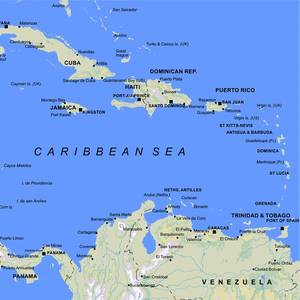
U.S. forces hit another vessel allegedly carrying illegal drugs off the coast of Venezuela on Saturday evening, U.S. President Donald Trump said on Sunday, adding that the U.S. would also start looking at drug trafficking occurring on land.Trump made the comment during a speech at Naval Station Norfolk, next to the Harry S. Truman aircraft carrier.
Terminal operators in a major oil port in east China's Shandong province are set to introduce measures to ban shadow fleet vessels and curb visits by other old tankers, according to an official notice seen by Reuters and a tanker tracker.The measures, to take effect from November 1, would ban vessels using fake IMO numbers and ships of 31 years or older