

Stephen M. Carmel & MarAd are aiming to make this U.S. Maritime Rebuild StickFor anyone who has spent a career in the U.S. maritime industry, the past two years have been unusual by any metric. Maritime has moved from the far margins of federal policy discussions to center stage, with rebuilding American shipbuilding

China's state-owned shipping giant COSCO uses concealed equipment on board its ships to spy on military communications near the coastlines of target nations including the U.S., two senior Trump administration officials said.The officials, who spoke on condition of anonymity to discuss the U.S.

A Chinese supertanker carrying two million barrels of Iraqi crude sailed through the Strait of Hormuz on Wednesday after being stranded in the Gulf for more than two months due to the U.S.-Iran war, LSEG and Kpler ship-tracking data showed.The VLCC Yuan Hua Hu is now anchored off the Gulf of Oman, near where the U.S. Navy has set up a blockade on Iranian vessels, LSEG data showed.

A bipartisan group of U.S. senators on Monday urged President Donald Trump to hold fast to trade remedies proposed by his administration to rebuild U.S. shipbuilding and not offer concessions when he meets with Chinese President Xi Jinping.Democratic Senators Tammy Baldwin of Wisconsin and Mark Kelly of Arizona as well as Republicans Tim Scott of South Carolina and Todd Young of Indiana told

Often debated and long-awaited, The White House released its long-anticipated America’s Maritime Action Plan (MAP), a 40+ page blueprint aimed at what it calls a new “Maritime Golden Age” for the United States.The document, developed under Executive Order 14269, lays out a four-pillar strategy to rebuild domestic shipbuilding capacity, expand the U.S.

Taiwan remained on high alert on Wednesday after China staged massive military drills around the island the previous day, keeping its emergency maritime response centre running as it monitored Chinese naval manoeuvres, the coast guard said.The exercises named "Justice Mission 2025" saw China fire dozens of rockets towards Taiwan and deploy a large number of warships and aircraft near the island
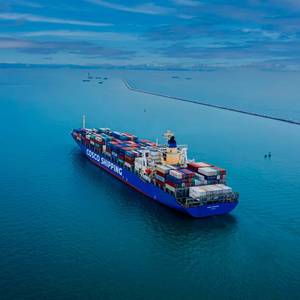
China's trade surplus topped $1 trillion for the first time as manufacturers seeking to avoid President Donald Trump's tariffs shipped more to non-U.S. markets in November, with exports to Europe, Australia and Southeast Asia surging.Shipments to the United States dropped by close to one-third from the same month a year before."The tariff cuts agreed under the U.S.
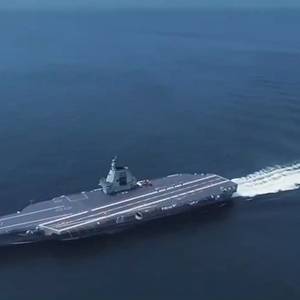
The commissioning of China's latest aircraft carrier this week marks a new chapter in its military modernisation effort but security analysts and regional diplomats say tough challenges lie ahead before it can be made fully operational.President Xi Jinping attended the commissioning and flag-presenting ceremony of the Fujian in Hainan province on Wednesday
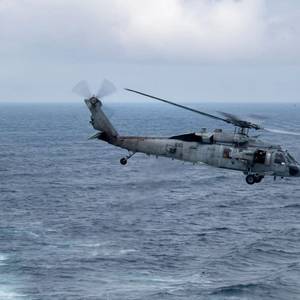
A U.S. Navy helicopter and a fighter jet crashed separately into the South China Sea within the space of an hour during routine operations conducted from the same aircraft carrier on Sunday, the U.S. Navy said, adding all personnel were safe.The incidents came while President Donald Trump was on a visit to Asia.
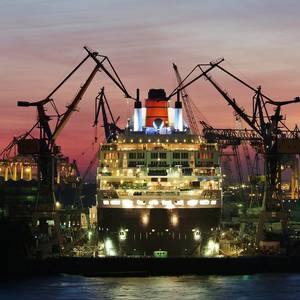
China's sanctions against five U.S.-linked affiliates of South Korean shipbuilder Hanwha Ocean are seen as a warning gesture without immediate impact, and Beijing is unlikely to gain much by expanding them, analysts said on Wednesday.The move, announced on Tuesday when the U.S. and China began charging additional port fees targeting each other's vessels
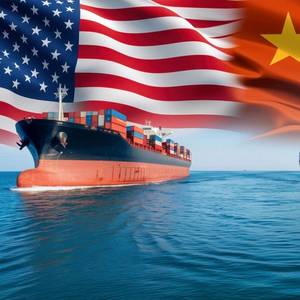
Vessels owned or operated by U.S. firms and individuals - or those built in the United States or that fly the U.S. flag - will be charged additional port fees per voyage starting on October 14, China's transport ministry said.The fees are a counter-measure against upcoming U.S. port fees on Chinese ships, the ministry said on Friday.
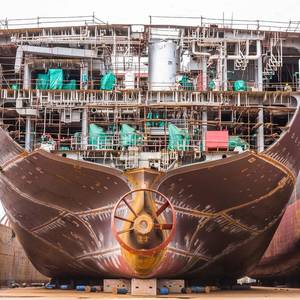
The U.S. is one week away from imposing port fees on certain vessels with links to China, a move expected to cost the top 10 carriers $3.2 billion next year as President Donald Trump seeks to address China's growing dominance on the high seas."While some observers believe the October 14 deadline may be extended - or even scrapped - as part of broader negotiations