

Many claim to have ‘saltwater in their veins,’ but all you have to do is walk into the corner office of John McDonald, the new Chairman and CEO of the American Bureau of Shipping (ABS), to see that him saying “I was born into maritime” is not hyperbole. The first thing that greets you is a Dusan Kadlec nighttime painting of the Brooklyn Bridge

From the killer shark of "Jaws" to the tornado-tossed predators of the "Sharknado" movies, films long have portrayed sharks as objects of summer fear. But when a shark cuts through the waters off the U.S. East Coast, it now may be doing more than hunting. It may also be gathering data that helps scientists understand the potential intensity of a hurricane before it makes landfall.

SciencoFAST launched the MarineFAST Slide-In, a Marine Sanitation Device with a rail-mounted installation system that allows the unit to either slide directly into existing hull tanks and slide back out, or drop into an existing tank or space for easy inspection or maintenance.“The MarineFAST Slide-In was developed to solve one of the most common challenges in marine sanitation—tight equipment

Oil prices gained more than 1% on Monday after attacks by the U.S. and Iran underscored the fragility of their interim peace deal, while cautious hopes of a continued recovery in energy shipping through the Strait of Hormuz limited gains.Iranian and U.S. technical teams working on the implementation of an interim peace deal are expected to meet in Doha in the coming days

The Arab Shipbuilding and Repair Yard Company (ASRY) has completed its 200th offshore rig project following the delivery of the VALARIS 250 (Bob Palmer) offshore rig project.The milestone was marked during a ceremony attended by executives and officials from ASRY and representatives from Valaris.

Windward, thealeader in mission-grade Maritime AI, announced the appointment of Robert (Bob) Sharp, retired U.S. Navy Vice Admiral, as Chief Maritime Intelligence Officer (CMIO). Sharp brings decades of experience at the highest levels of the U.S. defense and intelligence establishment, and will work directly with Ami Daniel, CEO and Co-Founder

Strategic Marine and Mainprize Offshore have signed a Protocol of Delivery and Acceptance (PODA) for the MO15 and MO16 crew transfer vessels (CTVs), extending a multi-vessel offshore renewables vessel program announced in 2024.The agreement follows the earlier delivery of the MO10, MO11, MO12 and MO14 Supa Swath vessels.

Iran's publication of a new map asserting its control over the Strait of Hormuz risks extending an already punishing ordeal for thousands of mariners trapped on ships in the Gulf.More than 20,000 sailors are stuck on around 2,000 vessels in the Gulf, many of them unable to leave ship, lacking adequate supplies of food and fresh water, and fearful of an uncertain future at sea in a war zone.

Crew communications on board workboats in harsh marine environments are subject to a variety of challenges. Background noise from loud engines, shock and vibration pounding through rough water, high wind noise and turbulence at speeds of 55-60 knots, and the highly corrosive nature of the marine environment - can render workboat crew communications all but impossible.

Strategic Marine has delivered the first two Supa Swath crew transfer vessels (CTVs) to Mainprize Offshore, marking the initial handover under a multi-vessel contract signed at in June 2024.The deliveries represent the first two vessels in a program covering six Supa Swath vessels, with options for a further six units.

The count down is on for this year’s CMA Shipping 2026 conference and exhibition taking place from 10–12 March 2026 at the Hilton Stamford Hotel in Stamford, Connecticut. Organised by the Connecticut Maritime Association (CMA) and Informa Markets, this flagship event is set to bring together the most influential voices in the maritime industry for three days of industry networking
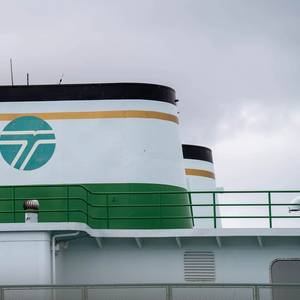
Washington State Ferries reported that its 17-vessel service was dinged by the removal of the ferry Wenatchee, which has been taken out of service due to a mechanical issue involving one of its electrical subsystems discovered last week.According to WSF, the vessel’s engine crew and maintenance teams are working to remove and replace the damaged equipment, which remains under warranty.