

China's state-owned shipping giant COSCO uses concealed equipment on board its ships to spy on military communications near the coastlines of target nations including the U.S., two senior Trump administration officials said.The officials, who spoke on condition of anonymity to discuss the U.S.

A bipartisan group of U.S. senators on Monday urged President Donald Trump to hold fast to trade remedies proposed by his administration to rebuild U.S. shipbuilding and not offer concessions when he meets with Chinese President Xi Jinping.Democratic Senators Tammy Baldwin of Wisconsin and Mark Kelly of Arizona as well as Republicans Tim Scott of South Carolina and Todd Young of Indiana told

China and Denmark renewed a memorandum of understanding on cooperation in green maritime technology and shipbuilding during a meeting between the two nations' industry ministers in Beijing on Tuesday, China's industry ministry said in a statement.China is willing to jointly conduct research and development with Denmark on low-carbon and zero-carbon fuel-powered ship technologies and explore

Maritime 2026 opened with a bang between the announcement of Battleships, Venezuela, shadow fleets and yes, U.S. shipbuilding. The commercial building issue may come down to strategic patience or the adaptability to evolve through new technology while ignoring historic, old tactics.

Taiwan remained on high alert on Wednesday after China staged massive military drills around the island the previous day, keeping its emergency maritime response centre running as it monitored Chinese naval manoeuvres, the coast guard said.The exercises named "Justice Mission 2025" saw China fire dozens of rockets towards Taiwan and deploy a large number of warships and aircraft near the island

China launched its most extensive war games around Taiwan on Monday to showcase Beijing's ability to cut off the island from outside support in a conflict, testing Taipei's resolve to defend itself and its arsenal of U.S.-made weapons.The Eastern Theatre Command said it had deployed troops, warships
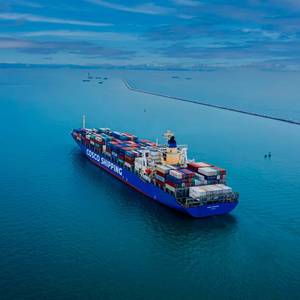
China's trade surplus topped $1 trillion for the first time as manufacturers seeking to avoid President Donald Trump's tariffs shipped more to non-U.S. markets in November, with exports to Europe, Australia and Southeast Asia surging.Shipments to the United States dropped by close to one-third from the same month a year before."The tariff cuts agreed under the U.S.
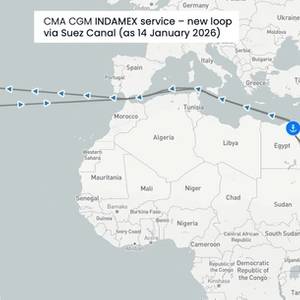
Major carrier CMA CGM has announced its INDAMEX service will transit Suez Canal on fronthaul and backhaul voyages between India/Pakistan and US East Coast in a notable step towards a largescale return of container ships to the Red Sea region.The first vessel to complete a full service loop via Suez Canal will be CMA CGM Verdi, sailing from Karachi to New York on 15 January.
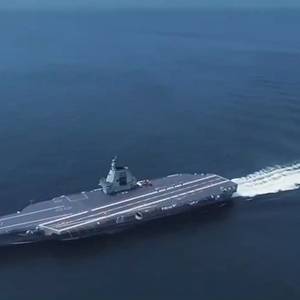
The commissioning of China's latest aircraft carrier this week marks a new chapter in its military modernisation effort but security analysts and regional diplomats say tough challenges lie ahead before it can be made fully operational.President Xi Jinping attended the commissioning and flag-presenting ceremony of the Fujian in Hainan province on Wednesday
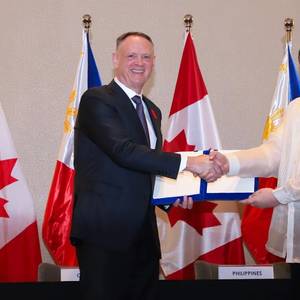
The Philippines and Canada signed a pact on Sunday for their armed forces to train on each other's soil, boosting defense cooperation to tackle common security concerns in the Indo-Pacific region.Canada's first such deal in the region, the Status of Visiting Forces Agreement (SOVFA) takes to five the number of accords on troops Manila has concluded with allies
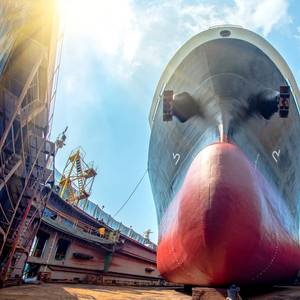
China's sanctions on U.S.-linked units of shipbuilder Hanwha Ocean threaten to impact ambitious plans for shipbuilding cooperation between Seoul and Washington by disrupting supplies of Chinese equipment and materials, officials in Seoul said on Friday.Beijing announced the sanctions on Tuesday as the U.S.
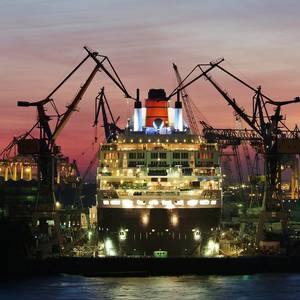
China's sanctions against five U.S.-linked affiliates of South Korean shipbuilder Hanwha Ocean are seen as a warning gesture without immediate impact, and Beijing is unlikely to gain much by expanding them, analysts said on Wednesday.The move, announced on Tuesday when the U.S. and China began charging additional port fees targeting each other's vessels