
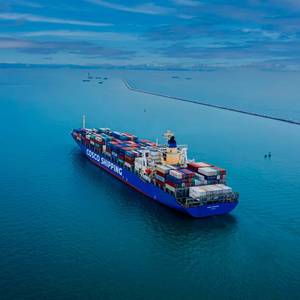
China's trade surplus topped $1 trillion for the first time as manufacturers seeking to avoid President Donald Trump's tariffs shipped more to non-U.S. markets in November, with exports to Europe, Australia and Southeast Asia surging.Shipments to the United States dropped by close to one-third from the same month a year before."The tariff cuts agreed under the U.S.
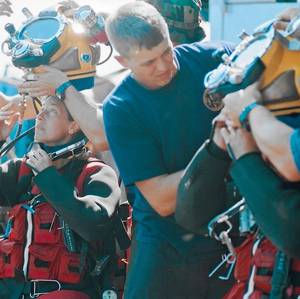
By Captain Bobbie Scolley, U.S. Navy (ret.) and Rear Admiral Tim Gallaudet, U.S. Navy (ret.)For more than six decades, spanning from 1905 to the late 1970s, the U.S. Navy’s diving apparatus for deep ocean operations and salvage remained fundamentally unchanged. During this period, the demographic of navy divers also saw little alteration.

Following the deaths of hundreds on cattle on the livestock carrier Spiridon II last year, Animal Welfare Foundation reports that Turkish importers are taking legal action against the livestock dealer.The Spiridon II was stranded off the Turkish coast for several weeks after a month-long voyage from Uruguay when the consignment of around 2,900 dairy cattle was rejected by local authorities.

A fire broke out on the Panama-flagged livestock carrier North Star 1 while it was docked at the Port of São Sebastião, Brazil, on 3 March.Some of the 28 crew onboard required medical attention due to smoke inhalation, and the 2,600 cattle onboard, destined for Turkey, were disembarked.The fire was reported to have started in a provisions store containing livestock fodder.

The 116-meter livestock carrier Blue Ocean A was towed to safety after suffering engine failure in adverse conditions on January 28.The Saint Kitts and Nevis-flagged vessel was sailing off the island of Saint Peter, Italy, on its way to Spain with 33 crew on board when a request for help was sent.

A global network of 36 animal welfare and protection organizations around the world has issued an urgent call to the IMO to introduce binding international regulations for livestock carriers, warning that the ageing fleet poses serious and escalating risks to human life, animal welfare, public health, and the marine environment.
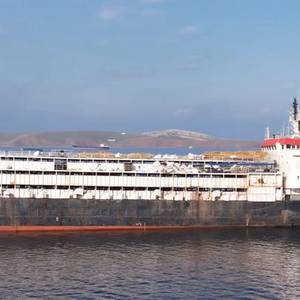
The recent rejection of around 2,900 dairy cattle on the Spiridon II raises animal welfare and pollution concerns when, after a long sea voyage, the laden vessel has again had to return to sea.The 52-year-old livestock carrier has left Turkey after its cargo was rejected by local authorities.
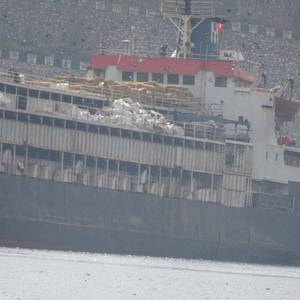
The 52-year-old livestock carrier Spiridon II rejected by Turkey has now left the area after its cargo of over 2,800 cows was rejected by local authorities.Court transcripts translated by Animal Welfare Foundation indicate that 58 cows died in transit to Turkey, 140 cows had miscarriages in transit, 50 newborn calves were present on board, but another 90 are unaccounted for.

The 52-year-old livestock carrier Spiridon II remains in quarantine off Turkey with around 20 crew and 2,853 cows onboard.Having departed from Montevideo (Uruguay) bound for Turkey on September 19 with 2,901 heifers, some of which may be pregnant, the Spiridon II is, over 50 days later, still unable to deliver the animals to shore.
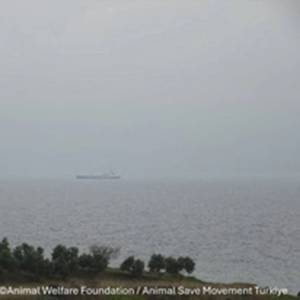
The 52-year-old MV Spiridon II loaded 2901 cattle has been stranded off Turkey, denied permission to unload due to issues with the animals’ ear tag.According to local media, the Turkish Ministry of Agriculture and Forestry inspected the cattle when the vessel arrived but denied permission to land the animals because approximately 500 of the ear tags did not match documentation on the ship.
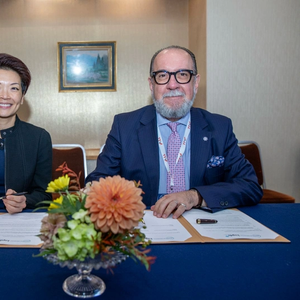
The Global Centre for Maritime Decarbonisation (GCMD) and the International Association of Ports and Harbours (IAPH) have signed a two-year partnership agreement aimed at accelerating the decarbonization of the maritime sector.IAPH has a global port network comprising more than 200 port authorities and operators in over 85 countries.
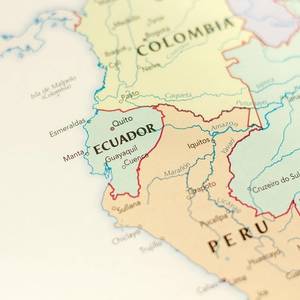
Ecuadorian activist María Chóez, a vocal advocate for the families of missing tuna fishers, has been murdered.According to witnesses cited by NGO Human Rights at Sea, the 48-year-old was shot in the head by occupants of a vehicle on September 25 in Manta, Ecuador.She was reported as being a family member of one of the 21 fishermen from the Patricia Lynn tuna vessel that went missing on December