

MacGregor has received an order from Nantong Rainbow Offshore & Engineering Equipment to supply motion-compensated cranes and gangways for four additional Skywalker-class commissioning service operation vessels being built for IWS Fleet.The equipment package will include three-dimensional motion-compensated cranes and MacGregor's Horizon gangway systems.

Integrated Wind Solutions (IWS) subsidiary IWS Fleet has ordered four Skywalker-class commissioning service operation vessels (CSOVs) for a combined firm yard price of around $301 million (€260 million), expanding its owned fleet from six to 10 CSOVs.The four vessels, priced at around $75 million (€65 million) each

U.S. natural gas futures rose to a near four-week high on Wednesday, supported by forecasts for hotter weather and firm oil prices, while investors awaited a federal storage report due this week. Front-month gas futures for September delivery on the New York Mercantile Exchange rose 9.6 cents, or 3.5%, to $2.87 per million British thermal units, their highest level since July 24.

U.S. natural gas futures fell about 4% to a six-week low on Thursday on expectations gas flows to liquefied natural gas (LNG) export plants will remain low through late August due to planned maintenance at Freeport LNG's plant in Texas, and after the release of a federal report showing last week's storage build was much bigger than expected.

Wärtsilä Water & Waste, part of technology group Wärtsilä, has introduced a flexible and modular grease trap product line designed to separate fats, oils and grease from galley wastewater streams onboard merchant vessels, cruise ships and offshore platforms. The solution supports improved wastewater management while contributing to protection of the marine environment by capturing fats, oils

The American Association of Port Authorities (AAPA) Board of Directors announced the appointment of Sang Yi as President and Chief Executive Officer (CEO), effective May 4.Most recently, Yi served as Deputy Administrator of the U.S. Department of Transportation’s Maritime Administration (MARAD), where he oversaw key programs supporting the nation’s commercial and strategic maritime infrastructure.

Regal Rexnord Corporation announced that its Board of Directors has appointed Aamir Paul to serve as Chief Executive Officer (CEO), commencing no later than July 1, 2026, upon the conclusion of his responsibilities with his current employer, Schneider Electric SE. The Board has also determined that Mr.

U.S. natural gas futures fell for a second straight session on Monday, as ample supplies kept pressure on the market despite forecasts for hotter weather in the coming weeks. On its first day as the front-month, gas futures for August delivery on the New York Mercantile Exchange fell 8.2 cents, or 2.5%, to $3.20 per million British thermal units. The contract is down 2.7% so far this month.
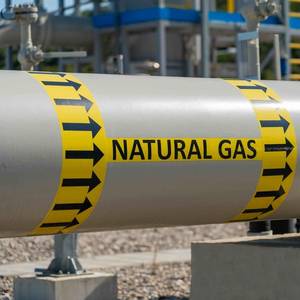
U.S. natural gas futures eased about 1% on Thursday on near-record output and ample amounts of gas in storage despite near-historic flows to liquefied natural gas (LNG) export plants and forecasts for colder weather and higher demand over the next two weeks than previously expected.

U.S. natural gas futures climbed about 4% on Wednesday on near-record flows to liquefied natural gas export plants and forecasts for higher demand than previously expected as the weather turns colder than normal going into December.Front-month gas futures for December delivery on the New York Mercantile Exchange rose 17.9 cents, or 4.1%, to settle at $4.