

Tim Mooney is the third-generation family member at the helm of the iconic Fire Island Ferries. While the company’s primary focus has been moving people to and fro, from the Long Island, NY mainland to the Fire Island barrier communities and beaches, the business has evolved and grown since its start in 1948 via acquisition and organic growth.

Shipments of iron ore from U.S. ports on the Great Lakes decreased 1.2 percent from last year to 4.6 million tons in September. Shipments were below the month’s 5-year average by 11.4 percent.Year-to-date, the iron ore trade stands at 32.2 million tons, a 2.4 percent increase compared to 2025. Through September, iron ore loadings are 6.

U.S. shipments of limestone on the Great Lakes increased 1.8 percent from last year to 2.7 million tons. Limestone cargos were below the month’s 5-year average by 5.8 percent. Year-to-date, the limestone trade stands at 15.9 million tons, a decrease of less than one percent compared to 2025 and 3.2 percent below the month’s 5-year average.

Shipments of iron ore on the Great Lakes totaled 5.1 million tons in July, an increase of less than one percent compared to 2025. Shipments were below the month’s 5-year average by 7.2 percent. Year-to-date, the iron ore trade stands at 22.5 million tons, an increase of 3.3 percent compared to a year ago. Iron ore shipments were 5.

U.S. shipments of limestone on the Great Lakes increased to 3.1 million tons in July, an 8.7 percent increase compared to last year. The trade was also above the month’s 5-year average by 3.2 percent.Year-to-date, the Lakes limestone trade stands at 10.1 million tons, a decrease of 3 percent compared to 2025 and 4.2 percent below the month’s 5-year average.

Shipments of iron ore on the Great Lakes increased 4.5 percent from June of last year to 5.1 million tons. Shipments were a near match to the month’s 5-year average.Year-to-date, the iron ore trade stands at 17.3 million tons, an increase of 4.2 percent compared to 2025. Iron shipments are below their 5-year average by 4.6 percent for the first six months of the year.

U.S. shipments of limestone on the Great Lakes increased 4.5 percent from June 2025 to 3 million tons. This June’s U.S. loadings were also above the month’s 5-year average by 6.9 percent.Year-to-date, the Lakes U.S. limestone trade stands at nearly 7 million tons, a decrease of 7.5 percent compared to last year and 7.2 percent below the month’s 5-year average.U.S.

Limestone shipments from U.S. ports decreased 27.5 percent compared to April 2025 to 1.1 million net tons. Loadings were also below the month’s 5-year average by 35.4 percent. Year-to-date, the U.S. limestone trade stands at 1.2 million tons, a decrease of 26.6 percent from last year and 31.9 percent below the 5-year average.

Iron ore shipments on the Great Lakes in March 2026 decreased 23.5 percent from a year ago. Loadings were also below the month’s 5-year average by 35.1 percent. The iron ore trade stands at 2.7 million tons, a decrease of 7.7 percent compared to 2025. For the first three months of the year, iron ore shipments are 21.2 percent below their 5-year average.

Iron ore shipments on the Great Lakes totaled 2 million tons in January, a near match to 2025. Loadings were below the month’s 5-year average by 14.5 percent.Since 1880, Lake Carriers’ has represented the U.S.-flag Great Lakes fleet, which today can move more than 90 million tons of cargos annually that are the foundation of American industry, infrastructure, and power: iron ore, stone, coal

Limestone shipments on the Great Lakes totaled 26.6 million tons in 2025, a decrease of 5.9 percent compared to the previous year. 2025’s loadings were below the trade’s 5-year average by 6.7 percent.Shipments from U.S. quarries decreased 5 percent from 2024 to 21.7 million tons. Loadings from U.S. quarries were also 5 percent below their 5-year average.
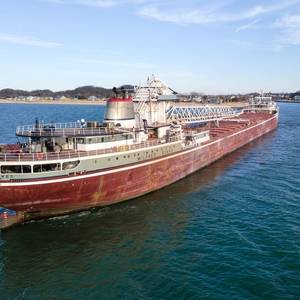
Shipments of limestone on the Great Lakes totaled 3.2 million tons in October, a decrease of 3.8 percent compared to 2024. Limestone cargos were also below the month’s 5-year average by 10.7 percent.Loadings from U.S. quarries totaled 2.6 million tons, a 6.1 percent reduction. Shipments from Canadian quarries increased 6.8 percent to 626,805 tons.Year-to-date, the limestone trade stands at 22.