

Ongoing fleet renewal by niche player Cool Carriers indicates continuing competitiveness at scale of the specialized, pallet-optimized reefership.Not so long ago, it seemed that the unrelenting march of containerization and ever-widening influence of the powerful ocean container line entities would finally usurp the conventional, breakbulk refrigerated cargo vessel.
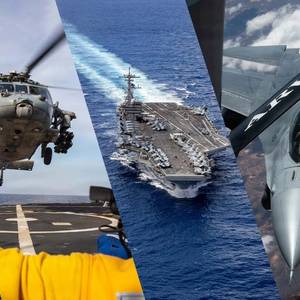
The U.S. military said on Monday it destroyed six Iranian small boats and intercepted Iranian cruise missiles and drones as Tehran sought to thwart a new U.S. naval effort to open shipping through the Strait of Hormuz.U.S. President Donald Trump launched the operation, called Project Freedom, on Monday as he sought to wrest control of the critical waterway from Iran

Starting in February and continuing into September 2026, the Antwerp office of COLI Group completed four project cargo shipments for their clients, end-clients, suppliers and partners in eight countries, including a used mobile crane, an industrial compressor, a metro railcar and a set of 90-tonne generators.

ABS has launched Eagle CRoute, an online tool designed to help containership operators improve operational flexibility through route-based lashing reduction factor calculations.Changing port rotations, blank sailings, evolving stowage plans and shifting geopolitical conditions are increasing pressure on operators to make faster loading decisions.

The warning came booming over the airwaves, in a voice unmistakably from the American south: "Warship! Get out of our waters!"Norwegian Lieutenant Thomas Johannsen and his sailors were preparing for a simulated boarding operation -- a core mission for their NATO maritime unit. But with so many other war games happening in the area, the crew was picking up unrelated chatter from a nearby vessel.

Lloyd’s Register (LR) has helped establish a new industry consortium aimed at ending the fragmented way container stowage and lashing data is shared across the sector. The Lashing Exchange Format (LXF) Consortium brings together major classification societies and key software developers to create a common digital standard for transferring data used in container securing arrangements and lashing

Rising temperatures and humidity are increasingly compromising cargo integrity during transit, making prevention essential for operational resilience.Climate change is no longer a distant concern for shipping. Across Southeast Asia, rising temperatures and humidity, and more volatile weather patterns are increasingly affecting cargo integrity during transit.

MacGregor has launched its new Balanced Lashing System, a solution designed to solve the long-standing industry challenge of uneven load distribution in container ship lashings.On conventional container ships, lashings often share loads unevenly, with upper lashings bearing the majority of the stress while lower lashings operate at only about half of their safe capacity.
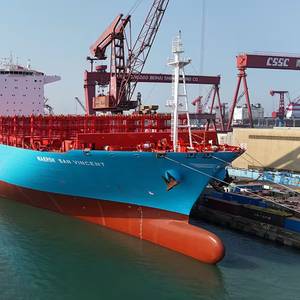
A.P. Moller - Maersk (Maersk), in close collaboration with the owners, is retrofitting around 200 vessels in its time-chartered fleet as part of a large-scale program involving 50 different shipowners.The main aim of the program is to reduce the slot cost by improving fuel efficiency and cargo-carrying capacity leading to a decrease in both cost and greenhouse gas emissions.

The New Zealand Transport Accident Investigation Commission (TAIC) has released its findings into the serious injury that occurred on the bulk carrier, Thor Nitnirund, in the Cook Strait on March 20, 2025.The Commission’s report highlights the need for effective safety management systems, proper planning of lifting operations, and vigilance around high-risk areas during deck work.

Nippon Yusen Kabushiki Kaisha (NYK), NYK Trading Corporation, and Rexxam have jointly introduced “eco CLASPER”, a newly developed car lashing belt made from 99.5% recycled polyester fiber.On March 26, the three companies completed the installation of the belts on the newly built pure car and truck carrier Elder Leader.
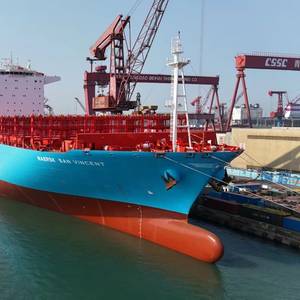
In a large-scale program involving 50 different shipowners, A.P. Moller - Maersk is retrofitting around 200 vessels in its time-chartered fleet. The main aim of the program is to reduce the slot cost by improving fuel efficiency and cargo-carrying capacity leading to a decrease in both cost and greenhouse gas emissions.