

The U.S. Coast Guard commissioned its newest Fast Response Cutter, USCGC Vincent Danz (WPC 1162), for official entry into its service fleet during a ceremony held in New York City on Friday.The Vice Commandant of the Coast Guard, Vice Adm. Thomas Allan, presided over the ceremony. Members of the Danz family were also in attendance, including the cutter's sponsor, Angela Donohue

A joint letter organized by the American Biofuels Maritime Initiative (ABMI) has been sent to U.S. Secretary of State Marco Rubio ahead of this week's negotiations at the IMO MEPC 84 meeting in London. The effort is aimed at ensuring that global maritime decarbonization also translates into durable new demand for American biofuels and additional income streams for U.S.

The U.S.-sanctioned tanker Rich Starry made its way back to the Strait of Hormuz on Wednesday after exiting the Gulf the day before, shipping data showed, failing to break through a U.S. blockade on vessels calling at Iranian ports.U.S. President Donald Trump announced the blockade on Sunday after weekend peace talks in Islamabad between the U.S. and Iran failed to reach a deal.

When Saudi Aramco told its oil buyers in a letter this week that it had no clear idea which port it would use for April exports, it laid bare a new reality: Iran, not the United States, holds the key to reopening the global energy market.The letter, sent to Saudi oil buyers around the world, said they might receive oil from the Red Sea, but they might still get it from the Gulf.

With a growing focus on mitigating climate change and progressing toward the International Maritime Organization’s (IMO) 2050 net-zero target, the marine sector is under intense pressure to decarbonize. Today, maritime transport emits nearly one billion tons of CO2 annually, representing roughly 2-3% of all energy-related carbon emissions worldwide .
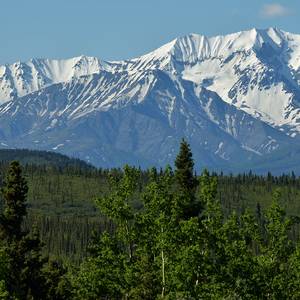
Canada's Prime Minister Mark Carney signed an agreement with Alberta's premier on Thursday that rolls back certain climate rules to spur investment in energy production, while encouraging construction of a new oil pipeline to the West Coast.Under the agreement, the federal government will scrap a planned emissions cap on the oil and gas sector and drop rules on clean electricity in exchange for
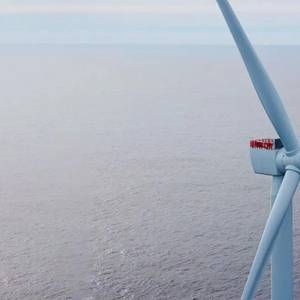
Offshore wind developer Orsted won shareholder approval on Friday for a $9.4 billion emergency rights issue to help fund U.S. projects thrown into uncertainty by President Donald Trump's opposition to the renewable energy source.The stakes are high for the Danish state-controlled firm
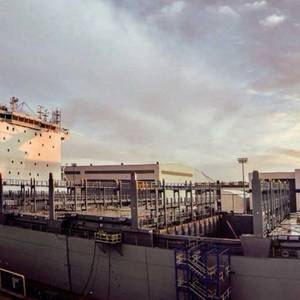
Hanwha Shipping, a U.S. subsidiary of Korean shipbuilder Hanwha Ocean, on Tuesday said it ordered an LNG carrier valued at roughly $252 million from its own Pennsylvania-based unit Hanwha Philly Shipyard.Under the agreement, the ship will be built in Korea and flagged in the United States. It is slated for delivery in the first half of 2028.
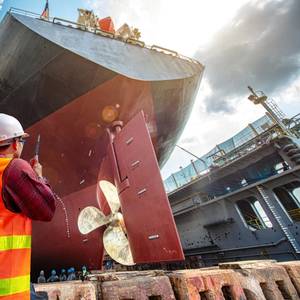
Chinese shipyards’ market share has dropped from 72% to 52% in the first half of 2025 amid growing concerns over the impact of US Trade Representative (USTR) port fees on Chinese ships, according to the latest report from BIMCO, the world’s largest shipping association.USTR port fees, set to take effect in October 2025, will impact both Chinese owners and operators

The world's largest car carrier making its maiden voyage is generally cause for celebration. But in the case of Chinese car manufacturer BYD and its mammoth new BYD Shenzhen -- a 16,300 dwt, 9200 CEU, LNG Dual-Fuel PCTC that measures 219.9 x 37.7m with a 9.2m draft -- the ship instead represents the flooding of a market with cheap electric vehicles (EVs).
Former Iranian Economy Minister Ehsan Khandouzi has said that tankers and LNG cargoes should only transit the Strait of Hormuz with Iranian permission and this policy should be carried out from "tomorrow [Wednesday] for a hundred days."It was not immediately clear whether Khandouzi was echoing a plan under theIranian establishment's consideration or sharing his personal opinion.
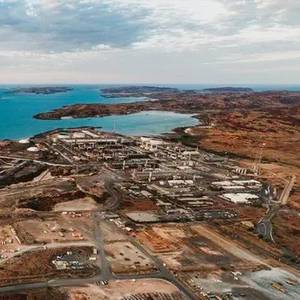
Australia conditionally approved on Wednesday a request by Woodside Energy to extend until 2070 the life of its North West Shelf gas plant, following a six-year review dogged by delays, appeals and backlash from green groups.The facility on the Burrup peninsula in Western Australia is the country's oldest and largest liquefied natural gas plant and a key supplier to Asian markets