

Brazil's state-controlled oil company Petrobras has signed a $427 million contract through its logistics subsidiary Petrobras Transporte (Transpetro) with the Rio Grande Shipyard for the construction of four medium range tankers as part of a broader program to renew and expand its shipping fleet.

Australian mining company Fortescue has signed an agreement with Belgian shipping and cleantech group CMB.TECH to charter up to 12 ammonia-capable bulk carriers, stepping up efforts to decarbonize maritime transport and support the development of green ammonia as a marine fuel.Under the agreement, Fortescue will charter 12 Newcastlemax dry bulk vessels, each with a carrying capacity of 210

Dorian LPG took delivery of its 93,000 cubic meter (cbm) dual-fuel newbuilding named Areion an LPG and ammonia very large gas carrier (VLGC/AC) from Hanwha Ocean Heavy Industries Co., Ltd. at the Okpo Shipyard in South Korea. Areion will commence employment on charter under the Helios LPG Pool, an entity jointly controlled by Dorian LPG Ltd and MOL Energia Pte Ltd.

When Saudi Aramco told its oil buyers in a letter this week that it had no clear idea which port it would use for April exports, it laid bare a new reality: Iran, not the United States, holds the key to reopening the global energy market.The letter, sent to Saudi oil buyers around the world, said they might receive oil from the Red Sea, but they might still get it from the Gulf.

The barge Defiant was refloated from the Castillo San Felipe del Morro shoreline in San Juan Harbor, Wednesday at approximately 2:22 a.m., just before high tide.Salvage crews and tugboat operators prepositioned three tugboats and completed all the preparations, including the pressurization of all cargo tanks, voids and compartments in the barge.

Mitsui O.S.K. Lines (MOL) has taken delivery of a new liquefied petroleum gas (LPG) dual-fuel very large gas carrier (VLGC), Energia Grandeur.The vessel was ordered by MOL group company MOL Energia from Hyundai Samho Heavy Industries, with delivery taking place off Mokpo port in South Korea on January 29, 2026.

Hafnia has taken delivery of the ECOMAR GIRONDE, the final vessel in its four-ship ECOMAR dual-fuel methanol newbuilding program developed in joint venture with France’s Socatra, completing the newbuilding series.Built at Guangzhou Shipyard International in China, ECOMAR GIRONDE is a 49,800-deadweight dual-fuel, methanol-capable Chemical IMO II medium-range tanker.

Seatrium delivered FREDERICK PAUP to Manson Construction Co. Built at Seatrium’s Brownsville Texas yard, the Jones Act-compliant vessel is the largest self-propelled hopper dredger in US history.Key highlights:Largest in the U.S. – 420’ length x 81’ beam, with a 15,000+ cubic yard hopper capacityPowerful and Agile – Self-propelled with 25,000 horsepower, triple azimuthing stern drives

As global demand for data storage and processing accelerates — driven by cloud computing, streaming media, and the explosive growth of artificial intelligence — the physical footprint of data centers has become a growing challenge. Land-based facilities face mounting constraints: limited space, water scarcity, grid congestion, long permitting timelines and rising community opposition.

The U.S. inland waterways don’t just move cargo — they move people into long-term, well-paid careers. At a time when trucking and rail struggle with shortages, turnover, and burnout, inland waterways operators quietly offer something different: a job you can start without experience, a career you can grow into, and a paycheck that gets better every step of the way.
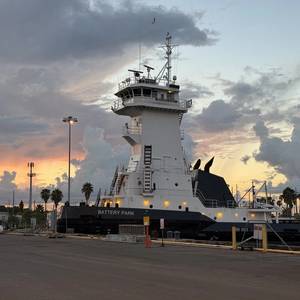
We are well into the discussions advising shipbuilders and operators how the U.S. will create a renaissance of the maritime industry. Federal Legislation, Executive Orders, and new foreign partnerships driving the promise of commercial competitiveness with the leading global shipbuilders. Most of the shipbuilding rhetoric indicates the domestic markets will be left to survive on their own.
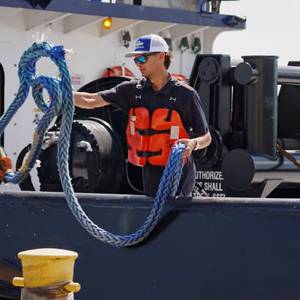
The American Waterways Operators, the trade association of the American tugboat, towboat and barge industry, has released a new video on the industry's contributions to U.S. national and homeland security.The two-minute video, The Tugboat, Towboat and Barge Industry: Supplying America, Securing America, notes that while the mariners who transport cargo and facilitate commerce on America's rivers