

McAllister Towing received the tug Mary McAllister from Washburn & Doughty Associates, Inc. in Maine. Mary McAllister is the sixth in a seven-tug series of American Bureau of Shipping-classed and certified 84-metric-ton bollard pull, low-emission tractor tugs. Mary McAllister is powered by CAT Tier IV engines producing 6,770 horsepower.

Master Boat Builders christened Marauder, the first vessel in an eight-tug construction program for Maritime Partners, marking a key milestone for the Gulf Coast shipbuilder and the growing fleet operator.The christening ceremony was held at the National Maritime Museum of the Gulf in Mobile, Ala.

U.S. President Donald Trump said on Tuesday he would briefly pause an operation to help escort ships through the Strait of Hormuz, citing progress toward a comprehensive agreement with Iran."We have mutually agreed that, while the Blockade will remain in full force and effect, Project Freedom ...
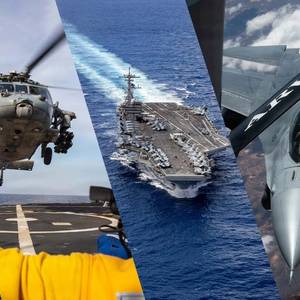
The U.S. military said on Monday it destroyed six Iranian small boats and intercepted Iranian cruise missiles and drones as Tehran sought to thwart a new U.S. naval effort to open shipping through the Strait of Hormuz.U.S. President Donald Trump launched the operation, called Project Freedom, on Monday as he sought to wrest control of the critical waterway from Iran

U.S. Central Command said it intercepted a merchant vessel trying to get through the blockade of Iran on Saturday.The ship, identified as the Sevan, was part of a 19-vessel "shadow fleet" transporting Iranian oil and gas products to foreign markets, the U.S. military said.Central Command said it was intercepted in the Arabian Sea by a U.S.

When Saudi Aramco told its oil buyers in a letter this week that it had no clear idea which port it would use for April exports, it laid bare a new reality: Iran, not the United States, holds the key to reopening the global energy market.The letter, sent to Saudi oil buyers around the world, said they might receive oil from the Red Sea, but they might still get it from the Gulf.

Explosive-laden Iranian boats appear to have attacked two fuel tankers in Iraqi waters, setting them ablaze and killing one crew member on Wednesday, after projectiles struck four vessels in Gulf waters, said port, maritime security and risk firms.The latest attacks on ships linked to the U.S. and Europe mark an escalation in the conflict between Iran and U.S.

Two foreign tankers carrying Iraqi fuel oil were subjected to unidentified attacks inside territorial waters, causing them to catch fire, Iraq's director general of the General Company for Ports Farhan al-Fartousi told Reuters on Wednesday.Iraq evacuated the 25 crew members from the two vessels and fire is still ablaze on both ships, he added.

The U.S. Navy has refused near-daily requests from the shipping industry for military escorts through the Strait of Hormuz since the start of the war on Iran, saying the risk of attacks is too high for now, according to sources familiar with the matter.The Navy's assessments spell continued disruption to Middle East oil exports and reflect a divergence from President Donald Trump’s statements

In December of 2025, the U.S. Coast Guard announced the award of two contracts to build up to six Arctic Security Cutter (ASC) icebreakers. The announcement declaring the vessels would be built between the United States and Finland in a major step forward for America’s national security in the Arctic region. The decision process encompassed more than the security of the Arctic passage.

India has seized three U.S.-sanctioned tanker ships linked to Iran this month and stepped up surveillance in its maritime zone to curb illicit trade, a source with direct knowledge of the matter said on Monday.India aims to prevent its waters from being used for ship-to-ship transfers that obscure the origin of oil cargoes, the source added.
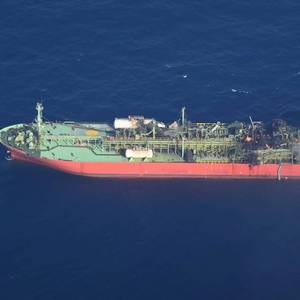
The LPG-laden tanker MV Falcon was on fire and adrift on Saturday off the coast of Yemen, after it reported an explosion that forced members of its crew to abandon the vessel, the European Union's naval force Aspides said in a statement.The cause of the explosion was unclear but most likely an accident, according to initial indications, Aspides said.