

Anduril Industries plans to invest $3.7 billion in a new Maryland shipyard to manufacture Virginia-class submarine components and other subsea systems, alongside a U.S. Navy contract worth up to $2.9 billion tied to production targets.The Arsenal-2 facility will be built at Tradepoint Atlantic in Sparrows Point, Baltimore County

McAllister Towing received the tug Mary McAllister from Washburn & Doughty Associates, Inc. in Maine. Mary McAllister is the sixth in a seven-tug series of American Bureau of Shipping-classed and certified 84-metric-ton bollard pull, low-emission tractor tugs. Mary McAllister is powered by CAT Tier IV engines producing 6,770 horsepower.

Introduction. Looking back at history one could argue that it was French author Jules Verne in his book “20,000 Leagues Under the Sea”, published in 1869, who was speculating about a new power source much in the same out of the box thinking that H.G. Wells employed when he wrote about inter-planetary flight in “War of the World’s.
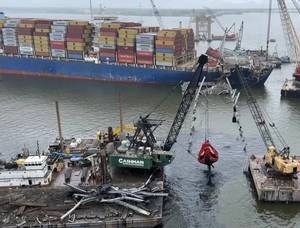
The National Transportation Safety Board said on Tuesday that a loose wire led to a power failure on the cargo ship Dali that crashed into Baltimore's Francis Scott Key Bridge in March 2024, killing six people and wrecking the bridge.The NTSB is holding a hearing in Washington to determine the probable cause of the incident that killed six construction workers on the bridge.

Gecko Robotics announced a partnership with Anduril Industries to help accelerate American shipbuilding using advanced robotics, AI-powered software, and automated quality assurance. The partnership will support Anduril's Arsenal-2, a new software-defined shipyard in Baltimore County, Maryland, announced as part of the company's $3.

NEOLINE and CMA CGM announced that Neoliner Origin completed her first call at PSA Zeebrugge on Monday, September 21, 2026. The call marked both the vessel’s first visit to Belgium and the addition of Zeebrugge to NEOLINE’s regular transatlantic service.Neoliner Origin is a 136-metrerroll-on/roll-off cargo vessel designed to use wind as its main source of propulsion

The U.S. Justice Department said on Tuesday a grand jury indicted two foreign operators and a shoreside superintendent in the March 2024 collision of the 984-foot cargo ship Dali that destroyed Baltimore’s Francis Scott Key Bridge and killed six construction workers.The Justice Department said the collision caused at least $5 billion in damage and significant environmental damage.

The Dredging Contractors of America (DCA) is pleased to report another strong year for the U.S. dredging industry in Fiscal Year 2025, with $1.8 billion in federal dredging awards executed entirely by the American-owned, American-crewed, American-built Jones Act dredging fleet.According to Michael Gerhardt’s U.S. Dredging Report, FY2025 marked a transition year.

A comprehensive suite of Furuno navigation and communication systems have been installed aboard Federal Hill, a new Baltimore Class high-speed pilot boat recently delivered to the Association of Maryland Pilots by Gladding-Hearn Shipbuilding.Designed for demanding harbor pilotage in all seasons, Federal Hill relies on Furuno’s NavNet TZtouchXL Multi Function Displays (MFDs) to support safe

The Association of Maryland Pilots has taken delivery of a new Baltimore Class pilot boat from Gladding-Hearn Shipbuilding.The vessel is a sistership to the first of its class delivered four years earlier.Built with an aluminum hull and based on the Ray Hunt Design deep-V, the launch measures 48.5 feet long, with a 15.6-foot beam and a 4-foot draft.

For the last few decades, the U.S. maritime industry has faced a slow-burning situation: few ships, an aging mariner workforce and too little visibility into what it takes to sustain both. In the aftermath of COVID-19, that challenge grew more urgent. Globally, ships that once had their pick of licensed officers suddenly found themselves short-crewed and companies like American Roll-On Roll-Off
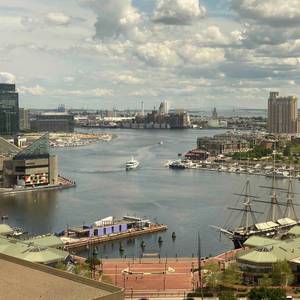
The Neoliner Origin, the world's largest cargo sailboat, completed its maiden transatlantic voyage on Thursday (October 30) despite sustaining damage to its aft sail during the crossing, forcing the crew to rely partially on its motor and remaining intact sail.The 136-meter-long (446 feet) vessel, equipped with two semi-rigid sails, first stopped in Saint Pierre and Miquelon