

For decades, floating nuclear power occupied a niche position in the energy debate – technically feasible, strategically intriguing, but commercially marginal. Today, however, combined pressures of decarbonization, energy security, land constraints, rising electricity demand and water scarcity are making floating nuclear power a more serious proposition for policymakers, utilities

Introduction. Looking back at history one could argue that it was French author Jules Verne in his book “20,000 Leagues Under the Sea”, published in 1869, who was speculating about a new power source much in the same out of the box thinking that H.G. Wells employed when he wrote about inter-planetary flight in “War of the World’s.

Security is all too often treated as a purely compliance-driven exercise. This isn’t advisable in any industry, but it is particularly damaging for those that fall under critical infrastructure frameworks. Ports, and, by extension, the dredging operations that maintain and expand shipping lanes, are the backbone of global trade, underpinning essential supply lines.

In December of 2025, the U.S. Coast Guard announced the award of two contracts to build up to six Arctic Security Cutter (ASC) icebreakers. The announcement declaring the vessels would be built between the United States and Finland in a major step forward for America’s national security in the Arctic region. The decision process encompassed more than the security of the Arctic passage.

With a growing focus on mitigating climate change and progressing toward the International Maritime Organization’s (IMO) 2050 net-zero target, the marine sector is under intense pressure to decarbonize. Today, maritime transport emits nearly one billion tons of CO2 annually, representing roughly 2-3% of all energy-related carbon emissions worldwide .

Kawasaki Heavy Industries and Japan Suiso Energy have signed a contract to build the world’s largest liquefied hydrogen carrier, marking a step toward the commercialization of an international hydrogen supply chain.The vessel will have a cargo capacity of about 40,000 cubic meters and will be built at Kawasaki Heavy Industries’ Sakaide Works in Kagawa Prefecture.
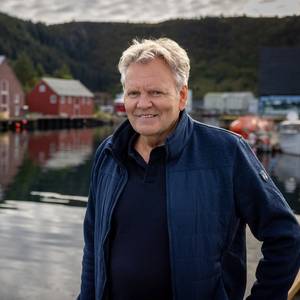
A new generation of hybrid vessels is demonstrating significant gains in both fuel economy and operational output. For Olympic Subsea’s owner and CEO Stig Remøy, it proves that technology-led efficiency is the fastest path to decarbonization—and a powerful business case.When Stig Remøy began pivoting Olympic Subsea toward subsea and renewables a decade ago

Whether you're in offshore wind, grid operations, geotechnical engineering, or digital transformation, this session, in conjunction with Offshore Engineer, will offer actionable insights, live demos, and expert opinions on:Why cable heat matters — from environmental impact to dynamic ratingHow to build better ground models using connected workflows and 3D subsurface dataHow thermal analysis
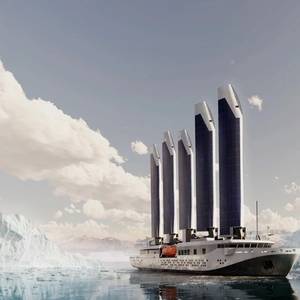
The construction of Captain Arctic, a 69-meter near-zero-emission exploration vessel designed for sustainable cruising in polar waters, has reached a major milestone as its hull was completed by Goltens Dubai, marking the start of final outfitting and integration work.The vessel, owned by French company SELAR and built in collaboration with Chantier Naval de l’Océan Indien (CNOI) and Goltens

Rising temperatures and humidity are increasingly compromising cargo integrity during transit, making prevention essential for operational resilience.Climate change is no longer a distant concern for shipping. Across Southeast Asia, rising temperatures and humidity, and more volatile weather patterns are increasingly affecting cargo integrity during transit.

The U.S. Coast Guard recently conducted a marine casualty investigation into an uncontrolled release of isobutane from a 2-inch cargo tank pipe aboard a pressure barge certificated to carry flammable cargoes. The direct cause of the incident was traced to the failure of the studs of a ball valve installed on a cargo tank’s gauging pipe which sheared off and caused the ball valve to separate from

Fuel-agnostic and suitable for newbuilds and retrofit, Organic Rankine Cycle waste heat recovery systems are making headway as an energy-efficiency measure.Market prospects are looking so good for waste heat recovery systems that Orcan Energy recently expanded its industry relationships by partnering with Goltens on installations.