

The headline grabbing global attention is simple enough: a shipowner reportedly paid more than $5 million for a single Panama Canal transit slot. But that may only mark the start of an historic surge in shipping costs.The vessel was a liquefied petroleum gas (LPG) carrier operated for South Korea's SK Gas.

If the Navy can’t successfully introduce smaller ship classes of ships, why does it think it can succeed with the largest surface combatants since World War II?The Navy has announced a new class of guided missile battleships, the USS Defiant [BBG(X)] or the Trump-class, as the centerpiece of a new “Golden Fleet.

The United States has become the world's largest oil exporter, upending a decades-old order long dominated by Saudi Arabia and Russia, a shift that tightens American companies' grip on energy markets as Washington's war with Iran reshapes global energy trade.America's ascendancy to the top spot marks a stunning reversal for a country that was dependent on Middle Eastern oil for decades and

Anemoi Marine Technologies’ Rotor Sail wind-assisted propulsion system has completed more than eight years of continuous commercial operation after M/V Afros successfully passed its second intermediate dry dock survey.The survey, conducted by Lloyd’s Register in China in April, confirmed the structural integrity and operational condition of the vessel’s four Rotor Sails, Anemoi said.

A bipartisan group of U.S. senators on Monday urged President Donald Trump to hold fast to trade remedies proposed by his administration to rebuild U.S. shipbuilding and not offer concessions when he meets with Chinese President Xi Jinping.Democratic Senators Tammy Baldwin of Wisconsin and Mark Kelly of Arizona as well as Republicans Tim Scott of South Carolina and Todd Young of Indiana told

President Donald Trump's administration said on Monday that it had reached a deal to end two more U.S. offshore wind leases in exchange for $885 million in pledged investments in domestic fossil fuels.The projects, one in the Atlantic and one in the Pacific, are managed by Ocean Winds, a joint venture between France's ENGIE and Portugal's EDP Renewables.
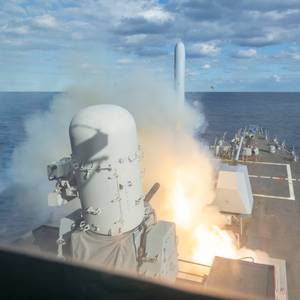
The U.S. and Israeli air war against Iran widened on Monday, with no end in sight as Israel attacked Lebanon in response to strikes by Hezbollah and Tehran kept up its missile and drone attacks on Gulf states that host U.S. military bases.U.S. President Donald Trump said the operation could continue for some weeks and that it was unclear who was in charge in Iran
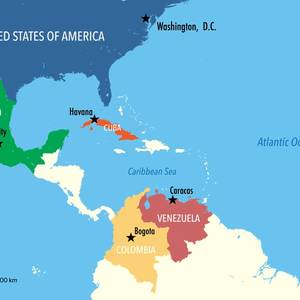
Cuban forces killed four people and wounded six others aboard a Florida-based speedboat that entered Cuban waters on Wednesday and opened fire on a Cuban patrol, the Cuban government said at a time of heightened tensions with the United States.The wounded were evacuated and receiving medical attention, while the Cuban patrol commander was also wounded, Cuba's Interior Ministry said in a statement

The Bureau of Ocean Energy Management announced a Proposed Notice of Sale for the third offshore oil and gas lease sale under the One Big Beautiful Bill Act. The proposed lease sale, known as Lease Sale Big Beautiful Gulf 3, or BBG3, is scheduled to take place on Aug. 12, 2026.This sale is the third of 30 Gulf of America oil and gas lease sales required by the One Big Beautiful Bill Act (Public

One of Australia's biggest coal export ports will resume operations on Monday, the port operator said, after climate-change protesters disrupted shipping at the Port of Newcastle for a second day on Sunday.Climate activist group Rising Tide, which claimed responsibility for the latest protest, said hundreds of activists paddled kayaks into the shipping lane of Newcastle Harbour on Sunday morning
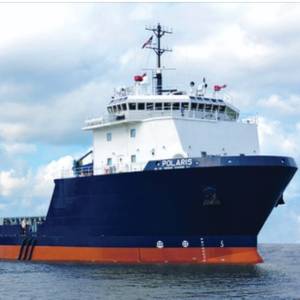
As oil exploration and production goes, so goes the market for Offshore Service Vessels (OSVs) and Platform Supply Vessels (PSVs). Throughout 2025, the prices of oil- which drives exploration and production (E & P), have softened, moving down towards $60/barrel amidst economic uncertainty and a wider than anticipated opening of the taps by major oil producers.
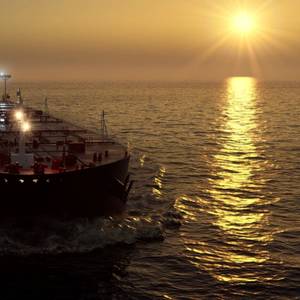
Britain targeted Russia's two largest oil companies, Lukoil and Rosneft, and 44 shadow fleet tankers on Wednesday in what it described as a new bid to tighten energy sanctions and choke off Kremlin revenues.Lukoil and Rosneft were designated under Britain's Russia sanctions laws for what London described as their role in supporting the Russian government.