

Technology companies and shipyards are vying for attention as the US unmanned navy grows in size and sophistication.No too long ago, US Navy Secretary John Phelan said: “If the last few years of conflict have taught us anything, it is that we will not win the wars of the future with the platforms of the past.

A newly built very large gas carrier (VLGC) was named Lucent Pathfinder at a ceremony held at Kawasaki Heavy Industries’ Sakaide Works, marking the seventh dual-fuel LPG carrier using LPG ordered by NYK.The vessel, which will be chartered by United Arab Emirates-based LPG trader BGN INT DMCC
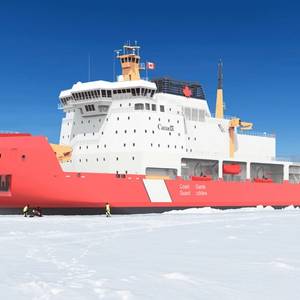
After developing the technique some five years ago, Aker Arctic has now completed the research required to get its new design methodology for icebreaker hulls accepted into the Finish-Swedish Ice Class Rules. The method has also been adopted to Polar Class rules of several Class Societies (LR, ABS, DNV).

Greater vehicle sophistication is pushing surveys and offshore energy inspections further towards autonomy.When the Norwegian Offshore Directorate set its new HUGIN autonomous underwater vehicle (AUV) to work in June, there was a moment’s reflection on the fact that deep sea areas have actually been mapped since the 1800s.

Autonomous vehicles are increasingly sophisticated defensive tools for ports wanting to protect against maritime threats - including attacks from other autonomous vehicles.In December 15 last year, the Security Service of Ukraine reported that its underwater drone had struck a Russian submarine in Novorossiysk. The incident highlighted just how sophisticated potential threats have become.

The UK-flagged research vessel Prince Madog has received certification for a hydrogen fuel cell retrofit, following approval by Lloyd’s Register (LR) under its ShipRight Risk Based Certification (RBC) framework. The certification was presented at Seaworks 2026 in Southampton.The project, delivered by vessel owner O.S.

Equipment OEMs are securing their position in the data pipeline from ship to shore.Crews are becoming increasingly reliant on digital support as onboard systems become more complex and demands for emissions reduction more stringent. OEMs are choosing where they want to fit in the flow of sensor data coming out of ships and the provision of support and troubleshooting back in.

It’s time to consider the role of “digital watchkeepers” as the become an increasingly complex tool for bridge teams.Releasing its annual report in July 2025, the UK Marine Accident Investigation Branch said that significant collisions between merchant vessels show no sign of reducing.

Fuel-agnostic and suitable for newbuilds and retrofit, Organic Rankine Cycle waste heat recovery systems are making headway as an energy-efficiency measure.Market prospects are looking so good for waste heat recovery systems that Orcan Energy recently expanded its industry relationships by partnering with Goltens on installations.
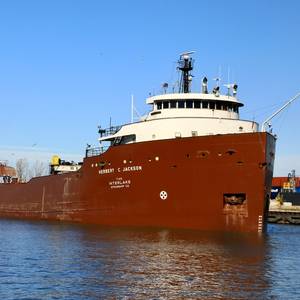
There hasn’t been an invasives species introduced to the Great Lakes from ballast water since 2006. So, what’s the problem now?As far as Transport Canada is concerned: “Scientific sampling to date consistently shows that ballast water management systems (BWMS) used in the Great Lakes reduce organism densities in ballast water discharges by over 99%, consistent with global evidence.
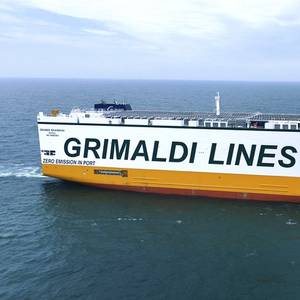
There’s an obvious fuel saving advantage, but partnering energy storage systems with new fuels brings other advantages too.There’s a new generation of vessels emerging which is exemplified by Grimaldi’s PCTC Grande Shanghai, claimed to reduce fuel consumption by 50% compared to previous-generation car carriers, and the NCL Vestland
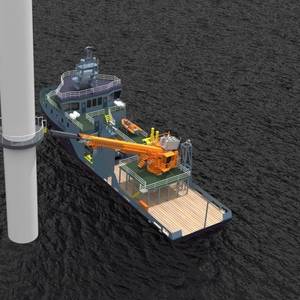
Offshore service provider OS Energy has adopted Sonardyne’s SPRINT-Nav DP dynamic positioning (DP) reference system to support its marine renewable energy projects in the North and Baltic Seas. SPRINT-Nav DP will enable OS Energy to maintain DP integrity, even in shallow water and GNSS-compromised environments that are increasingly characteristic of offshore wind construction and maintenance