

Sweden will order four navy frigates from France's Naval Group in a $4 billion deal that will triple its air defence capacity as the new NATO member focuses on security threats in the Baltic Sea, its prime minister said on Tuesday.Sweden is racing to build up its military in the wake of Russia's invasion of Ukraine and the Nordic country's subsequent accession to NATO

Anemoi Marine Technologies’ Rotor Sail wind-assisted propulsion system has completed more than eight years of continuous commercial operation after M/V Afros successfully passed its second intermediate dry dock survey.The survey, conducted by Lloyd’s Register in China in April, confirmed the structural integrity and operational condition of the vessel’s four Rotor Sails, Anemoi said.
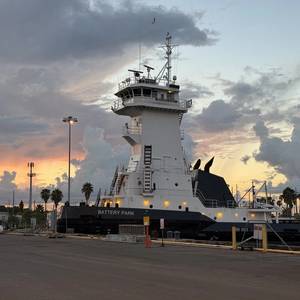
We are well into the discussions advising shipbuilders and operators how the U.S. will create a renaissance of the maritime industry. Federal Legislation, Executive Orders, and new foreign partnerships driving the promise of commercial competitiveness with the leading global shipbuilders. Most of the shipbuilding rhetoric indicates the domestic markets will be left to survive on their own.
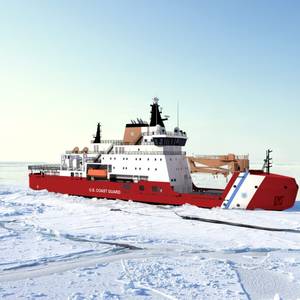
U.S. President Donald Trump and Finnish counterpart Alexander Stubb sealed an agreement on Thursday for the U.S. Coast Guard to acquire up to 11 icebreaker ships to bolster U.S. national security in the Arctic.Trump and Stubb have established friendly ties since Trump regained power in January, and the two met in March at the president's Mar-a-Lago club in Florida and played a round of golf.

Wall Street stock indexes edged up, oil prices tumbled and the dollar's safe haven appeal waned on Tuesday as investors looked past a U.S. blockade on Iran's ports to the prospect of an eventual resolution to the conflict.Negotiating teams from the U.S. and Iran could return to Islamabad this week, four sources said

SGMF has published its latest Life Cycle Assessment (LCA) on LNG, further demonstrating reductions in greenhouse gas (GHG) emissions compared to traditional marine fuels. One of the key findings is evidence of up to 29% tank-to-wake GHG emissions reductions when using LNG compared to MGO 0.1%, an improvement of up to 13% compared to the previous LCA conducted in 2022.

EcoNavis Solutions is developing a next generation wind-assisted propulsion system designed to enhance the performance and commercial viability of Flettner-type rotor sails for deep-sea shipping. The company’s Eco Rotor Sail introduces a patented tail-appendage device designed to increase thrust, reduce power demand, and widen the range of wind angles in which rotor sails can operate efficiently.

Gas majors including Shell and Chevron warned Australia against introducing a windfall tax on gas exporters, saying it would deter investment and undermine energy security as LNG prices surge amid disruption caused by the Iran war.Australia became the world's second-largest LNG supplier after Iranian strikes forced Qatar to halt production

India's Mangalore Refinery and Petrochemicals has suspended fuel exports due to the Middle East conflict that has disrupted crude oil flows from the Gulf, two sources familiar with the matter said on Wednesday.The company has declared force majeure on all upcoming gasoline export cargoes for March and April, two separate trade sources said.

NYK Bulk & Projects Carriers (NBP), a member of the NYK Group, has operated a methanol dual-fuel bulk carrier using low-carbon methanol fuel for the transportation of copper concentrate for BHP Group, achieving an approximately 65% reduction in greenhouse gas (GHG) emissions on a well-to-wake basis compared to conventional fuel.

DHL Global Forwarding and shipping group CMA CGM have agreed to jointly use 8,990 metric tons of second-generation biofuel to reduce emissions from ocean freight.The initiative is expected to cut around 25,000 metric tons of carbon dioxide equivalent emissions on a well-to-wake basis for container shipments moved under DHL’s GoGreen Plus service
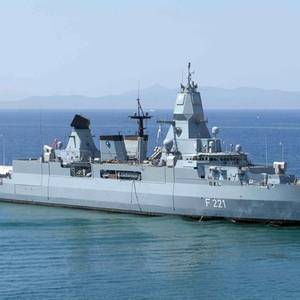
Sweden will choose a supplier for its multi-billion Swedish crown acquisition of four new frigates early next year, the defence minister said on Monday.Sweden is in an intense buildup of its forces in the wake of Russia's invasion of Ukraine and is looking to increase its navy fleet with bigger ships.