

On July 23rd, 2026 Amtech, courtesy an invitation from the U.S. Department of Commerce, attended the Grand Opening of the Korea-U.S. Shipbuilding Partnership Center (KUSPC) in Washington DC, a Secretary level event with invitations provided to recognized leaders in the U.S. commercial and naval shipbuilding industry.

A bipartisan group of U.S. senators on Monday urged President Donald Trump to hold fast to trade remedies proposed by his administration to rebuild U.S. shipbuilding and not offer concessions when he meets with Chinese President Xi Jinping.Democratic Senators Tammy Baldwin of Wisconsin and Mark Kelly of Arizona as well as Republicans Tim Scott of South Carolina and Todd Young of Indiana told

When we interviewed Saronic Co-Founder and CEO Dino Mavrookas late last year, he insisted that Saronic's mission was to deliver commercially viable autonomous vessels first, and in turn parlay that into a ready package for defense. That vision comes to fruition as Saronic announced a partnership with Hornbeck Offshore Services, Inc.
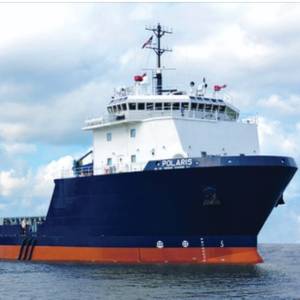
As oil exploration and production goes, so goes the market for Offshore Service Vessels (OSVs) and Platform Supply Vessels (PSVs). Throughout 2025, the prices of oil- which drives exploration and production (E & P), have softened, moving down towards $60/barrel amidst economic uncertainty and a wider than anticipated opening of the taps by major oil producers.

Crew communications on board workboats in harsh marine environments are subject to a variety of challenges. Background noise from loud engines, shock and vibration pounding through rough water, high wind noise and turbulence at speeds of 55-60 knots, and the highly corrosive nature of the marine environment - can render workboat crew communications all but impossible.

A bipartisan group of U.S. senators on Monday urged President Donald Trump to hold fast to trade remedies proposed by his administration to rebuild U.S. shipbuilding and not offer concessions when he meets with Chinese President Xi Jinping.Democratic Senators Tammy Baldwin of Wisconsin and Mark Kelly of Arizona, as well as Republicans Tim Scott of South Carolina and Todd Young of Indiana

“Never before have we witnessed such comprehensive alignment between Republicans and Democrats, industry, and organized labor for rebuilding our great nation’s maritime industry.”Arizona Senator and U.S. Merchant Marine Academy alum Mark Kelly (D-AZ) and Representative John Garamendi (D-CA-08) published an op-ed in Fox News highlighting the momentum to rebuild the U.S.

Helix Energy Solutions and Hornbeck Offshore Services have agreed to combine in an all-stock transaction to create an integrated offshore services company.Under the agreement, Hornbeck shareholders will own about 55% of the combined company, while Helix shareholders will hold around 45%.

On Wednesday, April 22, 2026, the Great Lakes Maritime Task Force (GLMTF) recognized Indiana Senator Todd Young for his commitment to the Great Lakes Navigation System and the nation’s maritime revitalization.“Senator Young understands the importance of U.S. shipping on the Great Lakes with interconnected harbors that depend on each other and a healthy maritime highway.

Marine Group Boat Works (Marine Group), a full-service shipyard based in San Diego, won a Navy Grant to establish a maritime welding program designed to expand the skilled labor workforce supporting the U.S. Navy’s growing shipbuilding and repair demands. Marine Group was awarded this grant because it addresses workforce constraints by increasing the number of highly skilled welders certified to

Guyana has asked judges at the International Court of Justice to rule that Venezuela does not have a legitimate claim on the potentially oil-rich region around the Esequibo river, which has been the subject of a dispute between the Latin American neighbours since colonial days."Facing a larger and more powerful neighbour's designs on our territory has not only threatened our peace and security

The National Ocean Industries Association (NOIA) has released its sixth annual Offshore Energy Industry's Innovation & Workforce Excellence Report, a comprehensive publication showcasing how offshore energy companies are leading on environmental performance, workforce development, safety, and corporate responsibility.