
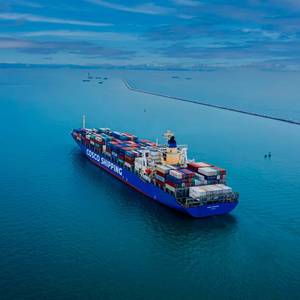
China's trade surplus topped $1 trillion for the first time as manufacturers seeking to avoid President Donald Trump's tariffs shipped more to non-U.S. markets in November, with exports to Europe, Australia and Southeast Asia surging.Shipments to the United States dropped by close to one-third from the same month a year before."The tariff cuts agreed under the U.S.
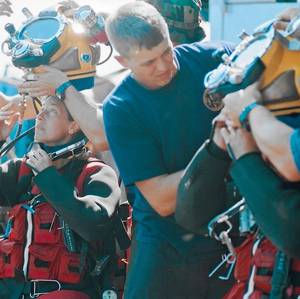
By Captain Bobbie Scolley, U.S. Navy (ret.) and Rear Admiral Tim Gallaudet, U.S. Navy (ret.)For more than six decades, spanning from 1905 to the late 1970s, the U.S. Navy’s diving apparatus for deep ocean operations and salvage remained fundamentally unchanged. During this period, the demographic of navy divers also saw little alteration.
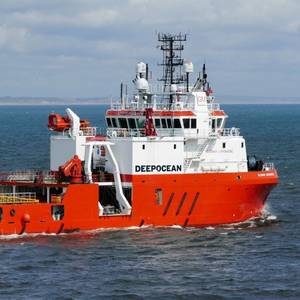
Ocean services provider DeepOcean has expanded its service offering to the offshore renewables and oil and gas industries by entering into a time charter agreement for the multipurpose support vessel Glomar Supporter.Chartered from Glomar Offshore, the Glomar Supporter vessel will join DeepOcean’s fleet in January 2026 with its first operations planned in EuropeDeepOcean will utilise the Glomar
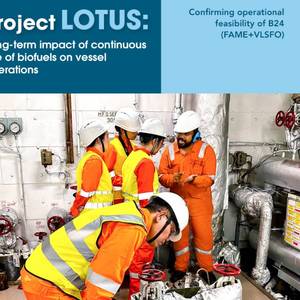
Nippon Yusen Kabushiki Kaisha (NYK) has completed a joint demonstration with Singapore-based Global Centre for Maritime Decarbonisation (GCMD) that verified the long-term use and storage of biofuel onboard ships, confirming its technical safety and sustainable usability.The six-month trial, as part of Project LOTUS, involved continuous use of B24 biofuel on a pure car and truck carrier.

Palaemon Maritime’s maritime security report this week points to some of the clearest indicators yet that piracy activity off Somalia is escalating again.“Taken alone, these incidents might appear isolated. Taken together, they point to something more important: the conditions that enable piracy are building again in the Western Indian Ocean.

The NGO Robin des Bois is concerned about the thousands of seafarers currently stuck in the Middle East and about the approximately 70,000 animals on livestock carriers in the region.The livestock has been exported from South America, the European Union, and the Horn of Africa to Saudi Arabia, the United Arab Emirates, Lebanon, Iraq, Israel, and Jordan.

The 34-year-old livestock carrier ship Blue Ocean A, flying the flag of Saint Kitts and Nevis, has been detained at the Italian Port of Cagliari after a port state control inspection found 54 irregularities, 30 of which were considered serious.The vessel nearly ran aground on January 29 off San Pietro Island due to a main engine failure while carrying 33 crew members.
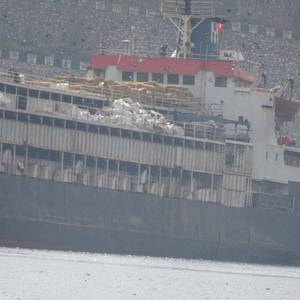
The 52-year-old livestock carrier Spiridon II rejected by Turkey has now left the area after its cargo of over 2,800 cows was rejected by local authorities.Court transcripts translated by Animal Welfare Foundation indicate that 58 cows died in transit to Turkey, 140 cows had miscarriages in transit, 50 newborn calves were present on board, but another 90 are unaccounted for.

The 52-year-old livestock carrier Spiridon II remains in quarantine off Turkey with around 20 crew and 2,853 cows onboard.Having departed from Montevideo (Uruguay) bound for Turkey on September 19 with 2,901 heifers, some of which may be pregnant, the Spiridon II is, over 50 days later, still unable to deliver the animals to shore.
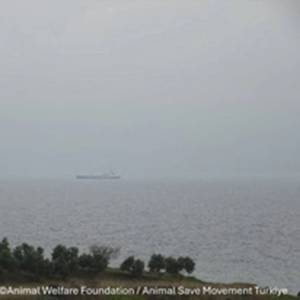
The 52-year-old MV Spiridon II loaded 2901 cattle has been stranded off Turkey, denied permission to unload due to issues with the animals’ ear tag.According to local media, the Turkish Ministry of Agriculture and Forestry inspected the cattle when the vessel arrived but denied permission to land the animals because approximately 500 of the ear tags did not match documentation on the ship.

Finland-based Bluetech has partnered with NYSE-listed INSW to develop Bluetech’s new ‘SeaWasp’ tanker vessel design, purpose-designed for wind but still practical for INSW MR fleet operations.With the support of wind-propulsion specialist Norsepower, Bluetech modified its BT50 design to extract maximum forward thrust from two 35-metre Rotor Sails.
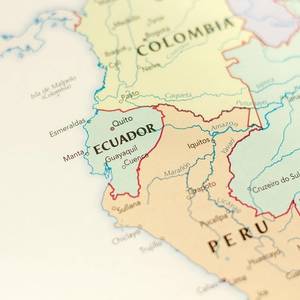
Ecuadorian activist María Chóez, a vocal advocate for the families of missing tuna fishers, has been murdered.According to witnesses cited by NGO Human Rights at Sea, the 48-year-old was shot in the head by occupants of a vehicle on September 25 in Manta, Ecuador.She was reported as being a family member of one of the 21 fishermen from the Patricia Lynn tuna vessel that went missing on December