

BRIX Marine has delivered It's About Time, a custom-built 4818-HTC Offshore passenger catamaran from the company's PaxCat lineup, built for FunToSee Island Ferry of Castries, St. Lucia. This marks the second vessel BRIX Marine has built for FunToSee Island, continuing a growing partnership between the two companies.FunToSee Island operates St.

A new all-electric passenger vessel is set to enter service in western Norway, as newly formed operator Cityboat has placed an order for a zero-emission shuttle from Hyke to support tourism and local transport around Haugesund’s island network.Cityboat — a joint venture between express boat operator Rødne and local tourism firm Viking Adventure — has selected the 15-meter Hyke F-15 Shuttle
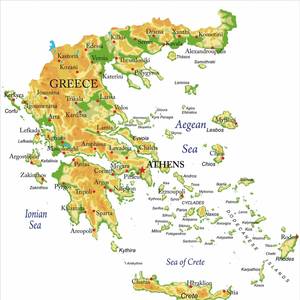
Fifteen migrants died after their boat collided with a Greek coast guard vessel, capsized and sank off the island of Chios in the Aegean Sea late on Tuesday, the coast guard said, in one of the deadliest migrant shipwrecks in Greece in years.The incident occurred after a migrant boat sailing towards Chios with its navigation lights switched off ignored signals from a coast guard patrol vessel

VARD has recently signed an agreement (MoU) with the major Norwegian research institute NORCE, establishing a strategic partnership to cooperate on research and innovation.The agreement encompasses topics such as design, construction, on board and underwater maintenance and drone technology for ships and subsea technology

Panama is participating this week in the 34th session of the Assembly of the International Maritime Organization (IMO), the most significant forum within the global maritime system and the specialized governing body of the United Nations, from November 24 to 28. This setting defines the policies, standards, and priorities that will shape the international maritime agenda in the years ahead.
HikoTerra, a leader in mobile integrated power solutions, officially ushered in the next generation of marine power with the introduction of the H4 Hybrid Power System. The H4 product line is designed as a battery-first system flexible enough to deliver a home-like user experience.

Norwegian ferry operator Boreal has ordered 20 electric hydrofoil vessels from Swedish Candela Technology.Norway has long been a world leader in electrification of the car fleet and battery-powered ferries on short routes. However, express ferries – the fast passenger vessels that connect coastal communities over long distances – have been a challenge.

Ferries in port cities like Barcelona, Dublin and Naples are responsible for more toxic air pollution (SOx) than all the cars in those cities, a new study by T&E shows.Promisingly, 60% of Europe’s ferries could be electric by 2035, and over half (52%) would be cheaper to operate than fossil-fueled vessels, the report shows.

The December issue of Maritime Reporter magazine includes a feature story on Australian mining company Fortescue’s pioneering ammonia fuel trial on the platform supply vessel Green Pioneer.The Green Pioneer was named one of TIME’s Best Inventions of 2025.The conversion journey of its diesel-electric power system to dual-fuel ammonia started in 2022, on land