

When Saudi Aramco told its oil buyers in a letter this week that it had no clear idea which port it would use for April exports, it laid bare a new reality: Iran, not the United States, holds the key to reopening the global energy market.The letter, sent to Saudi oil buyers around the world, said they might receive oil from the Red Sea, but they might still get it from the Gulf.

Supertanker costs in the Middle East have hit all-time highs, according to shipping data and industry sources on Tuesday, as the U.S.-Iran conflict intensifies with Tehran attacking ships passing through the Strait of Hormuz.Shipping through the Strait between Iran and Oman, which carries around one-fifth of oil consumed globally as well as large quantities of liquefied natural gas

CF Industries, Trafigura and TFG Marine have signed a memorandum of understanding (MoU) to facilitate the adoption of low-carbon ammonia as a marine fuel.Building on the successful collaboration between CF Industries and Trafigura in the shipment of low-carbon ammonia, the agreement establishes a framework for the parties to work together on advancing low-carbon ammonia as a marine fuel

Conrad Shipyard and Samsung Heavy Industries have agreed to a collaborative framework to jointly explore opportunities in the rapidly expanding U.S. LNG bunkering market.Under the agreement, Conrad and SHI will work together to evaluate and pursue technical, commercial, and market-based initiatives that support the design, construction, and deployment of LNG bunkering vessels tailored for U.S.
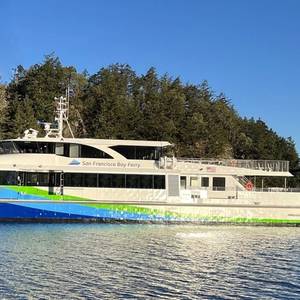
Mavrik Marine, Inc. was selected to build high-speed passenger ferries for the Golden Gate Bridge Highway & Transportation District. Mavrik will construct catamaran passenger ferries as part of the District’s eight vessel Lima Class Ferry Replacement Program to provide transportation services in San Francisco Bay.
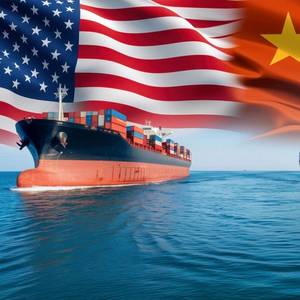
Vessels owned or operated by U.S. firms and individuals - or those built in the United States or that fly the U.S. flag - will be charged additional port fees per voyage starting on October 14, China's transport ministry said.The fees are a counter-measure against upcoming U.S. port fees on Chinese ships, the ministry said on Friday.
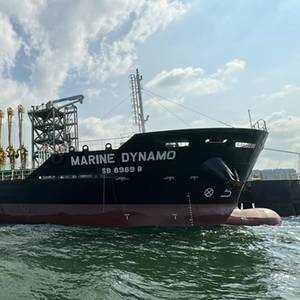
Singapore-registered tanker Marine Dynamo and a Malta-registered bulk carrier Flag Gangos have collided south of Tanah Merah in Malaysia.Both vessels are stable, following the incident that occurred in the early hours of September 1, the Maritime and Port Authority of Singapore (MPA) informed.Light oil sheens have been sighted in the vicinity of Marine Dynamo.
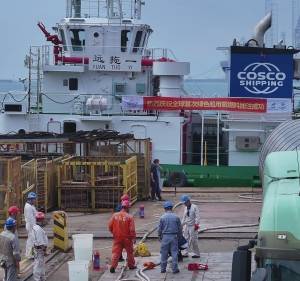
Sinobunker, one of COSCO Shipping’s subsidiaries, has completed the world’s first green ammonia bunkering operation at COSCO Shipping Heavy Industry’s Dalian terminal.The ammonia was sourced from the world’s largest green hydrogen and ammonia plant established by Envision in Chifeng and powered entirely by the world’s largest independent renewable energy system.
Ordering of alternative-fueled vessels is continuing to grow in 2025, despite a slowdown in the overall newbuild market. According to data from DNV’s Alternative Fuels Insight (AFI) platform, new orders for alternative-fueled vessels reached 19.8 million gross tonnes (GT) in the first six months of 2025, exceeding the 2024 figure by 78%.
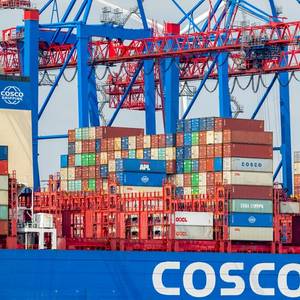
Rates for shipping cargo containers from China to the U.S. have dropped by more than half since earlier this month, as imports rebounded less than expected after the slump that followed President Donald Trump slapping 145% tariffs on China.Trump quickly reversed course by lowering the rate to 30%. That cost increase on goods from the nation's No.
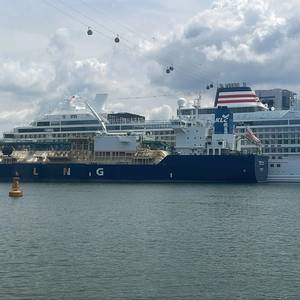
ASUKA III, said to be the largest Japanese-flagged cruise ship, has completed its first marine LNG bunkering by FueLNG Private at Singapore Cruise Centre.The bunkering milestone also marks Shell LNG's first supply to an LNG-powered cruise ship in the region, according to Singapore Cruise Centre.Asuka III is owned by NYK Cruises, a company of the Japanese shipping group NYK.
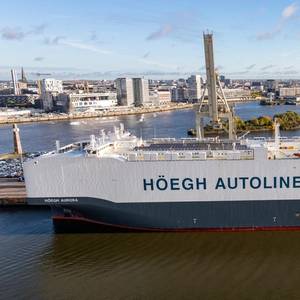
Confusion over new fuels will not be helped by the fact that each one has a good and bad version. The science on grey ammonia, grey methanol, and palm oil biofuel show that these are probably worse for the planet, if adopted, than unfettered continuation of fossil fuel consumption.