The first thirty days of the new Trump Administration have brought sweeping changes throughout the federal government. We take a pause to assess where things stand for maritime stakeholders and what may be coming next in Washington, DC, for our industry.A Maritime DirectiveFor those that work in the U.
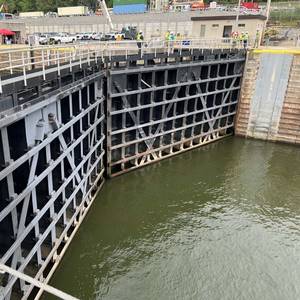
The path toward funding the U.S. Army Corp of Engineers (USACE) – and the critical inland infrastructure maintenance and construction of locks and dams that it does – is neither straight nor clear. Jen Armstrong, VP, Government Relations, Waterways Council, visited recently with Maritime Reporter TV to discuss in detail the historical context of how USACE funding has evolved in the past 50 years.
“In a global marketplace, supply and demand in one area of the world can greatly impact the agricultural production in another. American products are shipped worldwide …” is how the U.S. Department of Agriculture (USDA) describes the backdrop for international trade. The inland and coastwise waterway systems serving the United States (where agricultural cargoes are an important component) are
An integrated Li-ion battery bank recently caught fire onboard an inspected passenger vessel when loosely crimped lugs overheated. While no one was injured and the vessel sustained minimal damage, this casualty highlights safety hazards unique to Li-ion batteries. All integrated (installations used for propulsion and electrical power) Li-ion battery systems on inspected vessels must undergo