

U.S. President Donald Trump has allowed the Navy to build ships overseas and ordered it to abandon a complex system for launching jet fighters from its aircraft carriers and instead return to using steam catapults, the White House said on Thursday.Trump signed a national security memorandum directing the change, which would require the fourth vessel in the Gerald R.

If the Navy can’t successfully introduce smaller ship classes of ships, why does it think it can succeed with the largest surface combatants since World War II?The Navy has announced a new class of guided missile battleships, the USS Defiant [BBG(X)] or the Trump-class, as the centerpiece of a new “Golden Fleet.

Fincantieri has secured its first contract under the U.S. Navy’s Medium Landing Ship (LSM) program, marking an early step in what could become a 35-vessel procurement central to future expeditionary operations.The $30 million award to Fincantieri Marine Group covers long-lead materials procurement and engineering work for the first four vessels.

A U.S. submarine sank an Iranian warship off the southern coast of Sri Lanka, killing dozens of sailors and dramatically widening Washington's pursuit of the Iranian navy.Sri Lanka's deputy foreign minister identified the warship as the frigate IRIS Dena, and said it was heading back to Iran from an eastern Indian port.

The barge Defiant was refloated from the Castillo San Felipe del Morro shoreline in San Juan Harbor, Wednesday at approximately 2:22 a.m., just before high tide.Salvage crews and tugboat operators prepositioned three tugboats and completed all the preparations, including the pressurization of all cargo tanks, voids and compartments in the barge.

Ukraine's navy accused Russia of deliberately attacking a civilian Turkish vessel carrying sunflower oil to Egypt with a drone on Saturday, a day after Moscow hit two Ukrainian ports.In a statement on Telegram, the navy said the vessel was called the Viva and had 11 Turkish citizens on board. It added that nobody was hurt and the vessel was continuing its journey to Egypt.
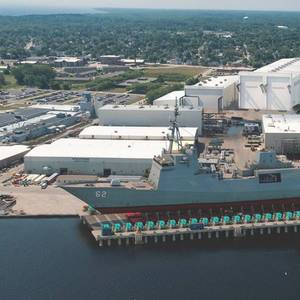
Fincantieri and the U.S. Navy have reached an agreement to redefine the future of the Constellation-class frigate program, ensuring work continues on the first two ships while cancelling four later units as part of a wider fleet review.The shift follows the Navy’s overhaul of its force-structure plans and aligns with new priorities aimed at accelerating next-generation ship designs and
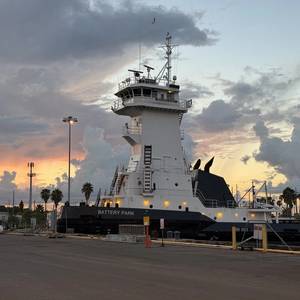
We are well into the discussions advising shipbuilders and operators how the U.S. will create a renaissance of the maritime industry. Federal Legislation, Executive Orders, and new foreign partnerships driving the promise of commercial competitiveness with the leading global shipbuilders. Most of the shipbuilding rhetoric indicates the domestic markets will be left to survive on their own.
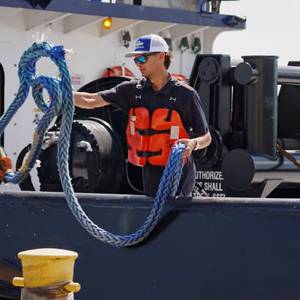
The American Waterways Operators, the trade association of the American tugboat, towboat and barge industry, has released a new video on the industry's contributions to U.S. national and homeland security.The two-minute video, The Tugboat, Towboat and Barge Industry: Supplying America, Securing America, notes that while the mariners who transport cargo and facilitate commerce on America's rivers
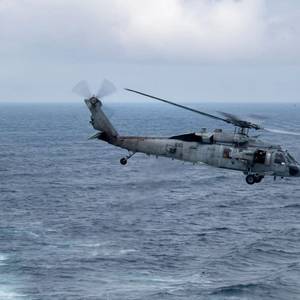
A U.S. Navy helicopter and a fighter jet crashed separately into the South China Sea within the space of an hour during routine operations conducted from the same aircraft carrier on Sunday, the U.S. Navy said, adding all personnel were safe.The incidents came while President Donald Trump was on a visit to Asia.
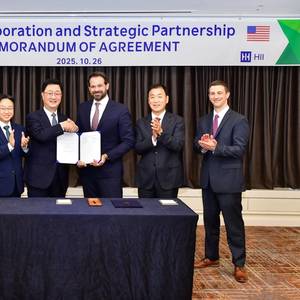
South Korea's HD Hyundai Heavy Industries and U.S. military shipbuilder Huntington Ingalls have agreed to jointly build U.S. navy auxiliary ships, the South Korean shipbuilder said on Sunday.HHI has a strong track record in this field, having delivered its first auxiliary vessel, HMNZS Endeavour, to New Zealand in 1987, followed by the HMNZS Aotearoa in 2020.
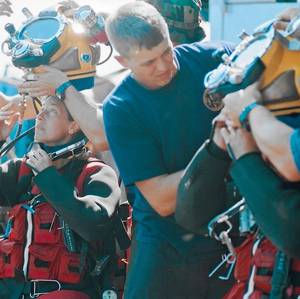
By Captain Bobbie Scolley, U.S. Navy (ret.) and Rear Admiral Tim Gallaudet, U.S. Navy (ret.)For more than six decades, spanning from 1905 to the late 1970s, the U.S. Navy’s diving apparatus for deep ocean operations and salvage remained fundamentally unchanged. During this period, the demographic of navy divers also saw little alteration.