

The U.S. is expanding its icebreaking fleet to strengthen Arctic and domestic access, and support commercial shipping, seabed resources, subsea cables and fisheries. Current plans include 1–3 heavy Polar Security Cutters (PSCs), 11 medium Arctic Security Cutters (ASCs), seven Homeland Security Cutter (HSC) HSC-L (light) icebreakers, 11 HSC-Ms (medium) and one additional heavy HSC-H (heavy).

The “Badan Riset dan Inovasi Nasional” (BRIN), Indonesia’s national agency for research and innovation, has commissioned the French shipbuilder PIRIOU to design and build two research vessels:a multimission offshore hydro-oceanographic vessel (ORV – Ocean Going Research Vessel) and a coastal research vessel (CRV – Coastal Research Vessel).
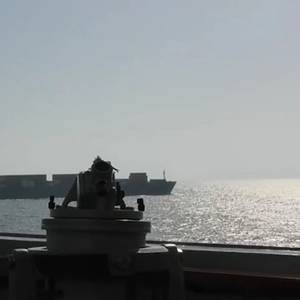
Concerns grew on Monday that the ceasefire between the United States and Iran might not hold after the U.S. said it had seized an Iranian cargo ship that tried to run its blockade and Iran vowed to retaliate.Efforts to build a more lasting peace in the region likewise appeared to be on shaky ground, as Iran said it would not participate in a second round of negotiations that the U.S.

American Cruise Lines christened American Ranger on the Hudson River last week. American Ranger is the third new ship the company has launched this year and the fourth new Patriot Class ship. The christening celebration took place on September 24 when the ship was docked at Historic Catskill Point, Catskill, New York.

The Xeneta Weekly Ocean Container Shipping Market Update provides data and intelligence including the latest freight rate and capacity movements across global trades with supporting insight from Peter Sand, Xeneta Chief Analyst.Data highlightsMarket average spot rates – 17 September 2026:Far East to US West Coast: USD 7,960 per FEU (40ft container)Far East to US East Coast: USD 11

KERSHIP, a joint venture between PIRIOU and Naval Group, launched the PETAR NJEGOS I, the first of two OPV 60M offshore patrol vessels ordered by Montenegro, at its Lanester shipyard on Friday, September 11, 2026.The ceremony, marking a milestone in the program, was attended by numerous Montenegrin and French dignitaries, including Mr. Aleksa Becic, Deputy Prime Minister, Mr.

Vessev, a technology company designing and building electric passenger vessels, announced the launch of a new hydrofoiling network in Hobart, Australia, marking a step in using waterways as an efficient, scalable, zero-emissions layer of urban transport.Fly Derwent, a new clean energy transport venture, will launch the network on the Derwent River

New Zealand marine technology company Vessev has announced its expansion into the Australian market, with the Enautic Group set to introduce Vessev's electric hydrofoiling passenger vessels to Western Australia. There are currently only three commercially-certified electric hydrofoiling vessels in operation anywhere in the world, two of which are Vessev VS-9s

According to Veson Nautical’s 2025 End-of-Year Market Report, a report which breaks down prevailing trends in all major oceangoing shipping sectors globally, these are the prevailing trends shipowners should watch in 2026.1. Routing Normalization vs. Geopolitical RealityMuch of 2025’s earnings strength—especially in containers

Norwegian offshore vessel owner Solstad Maritime has sold its Normand Clipper construction support vessel (CSV) to Global Maritime Group.Global Maritime Group, the current charterer of the vessel, declared the purchase option for the Normand Clipper, with the deliver of set to take lace at the end of the firm contract period on June 1, 2026.
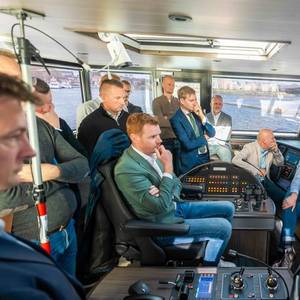
During a live showcase on board Scylla’s new passenger vessel MS Lumière, Shipping Technology, Retina, and Scylla successfully completed the first-ever autonomous Dock2Dock voyage—from undocking in Hardinxveld-Giessendam to docking in Gorinchem.The demonstration combined Retina’s M-Pilot maneuvering system with the ST BRAIN and Autonomous Lane Assist (ST Sailing) from Shipping Technology
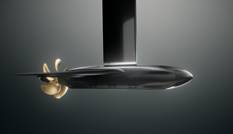
Vessev announced the VS–Drive, a podded propulsion system that stands to redefine electric marine performance. As the latest innovation from Vessev, which designs and builds commercial-grade electric hydrofoiling vessels, the VS–Drive is a submersible motor that combines advanced active cooling with custom direct-drive brushless motors in a modular design.