

The U.S. is expanding its icebreaking fleet to strengthen Arctic and domestic access, and support commercial shipping, seabed resources, subsea cables and fisheries. Current plans include 1–3 heavy Polar Security Cutters (PSCs), 11 medium Arctic Security Cutters (ASCs), seven Homeland Security Cutter (HSC) HSC-L (light) icebreakers, 11 HSC-Ms (medium) and one additional heavy HSC-H (heavy).

Saronic has expanded its operations to Gulfport, Mississippi, establishing an initial site for on-water testing of the company’s medium unmanned surface vessel (MUSV), Marauder, at the Port of Gulfport.As production of Saronic’s Marauder platform continues to scale, the site will support testing and commissioning of the 180-foot autonomous ships as they move from production to final delivery.
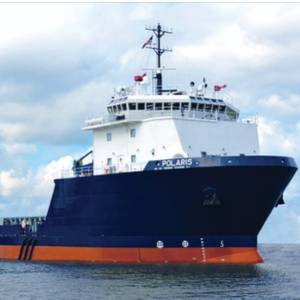
As oil exploration and production goes, so goes the market for Offshore Service Vessels (OSVs) and Platform Supply Vessels (PSVs). Throughout 2025, the prices of oil- which drives exploration and production (E & P), have softened, moving down towards $60/barrel amidst economic uncertainty and a wider than anticipated opening of the taps by major oil producers.

The St. Louis Metro Port system remains the nation’s most efficient inland port system, according to the latest U.S. Army Corps of Engineers data, ranking first in cargo tonnage per river mile and fourth in total tonnage among seven major inland port districts.In 2024, the 70-mile port system handled 24.8 million tons of cargo, averaging 354,286 tons per river mile.

American Cruise Lines has announced the names of two more U.S.-built small ships: American Beauty, a new riverboat for the Mississippi that will launch in 2028, and American Rhapsody, another new riverboat for the Columbia and Snake Rivers that will launch in 2029.These riverboats represent the 29th and 30th ships in the company’s fleet.

NOAA-supported scientists announced that this year’s Gulf of America hypoxic zone is approximately 1,332 square miles, making it the 2nd smallest zone on record in 40 years of measurement. Hypoxic areas, also called “dead zones,” are areas with little to no oxygen in the water, which can negatively impact fish, shellfish

SSA Marine and the Mississippi State Port Authority at Gulfport (Port of Gulfport) announced the commissioning of a new Liebherr LHM 550 hybrid mobile harbor crane at the Port, along with $1.6 million in state grant funding that will enable the electrification of the crane.The crane has a lift capacity of 124 metric tons and will be SSA Marine’s second LHM 550 in operation at the Port of Gulfport.

Bollinger Shipyards has opened a 7,200-square-foot workforce training center at its Gulfport, Mississippi, facility to expand skilled trades training for the U.S. shipbuilding industry.The facility was developed in partnership with the U.S. Navy's Submarine Industrial Base (SIB) Program Office and Mississippi Gulf Coast Community College.

Phoenix International Holdings, Inc. announced the successful completion of an emergency underwater repair operation on a foreign-flagged bulk carrier that had run aground in the Gulf of America.In early April, Phoenix mobilized a team of commercial divers to Pascagoula, Mississippi, to assess and repair damage to the vessel's hull.

As weather extremes, aging infrastructure and growing freight demands place increasing pressure on the U.S. inland waterway system, industry and government leaders say one factor is indispensable to maintaining reliable navigation: collaboration.That was the central message from a panel discussion during FreightWeekSTL 2026

The Tennessee-Tombigbee Waterway Development Authority has elected Governor Tate Reeves of Mississippi to serve as Chairman for 2026. Governor Reeves will lead the four-state interstate compact as it advances economic development, freight mobility, and recreation along the Tennessee-Tombigbee Waterway and the broader M-65 Marine Highway corridor.

Associated Terminals and Liebherr Maritime Cranes celebrated the christening of two CBG 500 E cranes in New Orleans, introducing the first all-electric transshipment cranes of their kind on the Lower Mississippi River. Each crane is engineered for high-volume bulk handling, offering maximum grab capacities of 90 tonnes in sheltered waters and up to 65 tonnes inopen water