

Technology identification, trial and adoption is cornerstone to running an efficient, cost-effective maritime operation. But with the speed of technological change, particularly in regards to Artificial Intelligence (AI), the process is neither straight nor short. We visited recently with Kenji Togasaki, SVP, Innovation Office, IINO Lines (USA)

Australian mining company Fortescue has signed an agreement with Belgian shipping and cleantech group CMB.TECH to charter up to 12 ammonia-capable bulk carriers, stepping up efforts to decarbonize maritime transport and support the development of green ammonia as a marine fuel.Under the agreement, Fortescue will charter 12 Newcastlemax dry bulk vessels, each with a carrying capacity of 210

HD Hyundai Heavy Industries and five other HD Hyundai affiliates are embarking on the development of a robot and data-based integrated hull management solution that automates the entire process—from hull diagnosis to cleaning and performance verification—for the first time in the shipbuilding industry.

Anemoi Marine Technologies’ Rotor Sail wind-assisted propulsion system has completed more than eight years of continuous commercial operation after M/V Afros successfully passed its second intermediate dry dock survey.The survey, conducted by Lloyd’s Register in China in April, confirmed the structural integrity and operational condition of the vessel’s four Rotor Sails, Anemoi said.

General Dynamics reported a solid start to 2026, with its maritime-focused Marine Systems segment delivering standout growth driven by continued demand for U.S. Navy shipbuilding programs.The company posted overall first-quarter revenue of $13.5 billion, up 10.3% year-over-year, but the strongest gains came from Marine Systems, where revenue jumped 21% to $4.34 billion.

The United States and French energy major TotalEnergies said on Monday they would redirect nearly $1 billion from offshore wind leases to U.S. oil and natural gas production.The agreement marks a new strategy in the Trump administration's wide-ranging effort to stymie development of U.S. offshore wind projects, which President Donald Trump has said he finds ugly, costly and inefficient.

Tim Mooney is the third-generation family member at the helm of the iconic Fire Island Ferries. While the company’s primary focus has been moving people to and fro, from the Long Island, NY mainland to the Fire Island barrier communities and beaches, the business has evolved and grown since its start in 1948 via acquisition and organic growth.
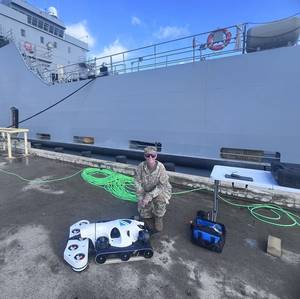
Sticking to legacy tactics won't beat China — adopt Secretary Hegseth's and the Army initiatives or surrender the edge.In a recent address, Admiral Christopher Grady, Vice Chairman of the Joint Chiefs of Staff, underscored the urgent need for a robotic hull-cleaning system to enable anytime maintenance, reduce drag, boost speed, and minimize fuel consumption for naval vessels.

McAllister Towing’s newest tractor tug, the Gerard McAllister, was delivered from Washburn & Doughty, the fifth in a series of six 84-metric-ton bollard pull, low-emission tractor tugs. She is McAllister’s 42nd tractor tug and the 13th with over 80 metric tons of bollard pull, underscoring the company’s continuation toward a more powerful, hi-tech, and sustainable fleet.
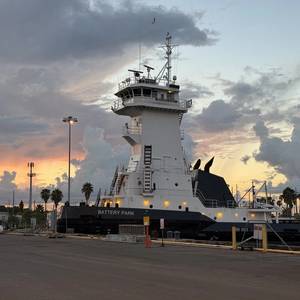
We are well into the discussions advising shipbuilders and operators how the U.S. will create a renaissance of the maritime industry. Federal Legislation, Executive Orders, and new foreign partnerships driving the promise of commercial competitiveness with the leading global shipbuilders. Most of the shipbuilding rhetoric indicates the domestic markets will be left to survive on their own.
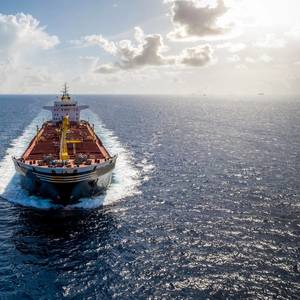
The International Maritime Organization will meet this week to formally decide whether to impose a carbon emissions price on global shipping, a move supported by an EU-led bloc including Britain, China and Japan but strongly opposed by the U.S.The IMO struck a preliminary deal to charge the global shipping industry for emissions in April after the U.S.
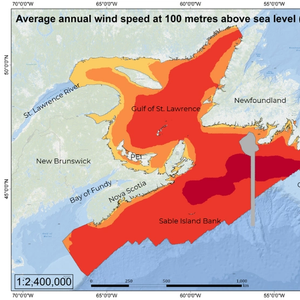
Sean Fraser, Canada’s Minister responsible for the Atlantic Canada Opportunities Agency, has announced that strategic direction has been given to the Canada–Nova Scotia Offshore Energy Regulator as a next step toward realizing Canada’s first-ever offshore wind project.Fraser made the announcement on behalf of Tim Hodgson, Canada’s Minister of Energy and Natural Resources