

Venezuela's state-run oil company PDVSA has begun cutting crude production because it is running out of storage capacity due to an ongoing U.S. oil blockade that has reduced exports to zero, piling more pressure on an interim government trying to hang onto power in the face of U.S. threats of more military action.

Fratelli Cosulich Group emerged from a turbulent 2025 with profitability largely intact, while continuing to put capital into ships designed for a changing marine fuels market. At the center of that strategy is Maya Cosulich, the first of a new generation of bunker tankers that the Italian group sees as both an investment in fleet renewal and a practical response to shipping’s energy transition.

Saipem has confirmed the completion of a key offshore installation campaign for the Neptun Deep natural gas project in Romania, marking another milestone in the development of what is expected to become the European Union's largest offshore gas project.The campaign, carried out by the Saipem 7000 heavy-lift vessel, included the installation of the production platform's 7,500-tonne jacket and 9

BRIX Marine has delivered It's About Time, a custom-built 4818-HTC Offshore passenger catamaran from the company's PaxCat lineup, built for FunToSee Island Ferry of Castries, St. Lucia. This marks the second vessel BRIX Marine has built for FunToSee Island, continuing a growing partnership between the two companies.FunToSee Island operates St.

Two months after the launch of the first vessel in this new series, Lucia Cosulich took to the water on May 2, 2026, marking another step forward in Fratelli Cosulich’s Marine Energy Unit commitment to alternative marine fuels and sustainable bunkering solutions.Held at Taizhou Maple Leaf Shipyard (China), the ceremony brought together the project team

This winter, ice on the Great Lakes is expected to impact a maritime economy valued at $35 billion. The wealth of data provided by space-based assets offers a potential lifeline for navigating these frozen waters. However, data alone is not a solution. Without the means to translate raw satellite feeds into actionable intelligence, it remains an untapped resource

Saudi Arabia's Aramco, the world's top oil exporter, said on Tuesday there would be "catastrophic consequences" for the world's oil markets if the Iran war continues to disrupt shipping in the Strait of Hormuz.Oil shipments have been largely blocked from traversing through the shipping artery, where normally roughly 20% of the world's oil would pass through daily.

The dollar surged on Monday as soaring oil prices sent investors scrambling for cash on worries that a protracted Middle East war could severely disrupt energy supplies and hurt global growth.Against the surging greenback, the euro EUR= and sterling GBP= were down roughly 1% in Asia, while the Aussie AUD= and even the safe-haven Swiss franc CHF= similarly tumbled, as the dollar proved king."The U.

Trading houses and buyers of Venezuelan oil have chartered the first very large crude carriers (VLCCs) to export from the South American country since a Caracas-Washington supply deal began, which is set to speed up shipments starting in March while boosting deliveries to India, according to four sources and data.
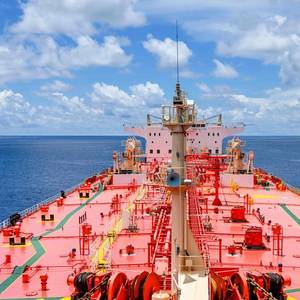
Venezuelan oil exports under a flagship $2 billion supply deal with the U.S. reached about 7.8 million barrels on Wednesday, vessel-tracking data and documents from state-run PDVSA showed, with shipments accelerating after the U.S. eased its blockade but not enough for PDVSA to fully reverse output cuts.Following the U.S.