

The U.S. is expanding its icebreaking fleet to strengthen Arctic and domestic access, and support commercial shipping, seabed resources, subsea cables and fisheries. Current plans include 1–3 heavy Polar Security Cutters (PSCs), 11 medium Arctic Security Cutters (ASCs), seven Homeland Security Cutter (HSC) HSC-L (light) icebreakers, 11 HSC-Ms (medium) and one additional heavy HSC-H (heavy).

Estonia has taken delivery of a new 38-meter multipurpose workboat that combines compressed biomethane and battery-electric propulsion with research, buoy-handling, pollution-response and rescue capabilities in a single vessel.Named KRATT, the new vessel was designed and built by Baltic Workboats for the Estonian State Fleet and christened August 12 at Saaremaa, Estonia.

On July 23rd, 2026 Amtech, courtesy an invitation from the U.S. Department of Commerce, attended the Grand Opening of the Korea-U.S. Shipbuilding Partnership Center (KUSPC) in Washington DC, a Secretary level event with invitations provided to recognized leaders in the U.S. commercial and naval shipbuilding industry.

Taking your children or grandchildren for a ride on the Merry-Go Round may be a pleasant past memory. With that memory, we are asking to think about your choice of the best horse as you board the platform. A decision resting upon what you want out of the ride. Now consider that selection to the current state of US shipbuilding.

Many claim to have ‘saltwater in their veins,’ but all you have to do is walk into the corner office of John McDonald, the new Chairman and CEO of the American Bureau of Shipping (ABS), to see that him saying “I was born into maritime” is not hyperbole. The first thing that greets you is a Dusan Kadlec nighttime painting of the Brooklyn Bridge

In December of 2025, the U.S. Coast Guard announced the award of two contracts to build up to six Arctic Security Cutter (ASC) icebreakers. The announcement declaring the vessels would be built between the United States and Finland in a major step forward for America’s national security in the Arctic region. The decision process encompassed more than the security of the Arctic passage.

Maritime 2026 opened with a bang between the announcement of Battleships, Venezuela, shadow fleets and yes, U.S. shipbuilding. The commercial building issue may come down to strategic patience or the adaptability to evolve through new technology while ignoring historic, old tactics.

The White House has ordered U.S. military forces to focus almost exclusively on enforcing a "quarantine" of Venezuelan oil for at least the next two months, a U.S. official told Reuters, indicating Washington is currently more interested in using economic rather than military means to pressure Caracas.
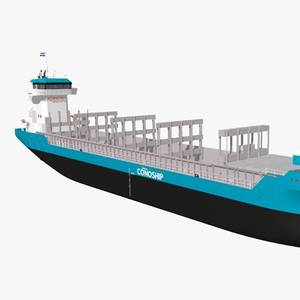
On October 28, 2025 U.S. Senator Dan Sullivan (R-Alaska), Chairman of the Senate Committee on Commerce, Science, and Transportation’s Subcommittee on Coast Guard, Maritime, and Fisheries, convened the Senate hearing “Sea Change: Reviving Commercial Shipbuilding”. This hearing examined how to modernize and accelerate U.S.
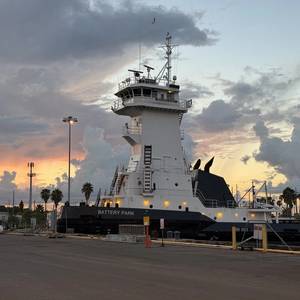
We are well into the discussions advising shipbuilders and operators how the U.S. will create a renaissance of the maritime industry. Federal Legislation, Executive Orders, and new foreign partnerships driving the promise of commercial competitiveness with the leading global shipbuilders. Most of the shipbuilding rhetoric indicates the domestic markets will be left to survive on their own.

The Coast Guard released a request for proposal (RFP) for design, production, testing and delivery of homeland security cutter-light (HSC-L) vessels. The Coast Guard plans to acquire seven HSC-Ls through an indefinite delivery/indefinite quantity contract.The RFP is available here. Proposals are due by July 14, 2026.

LS Marine Solution, a subsidiary of LS Cable & System, has started construction of a next-generation cable laying vessel (CLV) designed for long-distance high-voltage direct current (HVDC) and large-scale offshore wind grid projects.A steel-cutting ceremony for the new CLV was held at Tersan Shipyard in Türkiye, with delivery scheduled for the first half of 2028.