

The U.S. is expanding its icebreaking fleet to strengthen Arctic and domestic access, and support commercial shipping, seabed resources, subsea cables and fisheries. Current plans include 1–3 heavy Polar Security Cutters (PSCs), 11 medium Arctic Security Cutters (ASCs), seven Homeland Security Cutter (HSC) HSC-L (light) icebreakers, 11 HSC-Ms (medium) and one additional heavy HSC-H (heavy).

Stephen M. Carmel & MarAd are aiming to make this U.S. Maritime Rebuild StickFor anyone who has spent a career in the U.S. maritime industry, the past two years have been unusual by any metric. Maritime has moved from the far margins of federal policy discussions to center stage, with rebuilding American shipbuilding

If the Navy can’t successfully introduce smaller ship classes of ships, why does it think it can succeed with the largest surface combatants since World War II?The Navy has announced a new class of guided missile battleships, the USS Defiant [BBG(X)] or the Trump-class, as the centerpiece of a new “Golden Fleet.

Oman's Asyad Group and France's CMA CGM Group have signed a framework agreement to develop, manage and operate a multipurpose logistics terminal in Sohar, establishing a strategic partnership aimed at boosting maritime connectivity and opening new regional trade corridors.The agreement, signed during the official visit of Sultan Haitham bin Tarik to France

A dual fuel combustion system developed by Oak Ridge National Laboratory (ORNL) in collaboration with Caterpillar Inc. addresses the challenge of methanol ignition in diesel engines, with clear relevance for inland and coastal marine vessels.Methanol is typically produced from natural gas, an abundant domestic resource, and converting it into a liquid allows easier storage and handling.

Michael Carter and Steven Henderson grew up together in North Carolina, attended the United States Merchant Marine Academy (USMMA) together, and most recently jointly founded Fleet Zero, a company aiming to develop modular, containerized battery technology for electrifying cargo ships.

Major US maritime organizations have issued statements voicing their concern over the Trump Administration’s decision to issue a sweeping 60-day waiver of the Jones Act.Under the Jones Act, goods shipped between U.S. ports must be carried on vessels that are U.S.-built, U.S.-flagged and mostly U.S.-owned. A coalition of U.S.

Long-distance ferry routes form a key part of Japan’s national transport infrastructure, connecting the archipelago’s four major islands and littoral centers of population, commerce and industry.RoRo passenger (RoPax) ferry fleet renewal and development has been a constant process over the past two decades in particular

In December of 2025, the U.S. Coast Guard announced the award of two contracts to build up to six Arctic Security Cutter (ASC) icebreakers. The announcement declaring the vessels would be built between the United States and Finland in a major step forward for America’s national security in the Arctic region. The decision process encompassed more than the security of the Arctic passage.

Often debated and long-awaited, The White House released its long-anticipated America’s Maritime Action Plan (MAP), a 40+ page blueprint aimed at what it calls a new “Maritime Golden Age” for the United States.The document, developed under Executive Order 14269, lays out a four-pillar strategy to rebuild domestic shipbuilding capacity, expand the U.S.

The U.S. inland waterways don’t just move cargo — they move people into long-term, well-paid careers. At a time when trucking and rail struggle with shortages, turnover, and burnout, inland waterways operators quietly offer something different: a job you can start without experience, a career you can grow into, and a paycheck that gets better every step of the way.
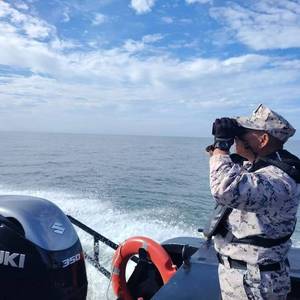
Malaysian patrols searched coastal waters in the Andaman Sea on Monday for dozens of members of Myanmar's persecuted Rohingya minority, after a boat believed to be carrying them sank last week and another went missing.At least 21 bodies have been found since the vessel went down on Thursday - 12 in Malaysia and nine in neighbouring Thailand - the regional head of Malaysia's maritime agency