

The headline grabbing global attention is simple enough: a shipowner reportedly paid more than $5 million for a single Panama Canal transit slot. But that may only mark the start of an historic surge in shipping costs.The vessel was a liquefied petroleum gas (LPG) carrier operated for South Korea's SK Gas.
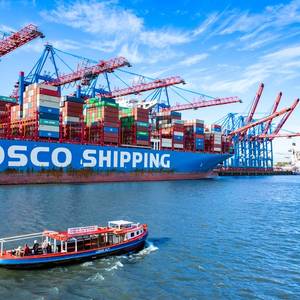
The U.S. and China on Tuesday began charging additional port fees on ocean shipping firms that move everything from holiday toys to crude oil, making the high seas a key front in the trade war between the world's two largest economies.A return to an all-out trade war appeared imminent last week

Oil fell on Friday as Middle East supply concerns eased after President Donald Trump said the US would not attack Iran before midterm elections next month and talked of "productive" talks to end their war that has disrupted global energy markets.Plans by China, the world's top oil importer, to resume refined fuel exports after a brief halt during its Golden Week holiday

The U.S. Court of Appeals for the D.C. Circuit recently issued a decision upholding the Federal Maritime Commission’s (FMC) determination that detention fees levied on a trucker by an ocean common carrier during a three-day port closure were unreasonable. The federal appeals court unanimously denied all aspects of the petition filed by the carrier, Evergreen Shipping Agency (America) Corp.

Crude prices plunged by more than 3% on Friday, on course for steep weekly losses, on easing supply concerns as more stranded oil tankers exited the Strait of Hormuz, even though a cargo vessel was hit near Oman on Thursday.Brent crude futures fell $2.61, or 3.47%, to $72.65 a barrel by 1037 GMT. U.S. West Texas Intermediate lost $2.46, or 3.42%, to $69.46.

Brent crude ticked slightly higher on Friday but was still on track for a more than 8% weekly decline after Israel and Hezbollah agreed to a ceasefire and tanker traffic through the Strait of Hormuz increased.Brent crude futures were up 20 cents, or 0.25%, at $80.05 a barrel by 10:55 a.m. ET, while U.S. West Texas Intermediate crude was up 25 cents, or 0.33%, at $76.85 per barrel.

Oil prices jumped more than 2% on Thursday after Iran's Revolutionary Guards said they targeted a U.S. airbase in response to a U.S. attack in the port city of Bandar Abbas.Brent crude futures LCOc1 rose $2.34, or 2.48%, to $96.63 a barrel by 0701 GMT, while the more active August contract LCOc2 gained $2.24 or 2.43%, to $94.49. The July contract is set to expire on Friday.U.S.

Brent crude futures rose more than 2% on Tuesday after the U.S. military carried out strikes in Iran, keeping markets on edge as a deal to end the war and open up the Strait of Hormuz remained elusive.Brent futures LCOc1 were up $2.36, or 2.5%, to $98.50 a barrel as of 0630 GMT, after settling 7% lower in the previous session.U.S. West Texas Intermediate crude CLc1 was at $91.

Ukrainian drones struck Russia's Black Sea port of Tuapse on Friday for the fourth time in 16 days as authorities struggled to cope with a mounting environmental disaster from toxic black smoke clouds and oil leaking into the sea.Ukraine's SBU security service said drones had again struck the sea port and refinerythat make Tuapse an important hub for Russian oil exports.

Exports from the Port of Los Angeles, the busiest U.S. gateway for ocean trade, fell 8% in January to the lowest monthly output in nearly three years, Executive Director Gene Seroka said on Tuesday."Exports to China look dismal," Seroka said after the Port of Los Angeles handled 104,297 20-foot equivalent units (TEUs) of loaded export containers in January.

On Monday, January 19, 2026, production of the fifth vessel in the Icon Class began at the Meyer Turku shipyard. The ceremonial event held in the steel hall was attended by representatives of the ship’s owner Royal Caribbean Group, the Meyer Turku organization, and the classification society.

China received 22 shipments of liquefied natural gas (LNG) last year from two export projects in Russia sanctioned by the United States and European Union, shiptracking data showed.One shipment was from Portovaya and the rest were from the Arctic LNG 2 project, showed data from Kpler and LSEG.The U.S.