

The headline grabbing global attention is simple enough: a shipowner reportedly paid more than $5 million for a single Panama Canal transit slot. But that may only mark the start of an historic surge in shipping costs.The vessel was a liquefied petroleum gas (LPG) carrier operated for South Korea's SK Gas.

If the Navy can’t successfully introduce smaller ship classes of ships, why does it think it can succeed with the largest surface combatants since World War II?The Navy has announced a new class of guided missile battleships, the USS Defiant [BBG(X)] or the Trump-class, as the centerpiece of a new “Golden Fleet.

At the head of the U.S.’ largest ferry system is Steve Nevey, Deputy Secretary, Washington State Ferry (WSF), which is engaged in a historic modernization to a hybrid-electric fleet. Nevey gives a candid look inside problems during the Wenatchee conversion, with insights on the hybrid electric direction and pace for newbuilds at Eastern Shipbuilding.Steve Nevey did not stumble into maritime.

Classification societies have always occupied a unique position in maritime: technical arbiters, rule makers, certifiers, and, increasingly, strategic advisors helping shipowners navigate some of the most consequential decisions in shipping’s and shipbuilding’s history. As maritime grapples with decarbonization mandates, digital transformation, automation

Michael Carter and Steven Henderson grew up together in North Carolina, attended the United States Merchant Marine Academy (USMMA) together, and most recently jointly founded Fleet Zero, a company aiming to develop modular, containerized battery technology for electrifying cargo ships.

The U.S. military has intercepted at least three Iranian-flagged tankers in Asian waters and is redirecting them away from their positions near India, Malaysia and Sri Lanka, shipping and security sources said on Wednesday.Washington has imposed a blockade on Iran's trade by sea while Iran has fired on ships to prevent them sailing through the Strait of Hormuz waterway at the entrance to the

In the world of large cruise ship construction, few yards operate at the level of Meyer Turku, which recently unveiled its 2025 results which serve as a turning point, not just in financial recovery, but in long-term strategic positioning.The numbers, at first glance, tell a familiar post-pandemic story. Turnover climbed to €2.

The quest to rebuild the U.S. iceabreaking fleet continues to move at lightening speed, with Seaspan Shipyards (Seaspan) signing agreements with Bollinger Shipyards (Bollinger) and Rauma Marine Constructions Oy (Rauma) to provide its Multi-Purpose Icebreaker (MPI) design and associated supply chain packages to enable rapid construction and delivery of up to six vessels for the U.S.
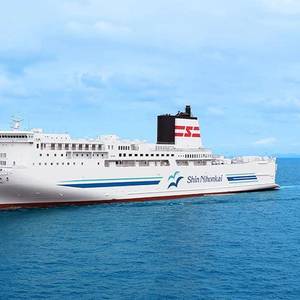
Mitsubishi Shipbuilding delivered the large car ferry KEYAKI, built for Shin Nihonkai Ferry Co., Ltd. and Japan Railway Construction, Transport and Technology Agency (JRTT), at the Enoura Plant of MHI's Shimonoseki Shipyard & Machinery Works in Yamaguchi Prefecture on the November 11, 2025.
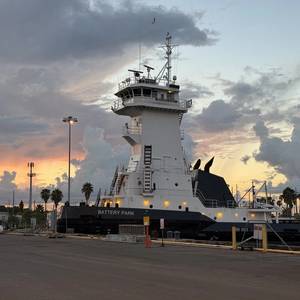
We are well into the discussions advising shipbuilders and operators how the U.S. will create a renaissance of the maritime industry. Federal Legislation, Executive Orders, and new foreign partnerships driving the promise of commercial competitiveness with the leading global shipbuilders. Most of the shipbuilding rhetoric indicates the domestic markets will be left to survive on their own.
AI is here to stay. Those who don’t explore its use and capabilities may soon find themselves left at the dock.At our company, we treat AI like any other engineering tool — no different than finite element analysis or computerized performance prediction. When used well, it’s extremely useful. When used poorly, it’s useless. At that level, we don’t worry about “intelligence.

ABS hosted the second edition of the Middle East Women in Maritime Summit at the Address Dubai Mall, gathering more than 150 industry professionals to celebrate the expanding role of women in the region’s maritime sector.Themed “Advancing Women in Maritime – Challenges and Opportunities