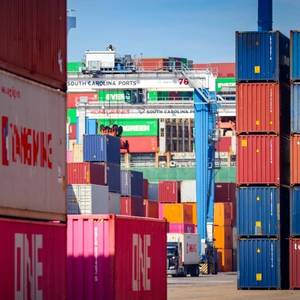
On April 17, the Trump administration shielded domestic exporters and vessel owners servicing the Great Lakes, the Caribbean and U.S. territories from port fees to be levied on China-built vessels.The Federal Register notice posted by the U.S. Trade Representative (USTR) was watered down from a February proposal for fees on China-built ship of up to $1.5 million per port call.
U.S. Trade Representative Jamieson Greer told lawmakers on Tuesday that not all of the agency's proposed multimillion-dollar fees for Chinese-built ships to dock at U.S. ports will be implemented, and they may not be cumulative.Greer told a Senate Finance Committee hearing that the proposals were made to address a lack of shipbuilding in the United States.
A Trump administration proposal aimed at reviving the U.S. shipbuilding industry may backfire by imposing steep fees on China-linked vessels—penalties that industry leaders say would hurt American ship operators and ports rather than help them, industry executives said at U.S. Trade Representative hearings on Monday.
South Carolina Ports recorded 206,859 TEUs at its marine terminals in October, a 1% year-over-year dip, as fiscal year volumes remain above plan. October marked the Port's strongest month for loaded exports since June, with an 18% year-over-year increase.The predicted slowdown mirrors national trends as containerized imports in the U.S. saw a 7.
After three years of leading the South Carolina Ports Authority as President and CEO, Barbara Melvin has announced her resignation, with plans to pursue other opportunities.Melvin joined SC Ports in 1998, serving in a variety of roles and leading major infrastructure initiatives like the Charleston Harbor Deepening Project.
SC Ports has expanded its container yard at Inland Port Greer to handle customers' growth.South Carolina Ports is enhancing its intermodal connections in South Carolina with the ongoing expansion of Inland Port Greer and construction of the Navy Base Intermodal Facility.SC Ports is investing to expand Inland Port Greer with more cargo and rail capabilities to support customers’ growth in the
The United States can use other measures to recreate the roughly $200 billion in revenues it is collecting under tariffs based on a 1977 law if the Supreme Court strikes down use of that law, U.S. Trade Representative Jamieson Greer said on Wednesday.Greer, speaking at an event hosted by the Atlantic Council, said it would make sense for Congress to legislate new rules for U.S.
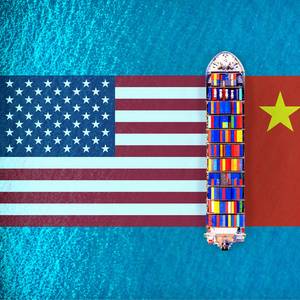
Trade Representative Jamison Greer said on Sunday that the U.S. reached out to China for a phone call following an announcement that it was expanding its rare earths export controls but Beijing deferred, while China accused the U.S. of what it called "double standards.""I can tell you that we were not notified, and quickly, as soon as we found out from public sources
Vietnam and the United States made progress during a third round of trade negotiations last week, but critical issues remain unresolved, requiring further analysis and continued dialogue, Vietnam's trade ministry said on Sunday.The talks, in Washington, D.C. from June 9-12, were held as a pause on 46% "reciprocal" tariffs on Vietnamese exports approaches expiration in early July
Australia offers a secure alternative supply for critical minerals vital to industry, its trade minister Don Farrell said on Thursday, in the face of rising concerns about Beijing's dominance of the sector.China's decision in April to suspend exports of a wide range of rare earths and related magnets crucial to sectors ranging from automakers to aerospace and defence was widely seen as Beijing
Recent discussions on tariffs have largely overlooked the potential implementation of the Office of the United States Trade Representative (USTR)’s port fees on Chinese-built vessels. This fee, which could reach up to $3.5 million per port call, varies based on the vessel’s origin and the owner’s fleet composition.
The U.S. Trade office will this week announce its plan for levying port fees on China-linked ships as part of President Donald Trump's effort to revive domestic shipbuilding and counter China's dominance on the high seas.The proposed fees on China-built ships could hit $1.5 million per U.S. port call. Few vessels would be exempt, making U.S.