

Anduril Industries plans to invest $3.7 billion in a new Maryland shipyard to manufacture Virginia-class submarine components and other subsea systems, alongside a U.S. Navy contract worth up to $2.9 billion tied to production targets.The Arsenal-2 facility will be built at Tradepoint Atlantic in Sparrows Point, Baltimore County

If the Navy can’t successfully introduce smaller ship classes of ships, why does it think it can succeed with the largest surface combatants since World War II?The Navy has announced a new class of guided missile battleships, the USS Defiant [BBG(X)] or the Trump-class, as the centerpiece of a new “Golden Fleet.

A record wave of global investment in new ships is translating into sustained growth for Germany's marine equipment industry, with suppliers reporting rising revenues, strong order books and growing optimism despite mounting geopolitical and competitive pressures.According to the latest industry survey from VDMA, Germany's maritime supplier sector posted average revenue growth of 5.

Oman's Asyad Group and France's CMA CGM Group have signed a framework agreement to develop, manage and operate a multipurpose logistics terminal in Sohar, establishing a strategic partnership aimed at boosting maritime connectivity and opening new regional trade corridors.The agreement, signed during the official visit of Sultan Haitham bin Tarik to France

At first glance, the Iran war appears to be hitting oil and gas with equal force, as missiles, drone strikes and shipping disruptions choke flows through the Strait of Hormuz.But beneath that surface symmetry lies a critical imbalance. The global gas supply chain has fewer rerouting options and less storage capacity than the oil market - making the fallout for gas consumers considerably more

Hafnia has taken delivery of the ECOMAR GIRONDE, the final vessel in its four-ship ECOMAR dual-fuel methanol newbuilding program developed in joint venture with France’s Socatra, completing the newbuilding series.Built at Guangzhou Shipyard International in China, ECOMAR GIRONDE is a 49,800-deadweight dual-fuel, methanol-capable Chemical IMO II medium-range tanker.

Swan Defence and Heavy Industries (SDHI) has signed its first newbuild contract for six IMO Type II chemical tankers, marking a milestone for India’s commercial shipbuilding sector and the country’s first chemical tanker order placed with a domestic shipyard.The contract, valued at $227 million, was awarded by European shipowner Rederiet Stenersen AS and covers six 18

Singapore-based Seatrium has resolved its dispute with an affiliate of Maersk Offshore Wind, over the delivery of a wind turbine installation vessel (WTIV), originally intended for Equinor’s Empire Wind 1 project in the United States.Under the agreement Seatrium Energy reached with Maerk’s affiliate Phoenix II A/S, the parties will discontinue all legal proceedings related to the contract
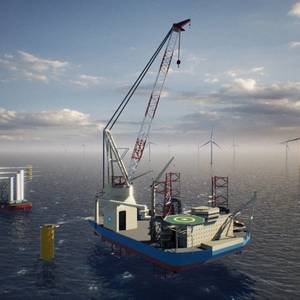
Seatrium has issued a notice of arbitration against an affiliate of Maersk Offshore Wind, escalating a dispute over the termination of a contract for a wind turbine installation vessel (WTIV) intended for the Empire Wind 1 project in the United States.The move follows a notice of arbitration delivered by the buyer on October 21

Odfjell SE and Japan’s Nissen Kaiun Co., Ltd. have formed a new Bergen-based joint venture, Odfjell Hakata Maritime AS, marking a significant expansion of their long-standing partnership and adding substantial capacity to the global chemical tanker market.The JV will launch with a fleet of 10 stainless-steel chemical tankers, equally contributed by the two companies.
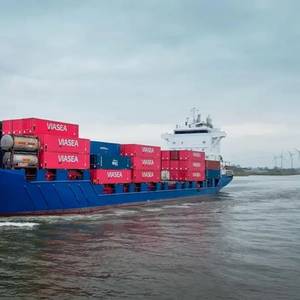
Ellerman City Liners, part of GB Global, has acquired Viasea Shipping from Norway’s ColliCare Holding AS, a move that strengthens Ellerman’s position in the European shortsea shipping market and deepens its commitment to sustainable logistics solutions.Founded in 2016, Viasea has grown rapidly as a challenger brand in Northern Europe’s shortsea sector, operating scheduled services between the UK

The United States on Friday threatened to use visa restrictions and sanctions to retaliate against nations that vote in favor of a plan put forward by a United Nations agency to reduce planet-warming greenhouse gas emissions from ocean shipping.U.N. member nations are scheduled to vote next week on the International Maritime Organization's Net-Zero Framework proposal to reduce global carbon