

Ongoing fleet renewal by niche player Cool Carriers indicates continuing competitiveness at scale of the specialized, pallet-optimized reefership.Not so long ago, it seemed that the unrelenting march of containerization and ever-widening influence of the powerful ocean container line entities would finally usurp the conventional, breakbulk refrigerated cargo vessel.

The United States is having a maritime moment. Maritime is back on the national agenda. The Maritime Action Plan, the SHIPS for America Act,and now the Administration’s August 13 memorandum on rebuilding the Navy and America’s shipbuilding industrial base have renewed the conversation about rebuilding America's maritime capability.

Saronic has broken ground on Port Alpha, a new U.S. shipyard at the Port of Brownsville, Texas, representing a private capital investment of more than $3 billion and a potentially significant addition to U.S. shipbuilding capacity.Situated on 835 acres with an option to expand to nearly 4,400 acres, Port Alpha is being designed to build autonomous, autonomy-capable and manned vessels.

"So far this year, ship transits via the Panama Canal have increased 8% y/y to a daily average of 38, driven by the tanker sector. Transits have been especially high during the past five weeks, rising 16% y/y, as US energy exports to the Pacific jumped,” says Filipe Gouveia, Shipping Analysis Manager at BIMCO.

When Saudi Aramco told its oil buyers in a letter this week that it had no clear idea which port it would use for April exports, it laid bare a new reality: Iran, not the United States, holds the key to reopening the global energy market.The letter, sent to Saudi oil buyers around the world, said they might receive oil from the Red Sea, but they might still get it from the Gulf.

U.S. officials responding to economic uncertainty over high oil prices predicted on Sunday that the U.S.-Israeli war on Iran would end within weeks and that a drop in energy costs would follow, despite Iran's assertion that it remains "stable and strong" and ready to defend itself.U.S.

Seatrium delivered FREDERICK PAUP to Manson Construction Co. Built at Seatrium’s Brownsville Texas yard, the Jones Act-compliant vessel is the largest self-propelled hopper dredger in US history.Key highlights:Largest in the U.S. – 420’ length x 81’ beam, with a 15,000+ cubic yard hopper capacityPowerful and Agile – Self-propelled with 25,000 horsepower, triple azimuthing stern drives

Norwegian shipbuilder Ulstein Verft has launched first of the two offshore wind commissioning service operation vessels (CSOVs) under construction at its yard for J.P. Morgan.On January 2, Ulstein Verft towed the CSOV yard number 322 from the dock hall to the outer dock, where the yard’s heavy-lift department installed the vessel’s tower using a crawler crane with a lifting capacity of up to 600

The quest to rebuild the U.S. iceabreaking fleet continues to move at lightening speed, with Seaspan Shipyards (Seaspan) signing agreements with Bollinger Shipyards (Bollinger) and Rauma Marine Constructions Oy (Rauma) to provide its Multi-Purpose Icebreaker (MPI) design and associated supply chain packages to enable rapid construction and delivery of up to six vessels for the U.S.
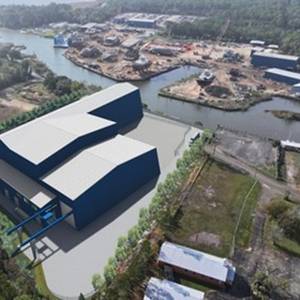
Facility will include 150,000 square feet of covered manufacturing space optimized for serial productionNew yard will support 200 new jobs and expands shipbuilding capacity Master Boat Builders announced plans to build a new $60 million, 150,000 sq ft manufacturing facility dedicated exclusively to government and defense shipbuilding programs.
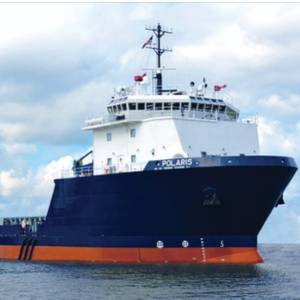
As oil exploration and production goes, so goes the market for Offshore Service Vessels (OSVs) and Platform Supply Vessels (PSVs). Throughout 2025, the prices of oil- which drives exploration and production (E & P), have softened, moving down towards $60/barrel amidst economic uncertainty and a wider than anticipated opening of the taps by major oil producers.
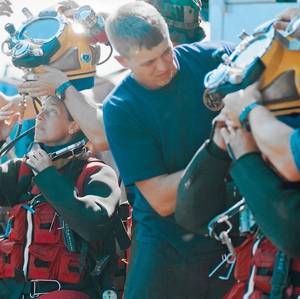
By Captain Bobbie Scolley, U.S. Navy (ret.) and Rear Admiral Tim Gallaudet, U.S. Navy (ret.)For more than six decades, spanning from 1905 to the late 1970s, the U.S. Navy’s diving apparatus for deep ocean operations and salvage remained fundamentally unchanged. During this period, the demographic of navy divers also saw little alteration.